
Key Takeaways
- Inspect the Base: Fungal brackets, mushrooms, or lifting soil at the very bottom of the trunk mean the root system is dying. This is the most dangerous red flag.
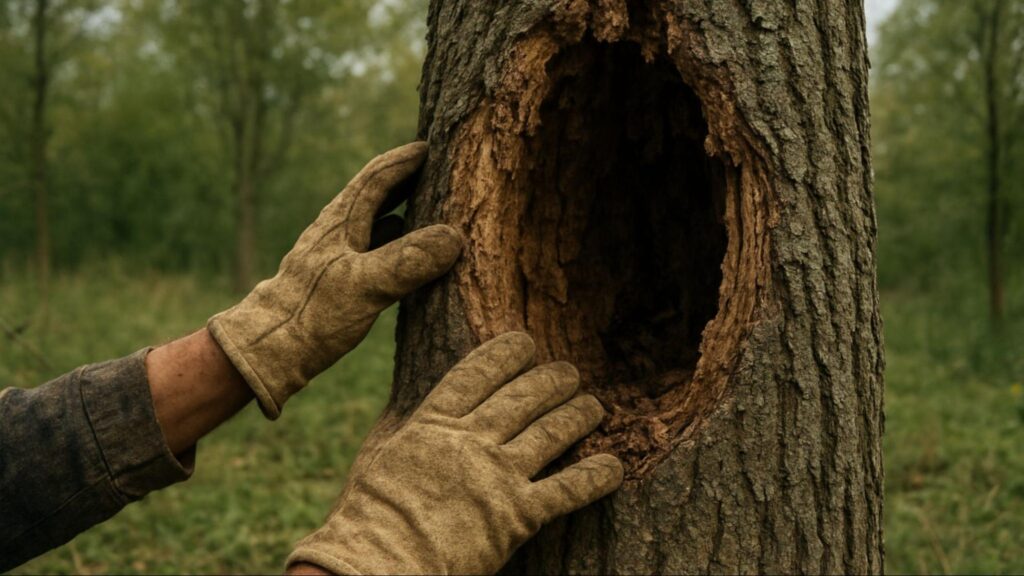
- The 1/3 Rule for Cavities: If a tree is hollow or has a massive open cavity covering more than one-third of its circumference, its internal framework is too weak to sustain high winds.
- Never Attempt Large DIY Removals: Dropping a compromised, unpredictable tree requires complex rigging, high-tonnage cranes, and advanced physics. Professional tree removal protects your roofline, power lines, and neighbors.
- Proactive over Reactive: It is always safer—and significantly less expensive—to schedule a planned removal than to pay for an emergency extraction after a tree has fallen through a roof.
A tree is a dangerous hazard requiring immediate tree removal if it shows critical red flags such as deep trunk cracks, mushroom growth around the roots, sudden leaning, or hollow cavity space covering over a third of its core. In Central Florida, where severe summer storms and hurricanes regularly test structural integrity, delaying necessary tree removal can result in catastrophic property damage or personal injury.
At Native Tree of Central Florida, we prioritize tree preservation whenever possible, but when these high-risk warning signs appear, professional tree removal is essential to protect your home and family.
Table of Contents
Identifying Structural Red Flags
| Warning Sign | What It Indicates | Required Action |
|---|---|---|
| Deep Trunk Cracks | Severe structural splitting. | Immediate safety evaluation. |
| Mushroom Growth at Base | Internal root rot or heartwood decay. | High risk; usually requires tree removal. |
| Sudden Leaning | Root failure or shifting soil. | Emergency mitigation needed. |
| Hollow Trunk Space | Over 30% of the tree's core is compromised. | Structurally unsound; plan for removal. |
Why Central Florida Weather Magnifies Tree Hazards
- The Hurricane Factor: A tree with internal decay might survive normal weather, but the sustained, high-velocity winds of a Florida storm will expose its structural weaknesses. Proactive tree removal of hazardous trees is your property’s best defense.
- Saturated Sandy Soils: Our heavy summer rainy seasons quickly saturate our porous sandy soils. If a tree has a compromised root system (marked by root heaving or fungal growth), the loose, wet soil makes it highly susceptible to sudden tipping.
- Co-Dominant Stems: Trees that grow with two main trunks forming a tight “V” shape are notorious for splitting down the middle under pressure. If a deep crack develops between these stems, it is a primary red flag that the tree’s structural integrity has failed.
Legal Compliance: Florida Statute 163.045
- Arborist Documentation: Under Florida law, residential homeowners can often proceed with an emergency tree removal without a costly local municipal permit if an ISA Certified Arborist documents that the tree poses an objective, structural hazard to people or property. Read more
- Liability Protection: Obtaining professional risk assessments protects you from municipal fines and ensures your insurance carrier recognizes that the removal was a safety necessity.
How to Spot Red Flags When Hiring a Tree Removal Company (The Contractor)
Once you identify that your tree is structurally compromised, the next step is choosing a partner to remove it safely. Because tree removal is high-risk work, you must avoid low-quality or untrustworthy contractors. Watch out for these operational red flags:
No Certified Arborist on Staff:
If a company cannot provide an ISA Certification number, they lack the formal training required to handle complex, dangerous removals.
Lack of Proof of Insurance:
Never hire a crew that cannot immediately produce up-to-date General Liability and Workers’ Compensation certificates. Without this, you are liable for property damage or injuries on your yard.
Demanding Upfront Payment:
Reputable tree removal services invoice you after the job is completed safely and the debris is cleared.
Recommending “Topping”:
If a company suggests topping a tree as a safety measure instead of a clean removal or proper pruning, they do not understand modern arboriculture.
Understanding When Tree Removal Is Necessary
Not every tree that looks unhealthy or inconvenient needs to be cut down. In many cases, trees can be saved through professional pruning, cabling, bracing, or disease treatment, restoring both safety and beauty to your property. However, there are situations when tree removal becomes the safest and most responsible option for the protection of your home, your family, and surrounding vegetation.
Here are some key indicators that a tree may need to be removed:
- Dead, Dying, or Hollow Trees – A tree that has lost most of its leaves, has brittle branches, or shows signs of decay at the trunk may be beyond saving. Dead or hollow trees are structurally unstable and can collapse without warning, posing serious safety risks to people, pets, and property.
- Leaning Dangerously Close to Structures – A leaning tree doesn’t always mean immediate danger, but if the tilt increases over time or roots are lifting from the ground, it could signal instability. Trees that lean toward houses, garages, or fences should be evaluated promptly by a professional company to prevent potential damage.
- Severe Storm or Pest Damage – High winds, lightning strikes, or pest infestations (like termites or borers) can weaken a tree’s structure from the inside out. When a large portion of the trunk or root system is compromised, removal may be the only safe solution to avoid accidents during future storms.
- Interference with Power Lines or Construction Work – Trees growing too close to power lines, rooftops, or new building projects can create safety hazards or hinder development. Utility companies may recommend in such cases to prevent outages or fire risks.
- Root Problems and Foundation Damage – Expanding root systems can damage sidewalks, driveways, and even building foundations. When roots begin disrupting underground utilities or structures, removal might be necessary to prevent long-term repair costs.
The Environmental Impact of Tree Removal
- Sustainable Wood Recycling and Reuse – Instead of sending removed trees to landfills, professional services often repurpose the wood. Logs and branches can be turned into lumber, firewood, or mulch. Chipping and recycling this material helps reduce waste and supports sustainable landscaping practices. By grinding stumps into mulch, nutrients are naturally returned to the soil, enriching future plant growth.
- Replanting and Ecological Restoration – A responsible company understands that every tree plays a vital role in the environment from air purification to providing shade and wildlife shelter. That’s why replanting is often encouraged after a removal. Replacing a dead or hazardous tree with a healthy, native species helps maintain biodiversity and ensures the ecosystem remains balanced.
- Soil and Water Conservation Practices – During removal, experts take measures to protect the surrounding soil and vegetation. Using ground mats, low-impact machinery, and careful cutting methods minimizes soil compaction and prevents erosion. These techniques help preserve the health of nearby trees and prevent water runoff issues.
- Wildlife Protection – Certified arborists are trained to recognize potential wildlife habitats, such as nests, burrows, or bee colonies, before removal begins. They may delay or modify the process to ensure safe relocation of animals.
- Commitment to Long-Term Sustainability – Companies like Native Tree of Central Florida integrate environmental responsibility into every project. They not only remove trees safely but also promote replanting of native tree species that thrive in Central Florida’s climate. This helps restore ecological balance and supports the community’s long-term green spaces.
How to Verify a Tree Removal Company Before You Hire
Choosing the right tree removal company is just as important as recognizing the warning signs of a bad one. Even if a company looks professional online, it’s essential to verify their credentials before agreeing to any work.
Start by confirming that the company carries general liability insurance and workers’ compensation coverage. A legitimate tree service should be able to provide proof of insurance upon request. This protects you from financial responsibility in case of accidents or property damage during the job.
Next, check if the company employs ISA-certified arborists or trained tree care professionals. Certification from recognized organizations indicates that the team follows industry standards for safety and proper tree care practices. It’s also helpful to review the company’s Google Business Profile, customer reviews, and years of operation. Established businesses with consistent local feedback are generally more reliable than newly created listings with limited history.
Before signing any agreement, ask for a written estimate that clearly outlines labor, equipment, debris removal, and cleanup. A professional company will provide transparent pricing without vague or incomplete descriptions.
Questions You Should Ask Before Hiring:
- Are you fully insured and can you provide proof?
- Do you have certified arborists on your team?
- What exactly is included in your estimate?
- How do you handle cleanup and debris disposal?
- Do you have local references or recent project examples?
Taking the time to verify these details helps ensure you’re hiring a qualified, legitimate tree service provider, not just someone offering the lowest price.
Do You Actually Need Tree Removal? (When Not to Cut a Tree Down)
Not every damaged or leaning tree needs to be removed. In many cases, tree removal is recommended too quickly when other solutions like pruning or maintenance may be enough. Understanding tree removal costs can also help homeowners make more informed decisions, especially when comparing removal versus treatment options.
Trees can often recover from minor storm damage, broken branches, or seasonal stress with proper care. In these situations, selective pruning or structural trimming may restore stability without the need for full removal.
A common misconception is that a leaning tree is always dangerous. However, some trees naturally grow at an angle and remain stable for years. The key factor is whether the lean is new or worsening, which may indicate root damage or structural instability.
Situations Where Tree Removal May NOT Be Necessary:
- Minor storm damage with recoverable branches
- Cosmetic issues like uneven canopy growth
- Seasonal leaf loss or thinning
- Stable leaning trees with healthy root systems
- Small dead limbs that can be safely pruned
Getting a professional evaluation before deciding on removal can save money, preserve healthy trees, and prevent unnecessary cutting.
Final Thoughts
Choosing the right tree removal service is an investment in your property’s safety, value, and overall tree health. By recognizing these six major red flags, lack of experience, no insurance, unclear pricing, poor reviews, missing certifications, and no written agreement, you can avoid costly mistakes and unreliable contractors.
If you want peace of mind and professional results, work only with experts who meet every safety and quality standard. For homeowners in Central Florida, Native Tree of Central Florida stands out as a trusted, fully insured, and highly rated company. They combine technical expertise with genuine care for customer satisfaction, making them the clear choice for any removal project.
Safe, Smart, and Reliable Tree Removal
Don’t take chances with your property. Our certified experts provide professional tree removal services that prioritize safety, precision, and care—so you can have peace of mind from start to finish.
Frequently Asked Questions
How do I know if a company is reputable?
How much does the service usually cost?
What should I do if I need emergency help?
Call a licensed and insured team that offers 24/7 emergency response for safe and quick storm or hazard cleanup.