
Key Takeaways
- Rocks and mulch both play important roles in yard design, but they behave very differently in Central Florida’s heat, humidity, and sandy soil conditions.
- Many homeowners in Ocala choose based on appearance alone, but long-term performance, safety, and maintenance matter more than aesthetics.
- Rock-based yard design is durable but can intensify heat and complicate plant health if not planned correctly.
- Mulch supports soil health and root systems but requires regular replenishment in Florida’s climate.
- Installation mistakes, especially DIY, often lead to drainage issues, plant stress, or costly corrections later.
- Choosing the right material should involve professional evaluation, especially in storm-prone regions like Central Florida.
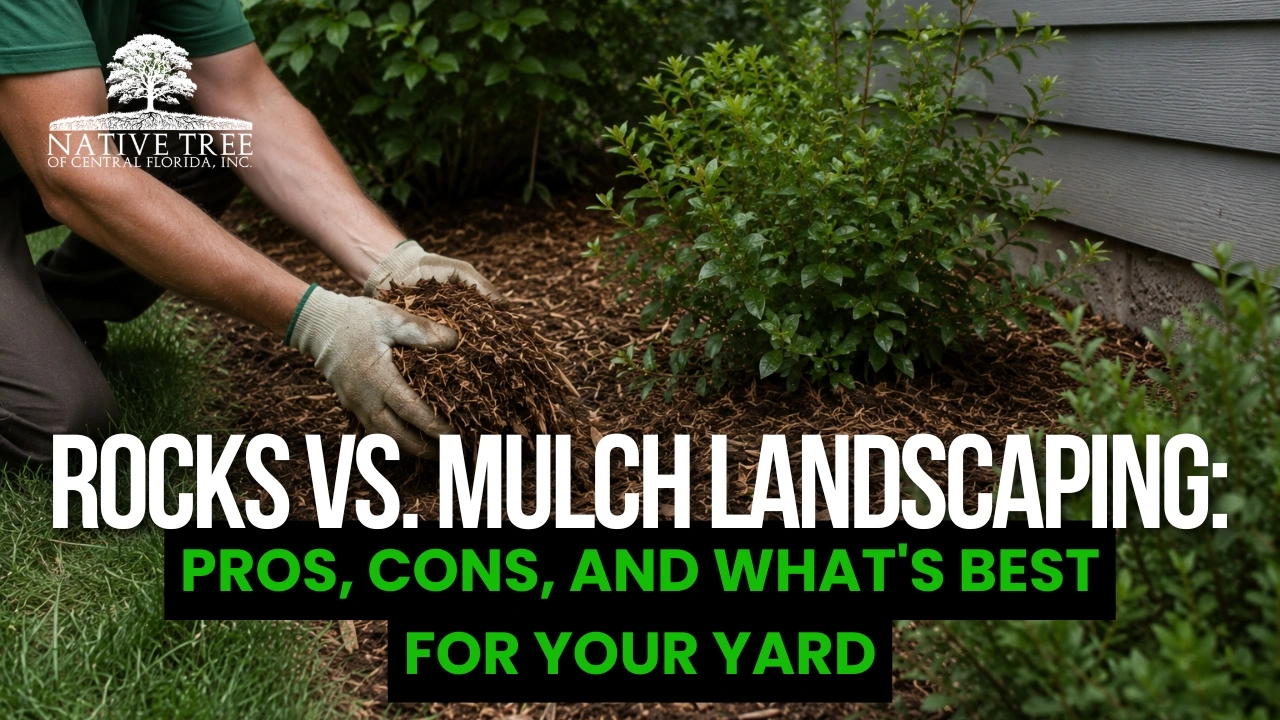
When homeowners in Central Florida start thinking about improving curb appeal or yard design in Florida, they often begin with simple landscaping changes like edging, plant beds, or basic outdoor upgrades. One of the most overlooked, but impactful, decisions is choosing between rocks and mulch.
At first glance, it seems like a purely aesthetic choice. In reality, it directly affects soil temperature, moisture retention, plant health, long-term maintenance, and storm resilience during Florida’s intense summer weather.
In Ocala and surrounding areas, where sandy soil, high humidity, and sudden downpours are part of everyday conditions, this decision carries more weight than most homeowners realize.
Rocks provide long-term durability and low maintenance, while mulch supports soil health and plant growth. In Central Florida’s hot and humid climate, the best choice depends on location, plant type, and drainage conditions rather than appearance alone.
Table of Contents
Landscaping Materials in Central Florida
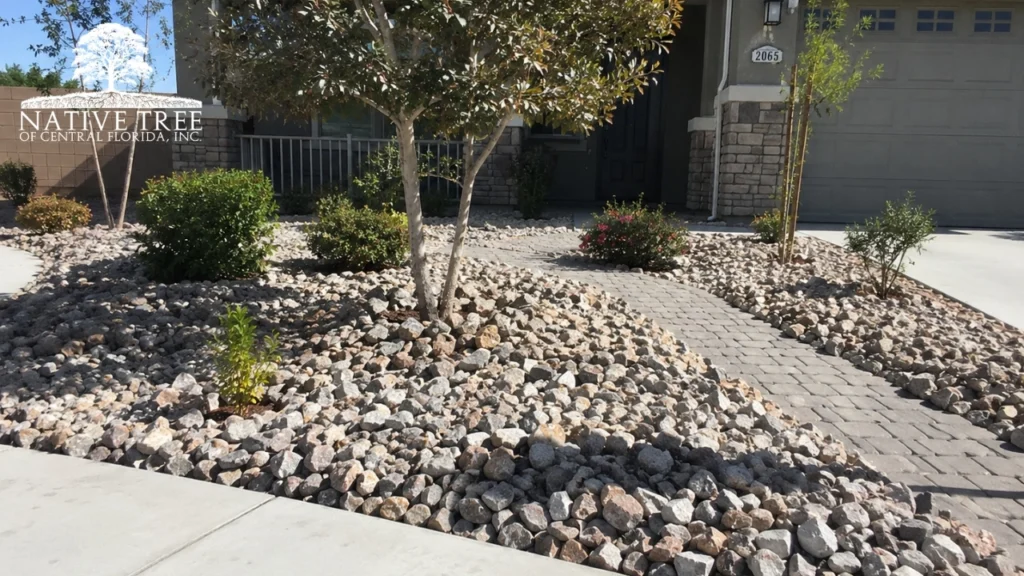
Rocks and mulch are two common landscape materials used in Florida yard design, each serving different functions depending on site conditions. Rocks are typically used for durability, erosion control, and low-maintenance design, while mulch is preferred for improving soil health, moisture retention, and plant support.
Each material plays a different role in how a yard performs over time, especially in Florida’s heat and storm-prone environment.
For more design inspiration and practical landscape layouts featuring palms, mulch, and stone elements, explore these Florida landscaping ideas → landscaping ideas
Rocks vs. Mulch Landscaping: Understanding the Core Difference
Before comparing pros and cons, it’s important to understand what each material actually does in a yard system.
| Landscaping Material | The Good (Durability & Benefits) | The Catch (Soil Impact) | Best For… |
|---|---|---|---|
| Rocks & Decorative Stone (Gravel, river rock, etc.) | Permanent & Low Maintenance: They are incredibly durable, won’t break down over time, effectively suppress weeds, and reduce erosion. | Passive Surface Cover: They do not contribute any nutrients to the soil underneath. | Modern yard designs and low-maintenance areas where soil improvement isn’t needed. |
| Landscaping Mulch (Organic materials) | Functional & Soil-Friendly: Regulates soil temperature, excels at retaining moisture in the Florida heat, and actively supports plant health. | Breaks Down: Because it is organic, it is designed to decompose over time and will need to be replenished periodically. | Active garden beds and plantings where soil structure and nutrient delivery are a priority. |
Pros and Cons of Rocks in Ocala Yards
Advantages of Rock-Based Yard Design
In Central Florida, decorative rock installations have become popular for homeowners seeking low-maintenance yards.
| The Pros | The Cons |
|---|---|
| * Long Lifespan: Offers incredible durability with minimal need for replacement. | * Heat Retention: Absorbs and holds heat, which can significantly raise soil temperatures. |
| * Excellent Weed Suppression: Highly effective at blocking weeds when installed with proper barrier layers. | * Root Stress: The trapped heat can severely stress plant roots in full sun conditions. |
| * Weather Resistant: Highly resistant to natural decomposition and won’t wash away easily during heavy storms. | * Hard to Modify: Extremely heavy and difficult to change or move once the installation is complete. |
| * Thrives in Dry Zones: Works exceptionally well in dry, high-sun areas where plants aren’t the main focus. | * Higher Upfront Cost: Requires a larger initial investment for materials and installation compared to organic options. |
| * Modern Aesthetic: Provides a clean, crisp, and modern visual appeal to the landscape. | * Poor Plant Compatibility: Does not pair well with nutrient-dependent plants since stones add nothing to the soil. |
A common misconception in Ocala is that rocks are always “set and forget.” In reality, improper installation can trap heat and restrict natural soil processes, especially during Florida’s peak summer months.
Pros and Cons of Mulch-Based Yard Design
Why Mulch Remains a Florida Favorite
Mulch continues to be widely used across Central Florida because it supports the natural ecosystem of the soil.
| The Pros | The Cons |
|---|---|
| * Retains Moisture: Keeps soil hydrated and healthy during dry spells. | * Requires Replenishment: Needs to be refreshed 1–2 times per year as it decomposes. |
| * Moderates Temperature: Shields and cools the soil during periods of extreme heat. | * Attracts Pests: Can invite unwanted bugs if it is piled directly against structures or improperly applied. |
| * Improves Soil Fertility: Actively feeds the ground and builds up nutrients as it breaks down, perfect for fast-draining, sandy Ocala soil. | * Storm Washout: Light materials may wash away during heavy downpours if the bed isn’t edged correctly. |
| * Boosts Root Growth: Enhances healthy root development in young trees and shrubs. | * Root Suffocation: Can choke out plants and cause rot if piled too deeply (often called “volcano mulching”). |
| * Easy to Refresh: Simple to modify, top-off, or completely redesign seasonally. | * Fades Over Time: Colors can bleach out from intense Florida sun exposure, requiring aesthetic upkeep. |
In many cases, homeowners unintentionally apply mulch too thickly, creating “volcano” effects around trees that harm root health over time.
Local Insight: What Works Best in Central Florida?
The truth is that in Central Florida yard design, neither option is universally “better.” Success depends on placement, plant type, drainage patterns, and long-term maintenance expectations.
In Ocala’s climate:
- Rock beds perform best in hot, dry, high-sun decorative zones
- Mulch performs best in planting beds, shaded areas, and young tree environments
A blended approach is often the most effective strategy, but only when designed with site-specific conditions in mind.
This is where professional evaluation becomes important. A trained eye can identify drainage behavior, soil conditions, and plant stress risks that most homeowners miss.
Professional vs DIY Installation: Why Experience Matters
DIY yard upgrades are common in Florida yard maintenance, but they often overlook critical technical details like drainage, soil compaction, and root protection.
- Drainage slope and water flow direction
- Soil compaction beneath materials
- Root zone protection for trees
- Heat absorption differences across materials
- Long-term maintenance planning
Incorrect installation doesn’t always show immediate problems. Many issues, like root decline or water pooling, appear months later, especially after Florida’s storm season.
This is why many homeowners choose to consult professionals offering certified arborist services in Ocala or tree risk assessments before making major yard changes.
We frequently encounter landscapes that look visually appealing on the surface but are unintentionally impacting tree health due to issues like improper material placement or incorrect depth. That’s why at Native Tree of Central Florida, we take an education-first approach, helping homeowners understand the reasoning behind every recommendation, not just the final result.
Insurance, Liability, and Why It Should Influence Your Choice
One of the most overlooked aspects of outdoor design and installation work in Central Florida is liability.
If a contractor is not properly insured, homeowners may be exposed to risks such as:
- Property damage during installation
- Injury on-site without coverage
- Costly corrections after poor workmanship
- No financial protection during accidents
This is not about fear, it’s about protection and accountability.
A fully insured company with ISA-certified professionals ensures that work is performed with safety standards, not shortcuts. That distinction becomes especially important in Central Florida, where weather and soil conditions can quickly expose poor installation practices — especially when it comes to tree care, mulch application, and rocks for landscaping.
Conclusion: The Smarter Way to Decide
Choosing between rocks and mulch is not just a design preference, it’s a long-term investment in the health, safety, and sustainability of your yard.
In Ocala and throughout Central Florida, the best results come from understanding how materials interact with climate, soil, and plant systems, not just how they look on day one.
When in doubt, the safest path is working with experienced professionals who understand both tree biology and landscape systems together.
At the end of the day, homeowners deserve more than guesswork, they deserve informed guidance, transparent recommendations, and landscape solutions built for long-term performance.
A professional evaluation ensures your landscape design is not only visually appealing, but also structurally sound for long-term tree and soil health.
Choose the Right Landscaping for a Healthier Yard
Deciding between rocks and mulch can impact soil health, maintenance, and long-term landscape success. Schedule a professional consultation to find the best option for your yard’s needs.
Call us today at (352) 561-3626 or reach us via e-mail at sales@nativetreecf.com to schedule your professional tree service.
Frequently Asked Questions
Is rock or mulch better for Florida yards?
It depends on location and purpose. Rocks work well in hot, dry decorative areas, while mulch is better for soil health and plant growth in most planting beds.
Does rock landscaping make yards hotter?
Yes. Rocks tend to absorb and retain heat, significantly increasing surrounding soil temperatures and adding stress to nearby plant root systems.
How often should mulch be replaced in Central Florida?
Typically once or twice a year due to decomposition and weather exposure.
Can I mix rocks and mulch in the same yard?
Yes, but only when properly planned. Mixing materials without drainage and plant consideration can create long-term issues.
Do I need a professional to decide between rocks and mulch?
For small decorative areas, maybe not. But for tree-heavy yards or full redesigns, professional guidance helps prevent costly mistakes.