
Key Takeaways
- Summer pruning is not automatically harmful, but timing, tree species, and cutting methods all matter in Central Florida’s climate.
- Many homeowners in Ocala assume all warm-weather pruning damages trees, but selective trimming can sometimes improve safety and tree health when done properly.
- Improper DIY cutting during Florida’s humid storm season can increase stress, pest exposure, decay risk, and liability concerns.
- Understanding the parts of a tree helps homeowners recognize why certain limbs should never be removed casually.
- Local tree species respond differently to summer cuts due to rapid growth cycles, sandy soils, and heat stress.
- Insurance and ISA-certified expertise matter because improper tree cutting can create serious property damage and safety risks.
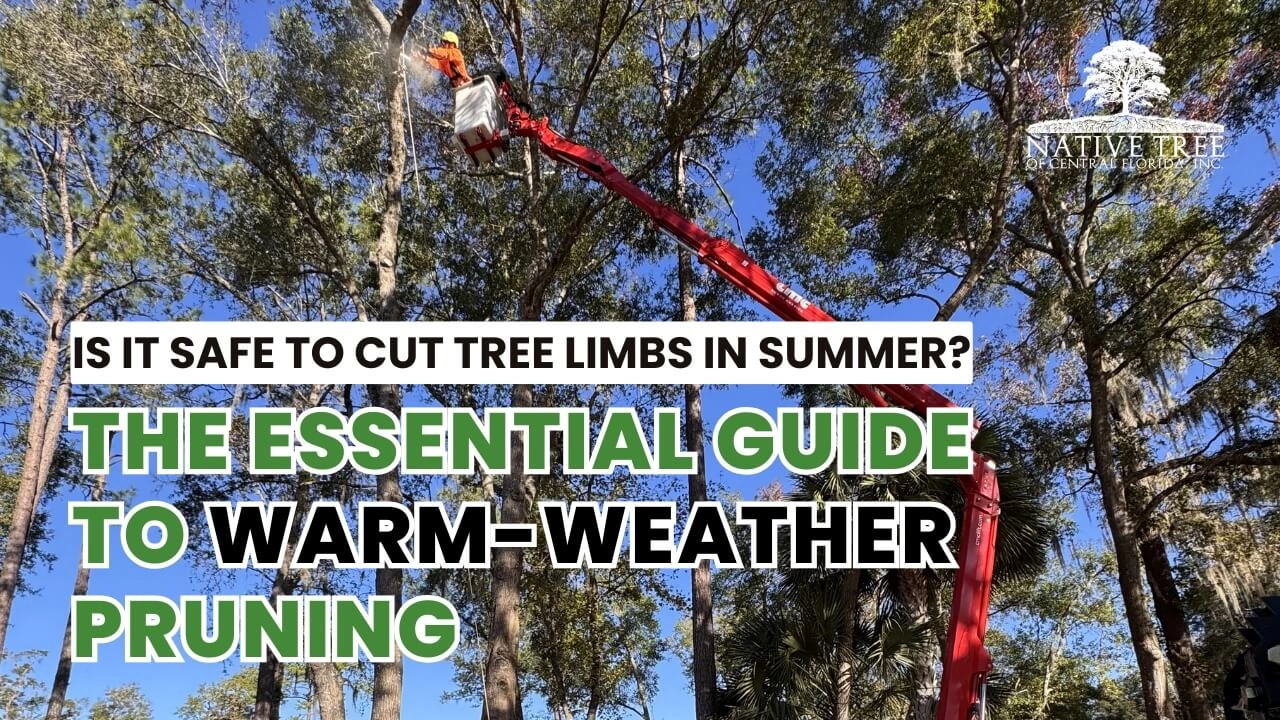
Florida summers create unique challenges for homeowners trying to care for mature trees. Between intense heat, daily humidity, fast growth cycles, and unpredictable storm activity, many people in Ocala wonder whether cutting tree limbs during summer is helpful or harmful.
The answer is more nuanced than most online articles suggest.
In some situations, summer pruning is appropriate and even beneficial. In others, cutting limbs at the wrong time can stress the tree, expose weak areas, or create long-term structural problems that are not immediately visible.
Understanding when professional evaluation matters is one of the most important parts of responsible tree maintenance in Central Florida.
Table of Contents
Can you cut tree limbs during summer in Florida?
Yes, certain tree limbs can be safely removed during summer, but only when the tree species, limb condition, weather patterns, and pruning goals are properly evaluated first.
In Central Florida, summer growth is extremely active. Trees are responding to heat, moisture, and storm conditions simultaneously. That means poorly timed or excessive cutting can sometimes create additional stress instead of improving tree health.
This is especially true for mature shade trees common throughout Ocala, Marion County, and many older North Central Florida neighborhoods with mature live oak canopies.
- Live oaks
- Laurel oaks
- Water oaks
- Southern magnolias
- Maple varieties
- Pine species
Many homeowners assume summer is automatically the wrong season for pruning. Others believe cutting branches anytime is harmless because “trees always grow back.”
Neither assumption is entirely accurate.
Why Florida Summer Conditions Change Everything
Tree care advice written for northern climates often does not fully apply to Central Florida.
Our region experiences:
- High humidity
- Rapid summer growth
- Saturated soil conditions
- Strong wind exposure
- Heat-related stress
- Frequent summer thunderstorms in Ocala
During the summer thunderstorm season in Ocala, trees already dealing with saturated sandy soil conditions may become more vulnerable to structural stress after improper pruning.
These environmental factors influence how quickly trees recover after cuts.
For example, a tree already struggling with compacted sandy soil or storm stress may not respond well to aggressive summer trimming. Meanwhile, selectively removing damaged or compromised limbs before hurricane season can reduce future structural failure risks.
That’s why professional tree evaluations and tree inspections matter more than generalized internet advice.
The Biggest Misconception About Summer Tree Cutting
| Topic | The Misconception / Extreme | The Reality / Risk |
|---|---|---|
| Leaving All Growth | Believing all green growth should be left completely untouched during the summer. | Weak or diseased branches left during Florida’s storm season greatly increase the risk of property damage or tree failure. |
| Over-Pruning | Removing too much of the tree canopy right before hurricane season to “prepare.” | Stripping away too much canopy during extreme heat ruins the tree’s ability to regulate moisture and cope with harsh sun exposure. |
| The Professional Focus | Over-focusing on a tree’s symmetrical appearance or aesthetic look. | Certified arborists focus entirely on balance—safely removing structurally weak limbs while preserving enough canopy for overall tree health and stability. |
Understanding Tree Limbs Meaning in Real Tree Care Decisions
When homeowners search for “tree limbs meaning,” they are often trying to understand which parts of a tree actually matter structurally.
Not every branch serves the same purpose.
Some limbs are critical to:
- Weight distribution
- Wind resistance
- Nutrient movement
- Canopy balance
- Structural stability
Improper removal can alter how force moves through the tree during storms.
This becomes especially important in Ocala neighborhoods where mature trees provide major shade coverage over homes, patios, and driveways.
At Native Tree of Central Florida, we often help homeowners understand that pruning decisions are rarely just cosmetic. Structural integrity is a major part of long-term tree health.
Do Tree Limbs Grow Back After Cutting?
Another frequent question we hear is: “Do tree limbs grow back?”
Technically, the exact limb does not regenerate the same way human tissue heals. Instead, trees compartmentalize wounds and produce new growth from surrounding tissue.
What happens next depends heavily on:
- Tree species
- Size of the cut
- Placement of the cut
- Overall tree health
- Environmental stress levels
- Timing of pruning
Improper cuts can trigger:
- Weak sprout growth
- Increased decay
- Unstable branch attachments
- Poor canopy structure
This is one reason random DIY tree cutting often creates future maintenance problems that homeowners do not notice until years later.
Why DIY Summer Pruning Can Become Risky
Florida homeowners are often tempted to trim branches themselves after storms or during rapid summer growth. Rapid summer growth combined with frequent afternoon thunderstorms in Ocala can place additional stress on already weakened trees, making DIY pruning more dangerous than it appears.
But summer conditions introduce several hazards that are often overlooked.
Hidden Structural Weakness
Limbs may appear healthy externally while already compromised internally from storm stress, decay, or fungal activity. Cutting without proper assessment can cause unexpected limb failure or destabilize the tree’s structure.
Heat and Fatigue Risks
Working on ladders during Florida’s intense summer heat increases the risk of:
- Heat exhaustion
- Dizziness or dehydration
- Reduced physical control
- Accidental falls
In Central Florida’s humid climate, these risks escalate quickly, especially during midday trimming.
Improper Cuts
Incorrect pruning techniques can permanently affect tree health and long-term structure.
Common mistakes include:
- Topping branches incorrectly
- Cutting too close or too far from the collar
- Removing too much canopy at once
These errors often lead to weak regrowth and long-term structural instability. Proper tree maintenance practices emphasize selective, strategic cuts rather than aggressive trimming.
Liability Concerns
If a falling limb damages neighboring property, vehicles, or injures someone, uninsured DIY work can quickly become a financial and legal burden.
This is especially important in densely planted Ocala neighborhoods where mature trees often extend over multiple properties.
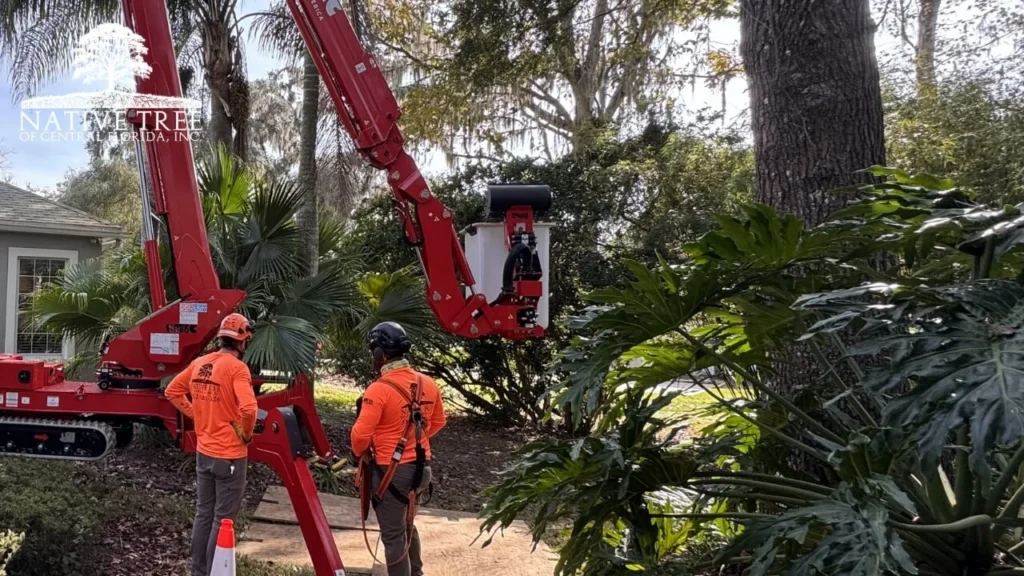
Working with a fully insured and experienced provider like Native Tree of Central Florida helps reduce these risks significantly.
The Importance of ISA-Certified Arborist Evaluations
Not every tree requires immediate pruning.
Sometimes the safest recommendation is monitoring instead of removal.
Homeowners seeking certified arborist services in Ocala should look for companies that prioritize long-term tree health rather than aggressive over-pruning.
ISA-certified arborists evaluate:
- Tree stability
- Limb attachment strength
- Species-specific growth habits
- Storm vulnerability
- Root health
- Canopy balance
- Long-term structural development
This level of evaluation becomes especially important during Florida’s active growing season.
Homeowners in Ocala are often surprised to learn that over-pruning can sometimes increase future storm vulnerability rather than reduce it.
Responsible tree pruning is about strategy, not simply removing branches.
Tree Maintenance Should Be Seasonal, Not Reactive
Many homeowners only think about tree care after visible problems appear.
But proactive tree maintenance is usually far more effective than reactive emergency work.
In Central Florida, that means evaluating trees before:
- Hurricane season peaks
- Heavy rain saturation weakens root systems
- Overextended limbs become storm hazards
- Summer growth creates canopy imbalance
A professional inspection and tree risk assessments can often identify developing issues long before they become emergencies.
Conclusion
Summer tree pruning in Ocala is not a simple yes-or-no issue.
Florida’s climate creates unique conditions where timing, species, structural integrity, and overall tree health all play important roles in determining whether cutting limbs is beneficial or harmful.
While some summer pruning can improve safety and reduce storm risks, improper tree cutting can also create avoidable stress, weak regrowth, and long-term structural problems.
That’s why professional evaluations matter.
Schedule Safe Summer Tree Pruning Today
Proper warm-weather pruning helps protect your trees from stress, storm damage, and costly mistakes. Contact a professional tree service to ensure safe and healthy summer trimming for your landscape.
Call us today at (352) 561-3626 or reach us via e-mail at sales@nativetreecf.com to schedule your professional tree service.
Frequently Asked Questions
Is it safe to trim tree limbs during summer in Central Florida?
Yes, selective summer pruning can sometimes improve safety and tree health in Central Florida. However, excessive pruning during extreme heat or active storm periods may negatively affect tree stability and recovery.
Do tree limbs grow back after cutting them?
Trees produce new growth after cuts, but the original limb does not regenerate exactly the same way. Improper pruning can lead to weak or unstable regrowth.
Why should homeowners avoid DIY tree cutting during summer?
Professional tree cutting reduces risks associated with falls, improper cuts, storm-damaged limbs, and liability concerns. Certified arborists also understand species-specific growth patterns and structural integrity.
Which tree species in Ocala require careful summer pruning?
Live oaks, laurel oaks, magnolias, pine trees, and mature shade trees commonly found throughout Central Florida often require careful evaluation before summer pruning.
How do I know if tree limb removal is necessary?
Signs may include cracked limbs, hanging branches, deadwood, storm damage, rubbing branches, or limbs extending dangerously over structures. A professional evaluation helps determine whether removal is truly needed.