

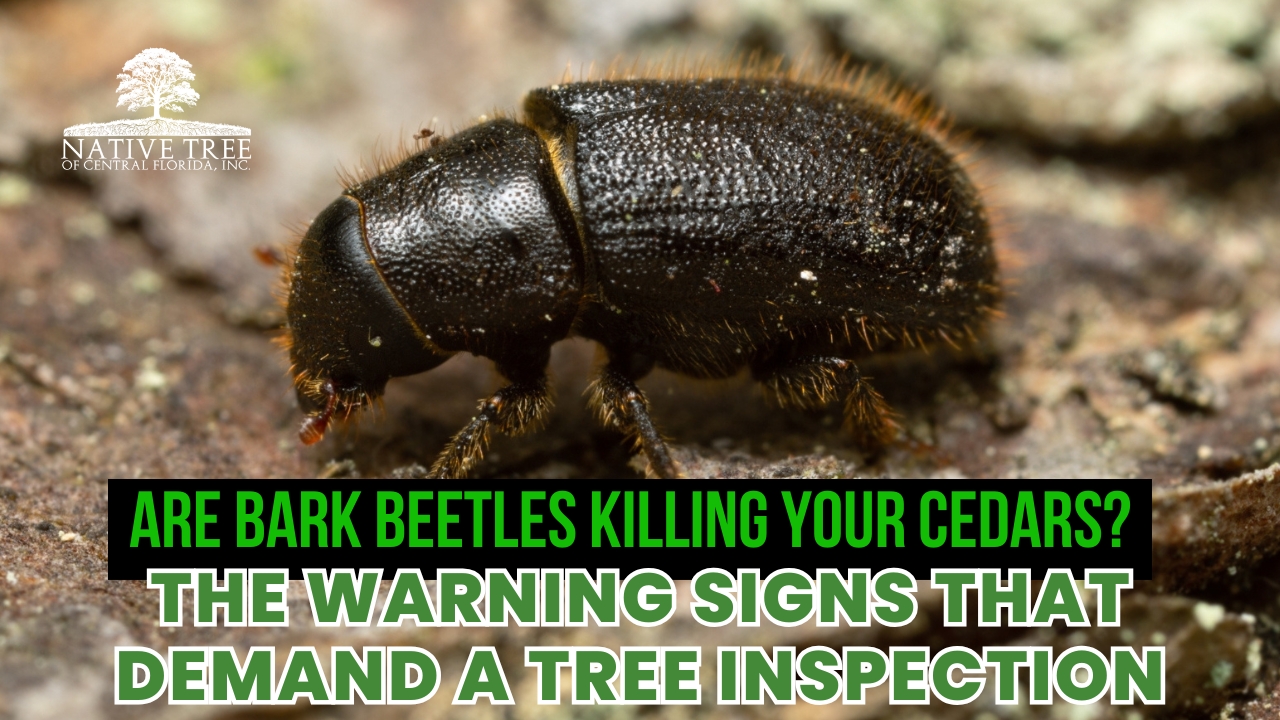
Key Takeaways
- Cedar bark beetles are tiny insects that tunnel beneath the bark, disrupting a cedar tree’s ability to transport nutrients and moisture.
- Early warning signs include tiny entry holes, sawdust-like frass, yellowing or browning foliage, loose bark, and increased woodpecker activity.
- Trees weakened by drought, storm damage, construction, or other environmental stress are more vulnerable to bark beetle infestations.
- Many homeowners mistake bark beetle damage for heat stress or seasonal decline, allowing infestations to worsen before they are discovered.
- A professional tree health inspection can identify the underlying cause of a cedar’s decline and determine whether the tree can be preserved.
- Routine evaluations by ISA-Certified Arborists help detect hidden problems early and support healthier, safer landscapes throughout Ocala and Central Florida.
Yes, bark beetles can kill cedar trees if an infestation is not detected early. These tiny insects tunnel beneath the bark, disrupting the tree’s ability to transport water and nutrients. Common warning signs include small holes in the bark, sawdust-like frass, yellowing or browning foliage, loose or peeling bark, and dying branches. Because bark beetles spend most of their life cycle hidden beneath the bark, a professional tree health inspection is the most reliable way to confirm an infestation, assess the extent of damage, and recommend the appropriate treatment before the tree declines further.
Cedar trees provide year-round beauty, natural privacy, and lasting value to many landscapes across Ocala and Central Florida. Although they’re known for their durability, even healthy cedars can become vulnerable when environmental stress weakens their natural defenses. One of the most overlooked threats is an infestation of bark beetles, which often begins long before homeowners notice visible symptoms.
A professional tree inspection can uncover early signs of bark beetle activity before significant damage occurs, giving homeowners a clearer understanding of their tree’s condition and the most appropriate next steps.
The challenge is that cedar bark beetles spend most of their lives hidden beneath the bark. By the time needles begin turning brown or branches start dying, the infestation may already be well established. Many homeowners assume their cedar is simply reacting to Florida’s summer heat, inconsistent rainfall, or natural aging, allowing the problem to progress unnoticed.
Understanding the warning signs and knowing when it’s time to consult an experienced arborist can make the difference between preserving a valuable landscape tree and losing it altogether.
Table of Contents
What Are Bark Beetles?
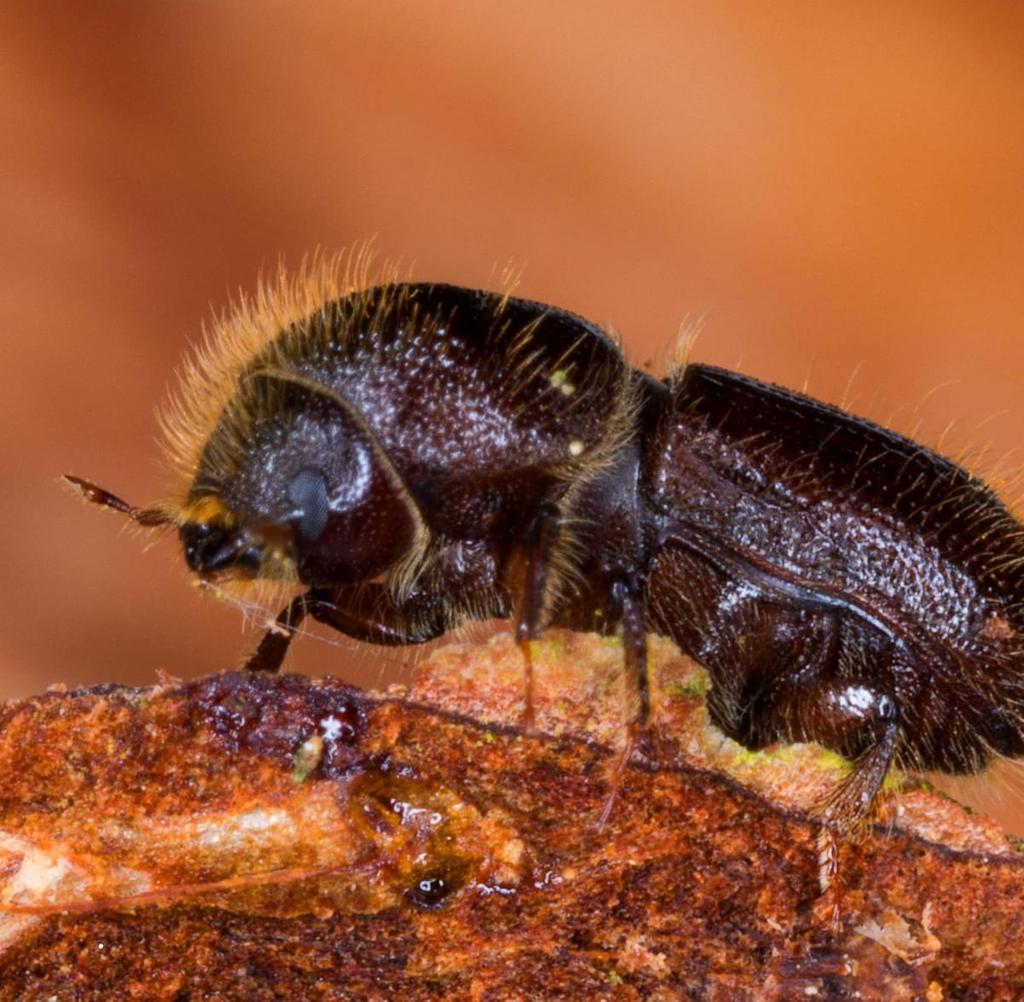
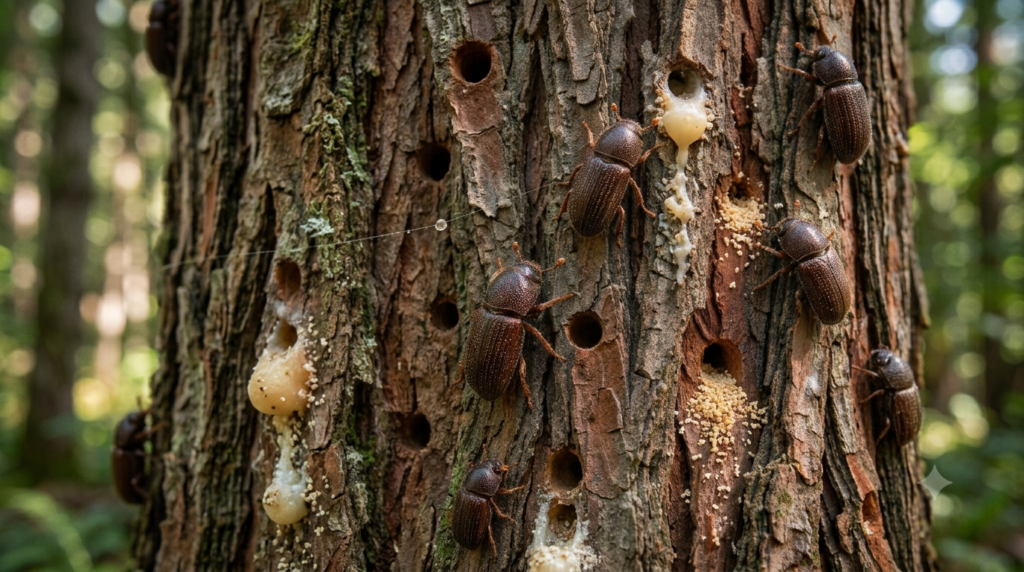
Bark beetles are tiny wood-boring insects that tunnel beneath a tree’s bark, where they feed and reproduce. Most are about the size of a grain of rice and are dark brown to black, making them difficult to spot. Instead of feeding on leaves, they create tunnels in the living tissue beneath the bark, disrupting the tree’s ability to transport water and nutrients. Because they spend most of their life cycle hidden inside the tree, infestations are often discovered only after visible damage appears.
If you’ve ever wondered what bark beetles look like, the answer may surprise you. These insects are incredibly small, usually no larger than a grain of rice, with dark brown to black bodies that blend easily into a tree’s bark. Because they spend most of their life cycle beneath the bark, homeowners rarely see the insects themselves.
Unlike insects that feed on leaves, bark beetles bore through the outer bark and create tunnels within the living tissue beneath the surface. Adult beetles lay their eggs inside these galleries, and once the larvae hatch, they continue feeding as they develop.
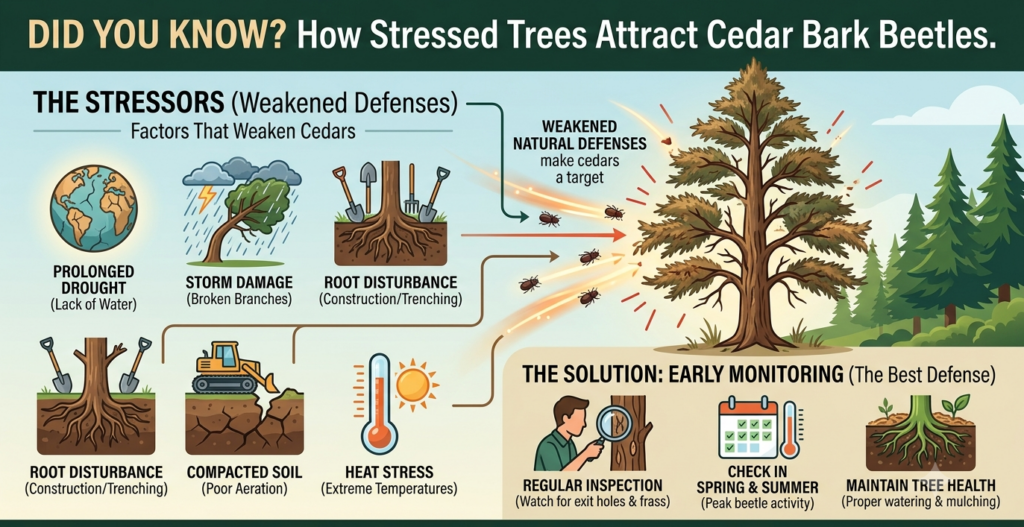
Many species of bark beetles exist across North America, but cedar bark beetles specifically target cedar and closely related conifer species. Trees weakened by drought, construction damage, compacted soil, lightning strikes, or storm-related injuries are often the first to be attacked because their natural defenses have already been compromised. In Central Florida, prolonged heat, periods of drought, and storm damage can place additional stress on cedar trees, making them more vulnerable to bark beetle infestations.
What Do Bark Beetles Eat and Why Does It Matter?
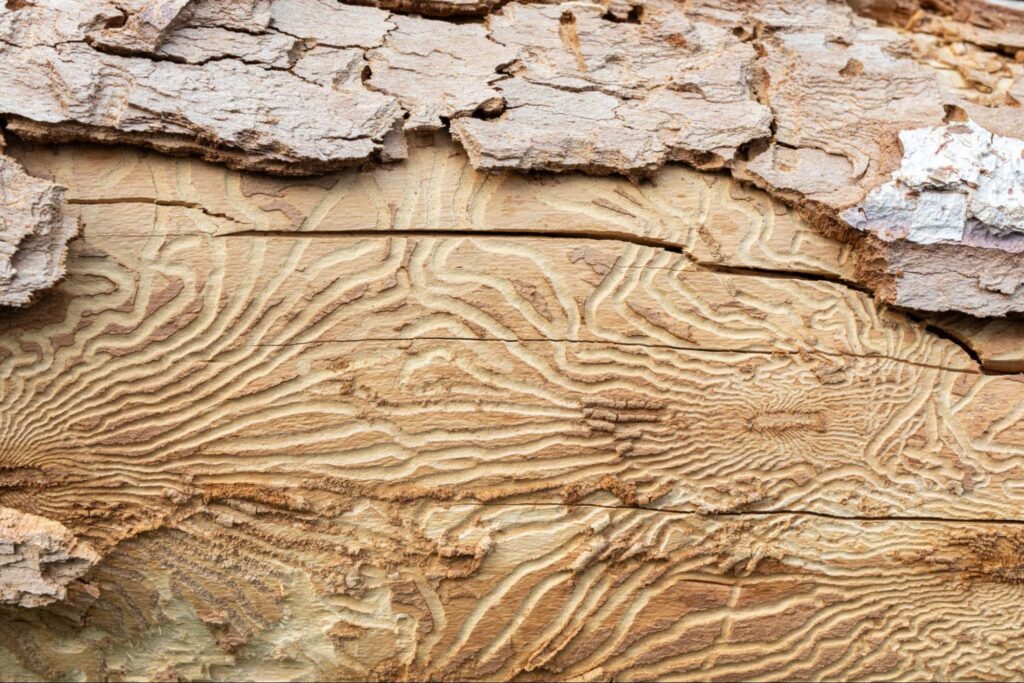
Bark beetles feed on the nutrient-rich tissues beneath a tree’s bark, called the phloem and cambium. These living layers transport water and nutrients throughout the tree. As bark beetles tunnel and feed, they disrupt this transport system, weakening the tree and causing symptoms such as yellowing foliage, dying branches, and eventual decline. Trees already stressed by drought, storm damage, or poor growing conditions are much more vulnerable because they produce less resin to defend against invading beetles.
Rather than feeding on the wood itself, bark beetles consume the nutrient-rich layer just beneath the bark, known as the phloem and cambium. Adult beetles create tunnels where they lay their eggs, and the developing larvae continue feeding within these galleries, expanding the damage.
Healthy cedars can sometimes defend themselves by producing resin that helps repel invading beetles. However, trees under stress often lack the energy to produce enough protective sap, making it much easier for bark beetles to establish an infestation.
In Central Florida, prolonged summer heat, fluctuating rainfall, sandy soils that drain quickly, and repeated storm seasons can all place trees under stress, increasing their susceptibility to bark beetle attacks.
How Do Bark Beetles Kill Trees?
Bark beetles kill trees by disrupting the flow of water and nutrients beneath the bark. As they tunnel through the tree’s living tissues, the damage spreads until branches and foliage can no longer receive the resources they need. In severe infestations, the tree gradually declines and may eventually die if left untreated.
As the infestation progresses, homeowners may notice:
- Yellowing, bronze, or reddish-brown foliage
- Branch dieback beginning near the top of the canopy
- Sparse needles or thinning foliage
- Reduced vigor and slower seasonal growth
- Entire sections of the tree declining
Some bark beetle species also introduce fungi while tunneling beneath the bark. These fungi can further interfere with the tree’s vascular system, accelerating decline and reducing the chances of recovery.
Once extensive girdling occurs beneath the bark, recovery becomes much less likely. Identifying the problem early through a professional tree inspection provides the best opportunity to protect the tree before irreversible damage occurs.
Warning Signs Homeowners Should Never Ignore
Early signs of a bark beetle infestation include small holes in the bark, sawdust-like frass, yellowing or browning foliage, peeling bark, and dying branches. Because bark beetles remain hidden beneath the bark, these symptoms often appear only after damage has already begun. Recognizing multiple warning signs early gives homeowners the best chance to protect their cedar trees before the infestation becomes severe.
A single symptom doesn’t always confirm a bark beetle infestation, but noticing several of these warning signs together is a good reason to schedule a tree health inspection. A professional evaluation can determine whether bark beetles, disease, drought stress, or another underlying issue is causing the tree to decline, allowing the appropriate treatment to begin before the damage becomes more extensive.
Watch for these warning signs:
- Tiny Entry Holes: Small, perfectly round holes scattered across the trunk or major branches are often among the earliest visible indicators that cedar bark beetles have entered the tree.
- Sawdust Around the Base: Fine, sawdust-like material called frass may collect in bark crevices, around the root flare, or near the base of the trunk as beetles excavate tunnels beneath the bark.
- Yellowing or Browning Foliage: Needles that gradually change from healthy green to yellow, reddish-brown, or bronze often indicate that the tree is struggling internally.
- Loose or Peeling Bark: As the tissues beneath the bark die, sections of bark may begin separating from the trunk more easily than usual.
- Increased Woodpecker Activity: Woodpeckers commonly feed on bark beetle larvae hidden beneath the bark. If birds suddenly become frequent visitors to a single cedar tree, it may be worth taking a closer look rather than assuming it’s simply normal wildlife activity.
- Dead Branches in the Upper Canopy: Dieback that begins near the top of the canopy often indicates the infestation has been progressing for some time.
Can You Save a Cedar Tree After a Bark Beetle Infestation?
Yes, a cedar tree can sometimes be saved after a bark beetle infestation if the damage is detected early. Trees with limited bark beetle activity and enough healthy tissue often respond better to treatment than those with extensive canopy decline or severe internal damage. A professional assessment is the best way to determine whether the tree can recover or if removal is the safest option.
During our evaluation, we consider several factors, including:
- The extent of bark beetle activity
- The percentage of canopy decline
- Whether the infestation is active or no longer progressing
- The tree’s age, species, and overall health
- Site conditions, including drainage, soil quality, and nearby construction
- The potential risk to surrounding trees and property
Every tree responds differently. Some cedars benefit from monitoring and supportive care, while others may have declined beyond recovery. Our recommendations are based on the tree’s actual condition, ensuring homeowners receive practical guidance rather than unnecessary services.
Many homeowners also ask, how much does a tree inspection cost before scheduling an evaluation. The answer depends on factors such as the number of trees, their size, accessibility, and the type of assessment required. However, identifying bark beetle activity early can often help prevent more extensive damage and higher tree care costs later.
How to Get Rid of Bark Beetles: Why Professional Treatment Works Best
The most effective way to get rid of bark beetles is through early professional evaluation and targeted tree care. Because bark beetles live and reproduce beneath the bark, surface insecticide sprays are often ineffective. Successful treatment depends on identifying the extent of the infestation, reducing tree stress, and taking the appropriate action before nearby trees become affected.
Professional tree inspection services help arborists determine the severity of the infestation, identify underlying factors contributing to tree decline, and recommend the most effective treatment plan.
Depending on the condition of the tree, an arborist may recommend:
- Improving overall tree health by reducing environmental stress
- Watering properly during extended dry periods
- Applying mulch to conserve soil moisture and regulate root temperatures
- Pruning dead or heavily infested branches when appropriate
- Removing severely infested trees that threaten nearby healthy trees
- Monitoring surrounding trees for early signs of bark beetle activity
Homeowners should also avoid practices that increase tree stress, such as excessive pruning, damaging roots during landscaping projects, or striking the trunk with lawn equipment. Even minor injuries can weaken a cedar’s natural defenses, making it easier for bark beetles to establish new infestations.
Did You Know?
Cedar bark beetles often target trees that are already under stress. Factors such as prolonged drought, storm damage, root disturbance, or compacted soil can weaken a cedar’s natural defenses, making early monitoring one of the most effective ways to protect your landscape.
Conclusion
Every healthy landscape begins with an accurate diagnosis.
Cedar bark beetles may be small, but identifying them early can make a significant difference in protecting valuable trees. Whether the issue is insect activity, disease, or environmental stress, understanding the true cause allows homeowners to make informed decisions before problems become more costly or hazardous.
If you’ve noticed changes in your cedar trees, or simply want peace of mind about their condition, we’re here to provide honest evaluations and practical guidance. Our ISA-Certified Arborists provide thorough evaluations, honest recommendations, and science-based solutions tailored to the growing conditions of Ocala and Central Florida. Whether your trees need continued monitoring, treatment recommendations, or a complete health evaluation, we’ll help you make informed decisions that protect your landscape for years to come.
Protect Your Cedar Trees Before It’s Too Late
Bark beetles can cause serious damage long before the warning signs become obvious. If you’ve noticed tiny holes in the bark, sawdust-like frass, thinning foliage, or sections of your cedar turning brown, it’s time to schedule a professional tree inspection. Early detection can make the difference between saving your tree and losing it.
Call us today at (352) 561-3626 or reach us via e-mail at sales@nativetreecf.com to schedule your professional tree service.
Frequently Asked Questions
How much does a tree inspection cost?
The cost of a tree inspection depends on several factors, including the number of trees being evaluated, their size, accessibility, and whether you need a general tree health inspection or a more detailed risk assessment. Every property is different, so we recommend scheduling an evaluation to receive an accurate recommendation based on your trees’ specific condition.
Are bark beetles only a problem for dying trees?
No. Although bark beetles are more likely to attack stressed or weakened trees, healthy cedars can also become vulnerable after drought, storm damage, root disturbance, soil compaction, or construction activity. Keeping trees healthy and identifying problems early can significantly reduce the risk of infestation.
Can bark beetles spread to other trees?
Yes. Adult bark beetles can fly from one tree to another, especially when nearby trees are stressed or already declining. If one cedar becomes heavily infested, neighboring trees may also be at risk. Early detection and timely management help reduce the likelihood of the infestation spreading throughout your landscape.
Will insecticide eliminate bark beetles?
Not always. Since bark beetles spend most of their life cycle beneath the bark, many over-the-counter insecticides have limited effectiveness once an infestation is established. Successful management usually involves improving tree health, addressing environmental stress, and determining whether treatment, monitoring, or removal is the most appropriate solution.
Should I remove my cedar tree immediately if I suspect bark beetles?
Not necessarily. Every tree responds differently depending on the extent of the infestation and its overall condition. Some cedars can recover when problems are identified early, while others may already have extensive internal damage. A professional evaluation can determine whether preservation is possible or whether removal is the safest recommendation.