
Key Takeaways
- Choosing the right tree for your property is about more than creating shade, it also improves comfort, curb appeal, and long-term landscape value.
- Central Florida’s heat, humidity, sandy soils, and storm season make species selection especially important.
- Fast-growing trees can provide quicker relief from the sun but still require proper planning and structural pruning.
- The best results come from planting the right tree in the right location, with enough space for its mature size.
- Professional evaluations help homeowners avoid future problems such as root conflicts, storm damage, and costly removals.
The best shade trees for Central Florida homes are hardy species like Live Oak, Southern Magnolia, Bald Cypress, Red Maple, Shumard Oak, and Florida Maple. Living in Florida means dealing with intense summer heat, high humidity, and long afternoons spent looking for relief from the sun.
At Native Tree of Central Florida, we help homeowners select, plant, and maintain the ideal canopy. This guide covers the top ten shade trees that thrive in Ocala and surrounding regions.
Table of Contents
Planting with the Future in Mind
Planting a tree is one of the longest-lasting investments you can make in your landscape. While every young tree may look similar at the nursery, each species matures at a different rate, develops its own root system, and responds differently to Central Florida’s climate, soil, and weather conditions.
A thoughtfully selected tree can:
- Create natural shade for patios and outdoor living areas
- Reduce heat around your home and improve energy efficiency
- Increase curb appeal and property value
- Provide habitat for birds, butterflies, and other beneficial wildlife
- Add privacy and enhance outdoor living spaces
- Beautify your landscape for generations
However, selecting the wrong tree, or planting the right tree in the wrong location, can lead to costly problems as it matures. Overcrowding, excessive pruning, root damage to sidewalks or foundations, and conflicts with driveways, roofs, or overhead utility lines are all common issues that can often be avoided with proper planning.
Before planting, think beyond today’s small nursery tree and consider what it will look like 20, 30, or even 50 years from now. Choosing a species that fits your property’s available space, growing conditions, and long-term landscaping goals helps create a healthier, safer, and lower-maintenance landscape for years to come.
What Makes a Great Shade Tree?
Many homeowners ask, what are the best shade trees for homes?
There’s no one-size-fits-all answer. The ideal tree depends on your property’s available space, soil conditions, drainage, and how you plan to use your outdoor areas.
Generally, the best shade trees share several characteristics:
- Wide, balanced canopies
- Strong branch structure
- Adaptability to Florida’s climate
- Good tolerance for sandy soils
- Resistance to common pests and diseases
- Long life expectancy
- Reliable performance during storm season
Instead of focusing only on growth speed, it’s important to consider how a tree will mature over the coming decades.
Top 10 Shade Trees That Thrive in Central Florida
1. Live Oak (Quercus virginiana)
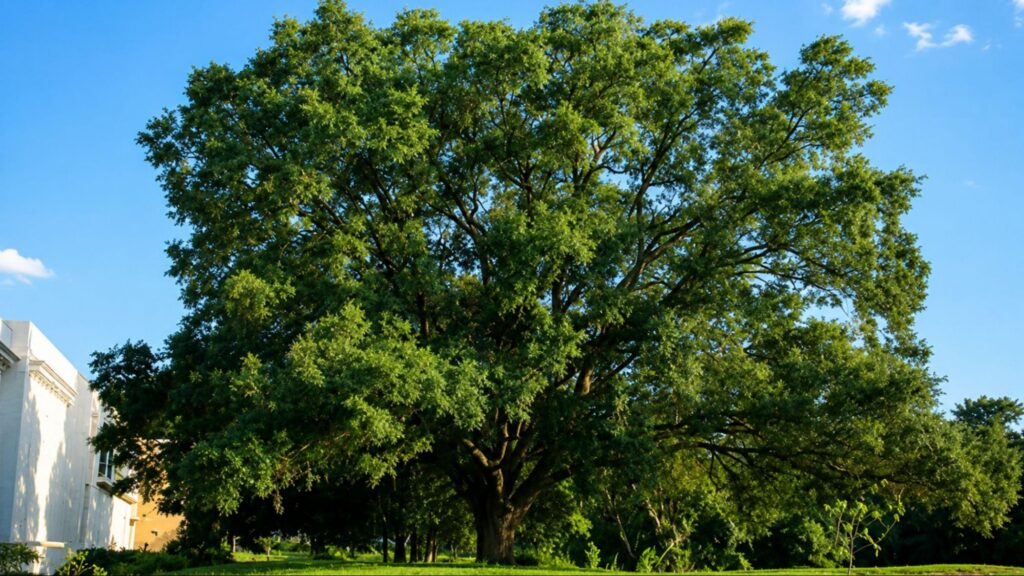
The Live Oak is one of Florida’s most recognizable and dependable landscape trees. Known for its massive canopy and graceful branching, it provides exceptional shade while becoming a defining feature of residential properties.
Once established, Live Oaks tolerate Florida’s heat, humidity, and periodic drought remarkably well. Their extensive root systems also help them withstand many storm conditions better than many other large tree species.
Best for:
- Large front yards
- Estate-sized properties
- Long-term landscape planning
- Natural cooling around homes
Professional Insight
Although young Live Oaks appear manageable, they eventually spread 60 to 100 feet wide. Proper placement during planting is essential to avoid future conflicts with roofs, driveways, and neighboring properties.
2. Southern Magnolia (Magnolia grandiflora)
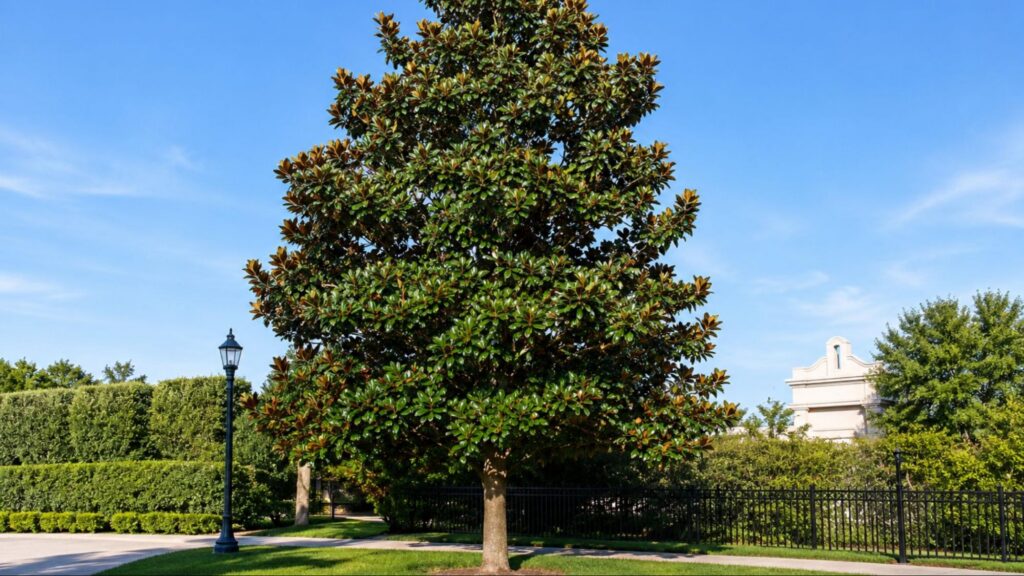
Southern Magnolia is admired for its glossy evergreen leaves and large, fragrant white flowers that bloom throughout the warmer months.
Beyond its ornamental appeal, this native tree develops a dense canopy that offers welcome shade throughout the year. Because it retains its foliage, it also adds privacy and visual interest even during winter.
Best for:
- Medium to large residential landscapes
- Accent trees
- Year-round greenery
- Homes seeking both beauty and shade
3. Bald Cypress (Taxodium distichum)
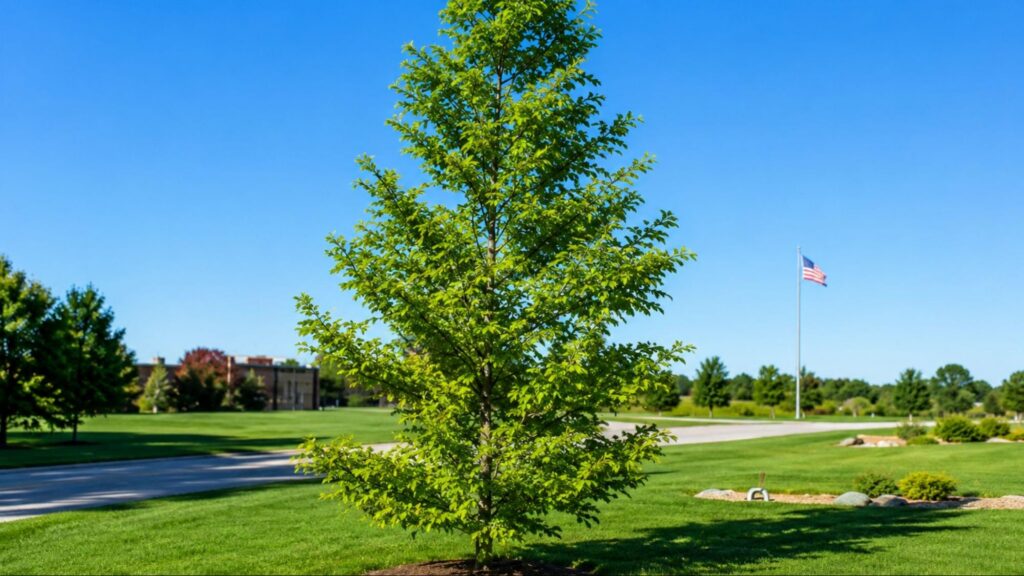
Despite its association with wetlands, Bald Cypress adapts surprisingly well to many residential landscapes throughout Central Florida when planted in suitable conditions.
Its upright growth habit and soft, feathery foliage create filtered shade while maintaining excellent structural strength. During fall, its foliage turns a beautiful bronze color before naturally shedding.
Best for:
- Larger properties
- Low-lying or moisture-retaining areas
- Homeowners looking for excellent storm resilience
Did You Know?
Bald Cypress is one of Florida’s most wind-tolerant native trees, making it an excellent choice for homeowners preparing their landscape for hurricane season.
4. Red Maple (Acer rubrum)
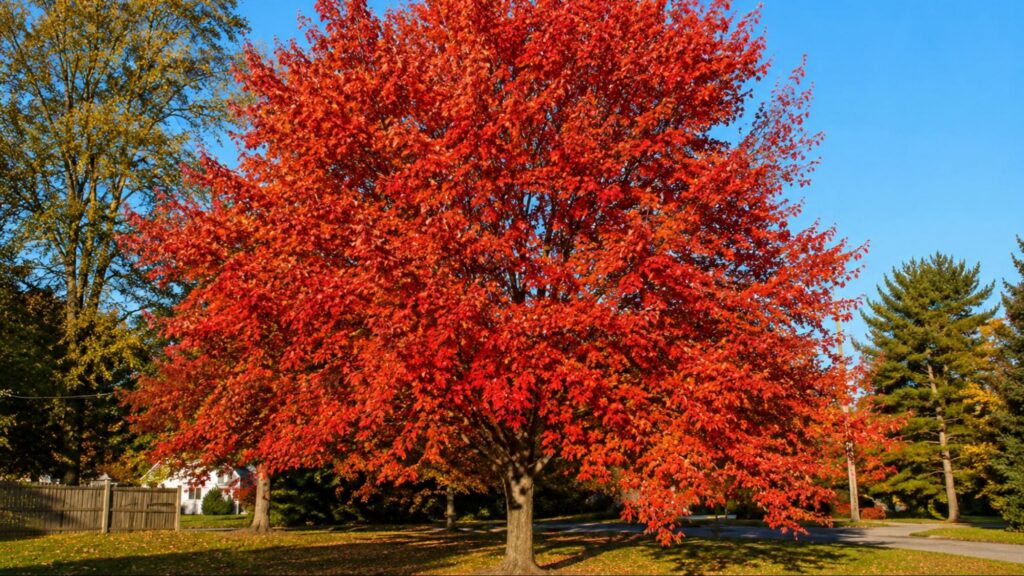
Many people don’t associate vibrant fall color with Florida, but Red Maple proves otherwise. This adaptable native tree produces beautiful seasonal foliage while providing a broad canopy that helps cool outdoor spaces.
It establishes relatively quickly and performs well in many areas throughout Ocala when planted in locations with appropriate soil moisture.
Best for:
- Homeowners wanting seasonal color
- Medium to large landscapes
- Natural wildlife habitat
Because Red Maples grow at a moderate pace, they’re often considered one of the more balanced options for homeowners seeking beauty without sacrificing structural quality.
5. Shumard Oak (Quercus shumardii)
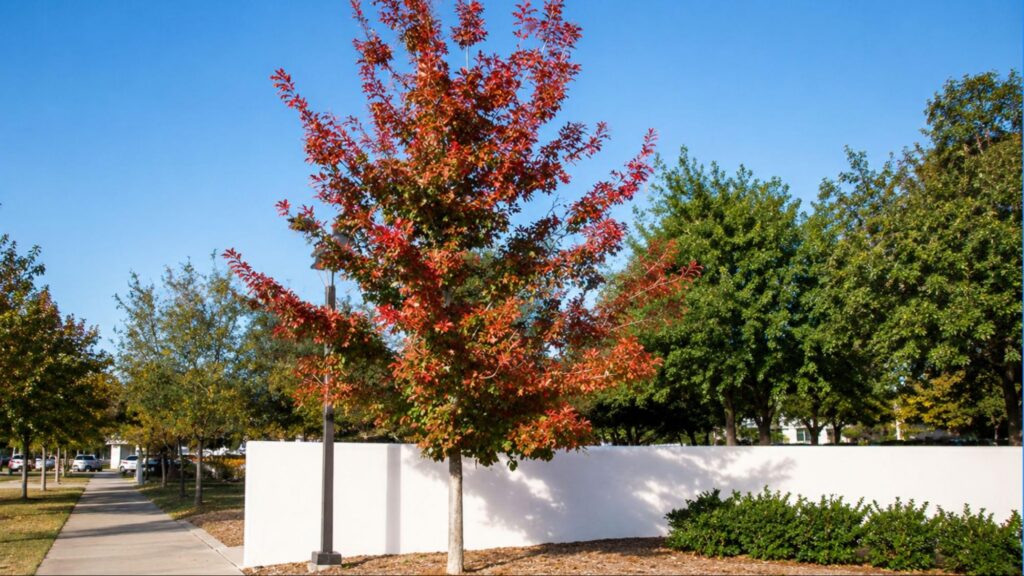
If you’re looking for a tree that combines durability with relatively faster growth, Shumard Oak is an excellent choice. It develops a broad, symmetrical canopy while adapting well to Central Florida’s climate.
Compared to some slower-growing oak species, Shumard Oak establishes more quickly without sacrificing long-term strength, making it a popular option for homeowners seeking fast growing shade trees that still provide lasting value.
Best for:
- Large residential landscapes
- Backyard gathering spaces
- Long-term shade planning
Arborist Tip
Even faster-growing trees benefit from early structural pruning. Proper branch development during the first several years helps improve stability and reduces future maintenance needs.
6. Laurel Oak (Quercus laurifolia)
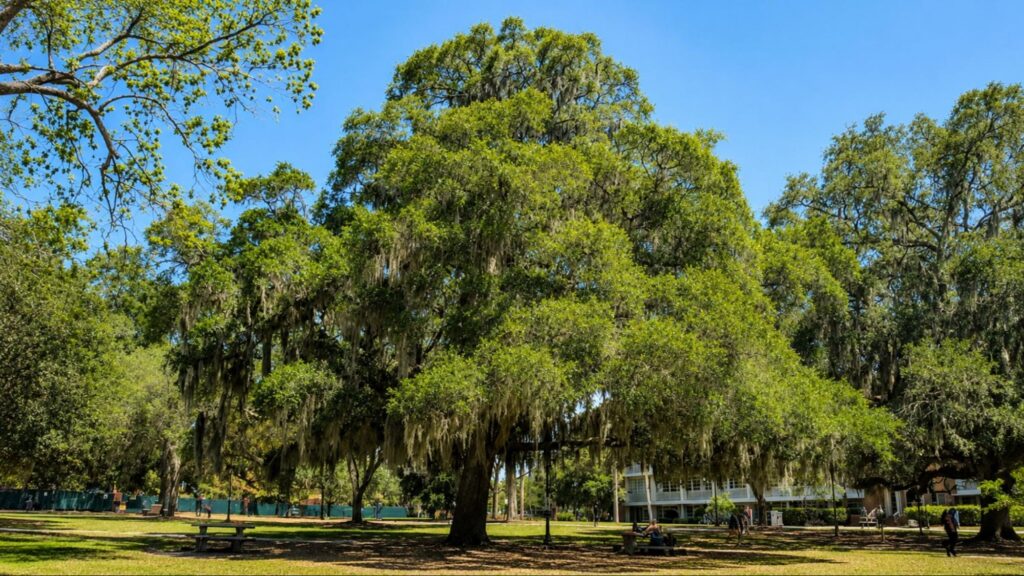
Laurel Oak is a familiar sight throughout Ocala and many other parts of Central Florida because it grows quickly and forms a broad, attractive canopy. Homeowners often choose it when they want faster shade without waiting decades for a mature tree.
Its rounded shape makes it ideal for creating comfortable outdoor living spaces, but it’s important to understand that Laurel Oaks generally have a shorter lifespan than Live Oaks and benefit from regular structural evaluations as they mature.
Best for:
- Large residential lots
- Backyard shade
- Properties with adequate planting space
Professional Insight
Because Laurel Oaks can become more susceptible to structural issues as they age, periodic inspections by an ISA-Certified Arborist help identify potential concerns before they become safety hazards.
7. Chinese Elm (Ulmus parvifolia)
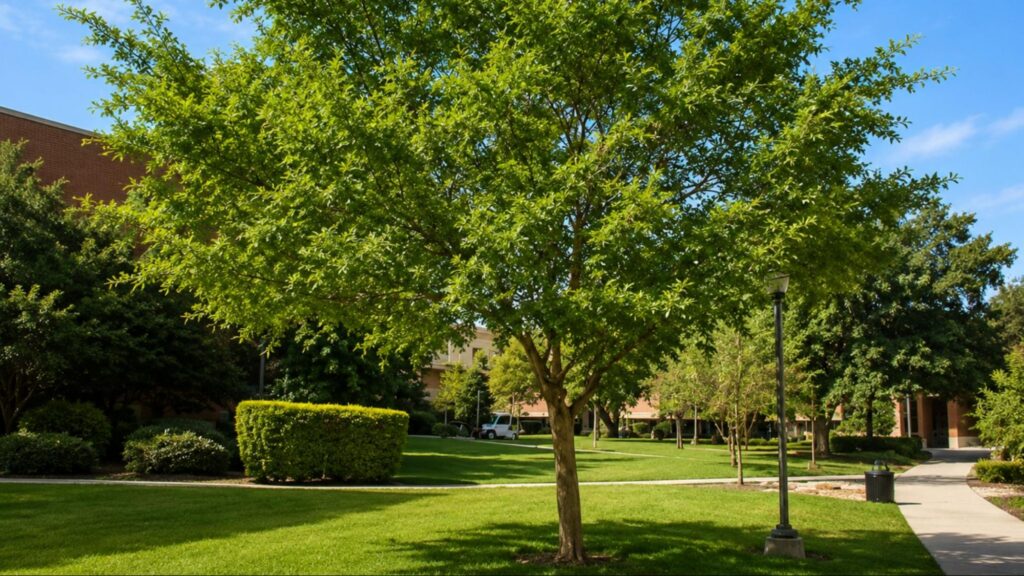
Chinese Elm has become a favorite landscape tree because of its adaptability, graceful branching, and attractive exfoliating bark. It develops a rounded canopy that provides generous shade while fitting comfortably into many residential landscapes.
This species tolerates heat, drought, and a variety of soil conditions, making it a dependable choice for many Central Florida homeowners.
Best for:
- Medium-sized yards
- Residential landscapes
- Homeowners wanting moderate growth with attractive appearance
8. River Birch (Betula nigra)
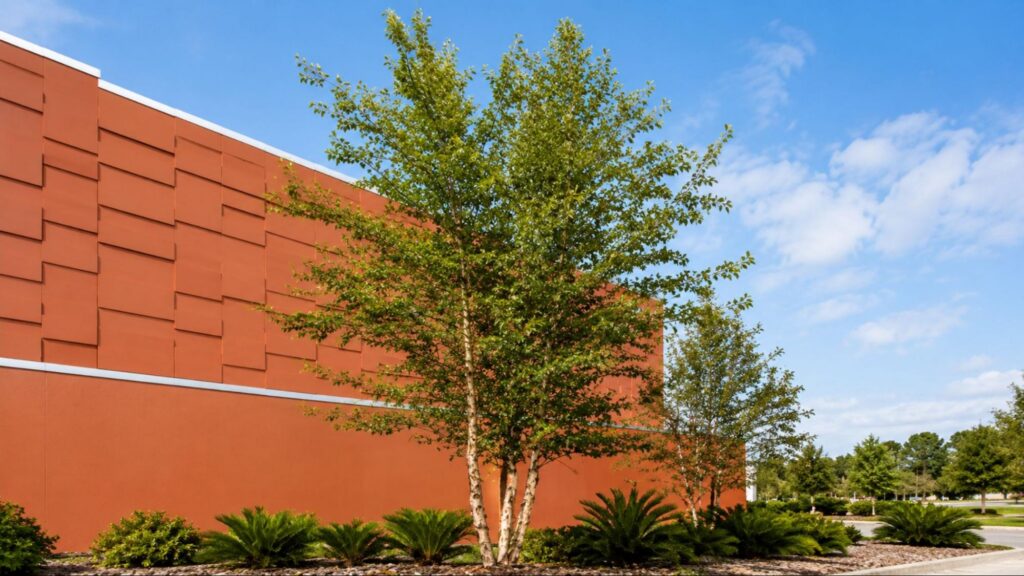
River Birch stands out with its peeling bark and soft, airy foliage that creates filtered shade without making a yard feel overly enclosed.
Although it naturally grows near waterways, River Birch performs well in residential landscapes that receive consistent moisture and proper site preparation.
Best for:
- Landscapes with irrigation
- Natural-style gardens
- Accent shade trees
Because this tree prefers more moisture than many Florida natives, proper watering during establishment is especially important.
9. Tulip Poplar (Liriodendron tulipifera)
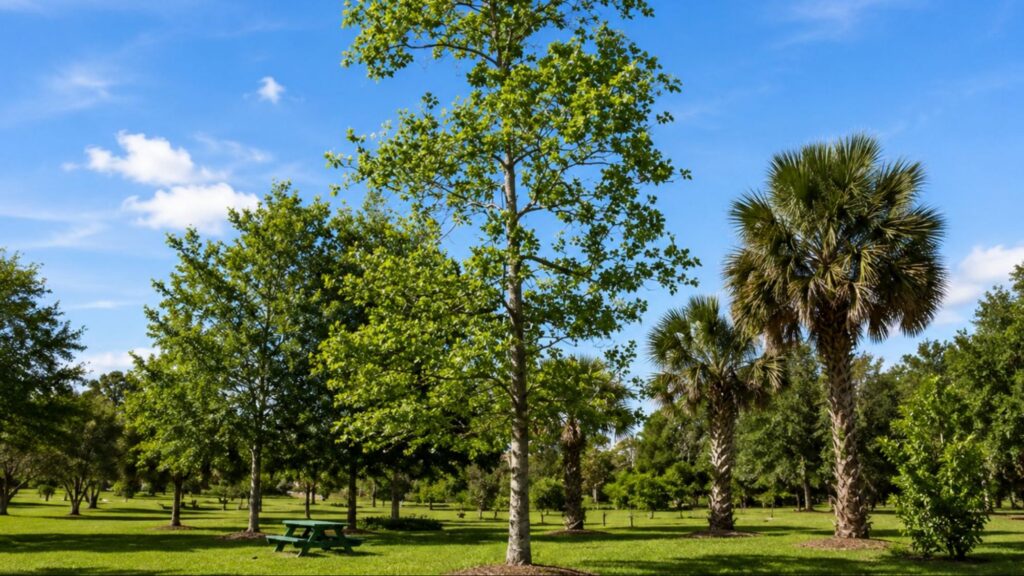
Tulip Poplar is valued for its tall, upright form and unique tulip-shaped flowers that appear during the growing season. It grows relatively quickly and eventually develops a broad canopy that offers welcome shade for larger properties.
Its straight trunk and symmetrical growth also make it a striking focal point within thoughtfully designed landscapes.
Best for:
- Spacious residential lots
- Large backyards
- Homeowners seeking seasonal blooms
10. American Hornbeam (Carpinus caroliniana)
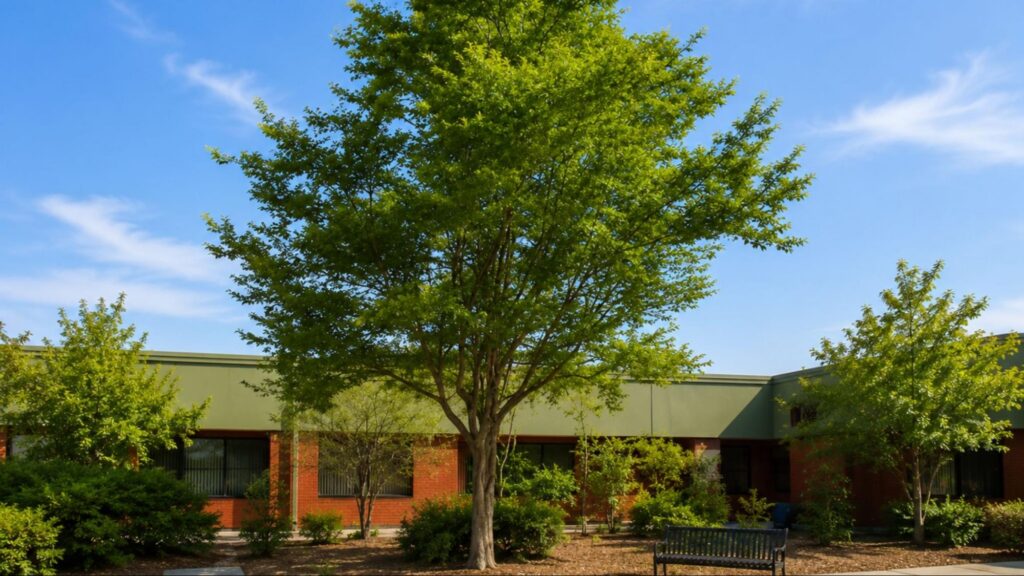
Sometimes called Musclewood because of its smooth, muscular-looking trunk, American Hornbeam is an excellent native tree for homeowners with smaller properties.
Although it doesn’t grow as large as Live Oak or Bald Cypress, it still provides comfortable shade while adding outstanding ornamental value throughout the year.
Best for:
- Smaller landscapes
- Partial shade locations
- Native landscape designs
Don’t Just Plant a Tree – Plant It in the Right Place
One of the biggest mistakes homeowners make isn’t choosing the wrong species, it’s choosing the wrong location.
A young tree from the nursery may look small today, but many mature shade trees eventually spread 40 to 80 feet or more. Planting too close to a home, driveway, septic system, pool, or overhead utility lines can create expensive maintenance issues years down the road.
Before planting, consider:
- Mature height and canopy spread
- Root growth potential
- Distance from structures
- Drainage and soil conditions
- Sunlight exposure
- Future landscape plans
Taking time to plan now can help avoid unnecessary pruning or premature tree removal later.
A Practical Tree Care Guide for Long-Term Success
Choosing the right tree is only the beginning. A healthy landscape also depends on consistent maintenance throughout each stage of growth.
A practical tree care guide includes:
- Watering deeply during the establishment period
- Applying mulch correctly without piling it against the trunk
- Monitoring for pests or disease
- Scheduling structural pruning while trees are young
- Removing damaged or crossing branches when necessary
- Inspecting trees before hurricane season
Routine tree care not only improves appearance but also encourages stronger branch development and healthier root systems.
Conclusion
The best landscapes are built with long-term thinking. Selecting the right tree, planting it in the proper location, and caring for it as it matures creates benefits that extend far beyond cooling your yard. You’ll enjoy greater curb appeal, healthier trees, improved outdoor comfort, and a landscape that’s better prepared for Central Florida’s changing weather.
Making the right choice today can save years of unnecessary maintenance tomorrow. That’s the approach we take at Native Tree of Central Florida. By combining local expertise, ISA-Certified Arborist knowledge, and a fully insured team, we provide honest evaluations and practical recommendations that put your property’s long-term health first. Whether you’re adding new shade trees or caring for established ones, we’re here to help you make confident decisions that benefit your landscape for years to come.
If you’d like to continue learning about selecting the best shade trees for Florida landscapes, reputable resources such as Moon Valley Nurseries and the University of Florida IFAS Extension offer additional research and planting guidance. When you’re ready for personalized recommendations, we’re here to help you make the right choice for your property.
Cool Down Your Yard with the Perfect Shade Tree!
Florida’s sunshine is beautiful, but without enough shade, your yard can become uncomfortably hot. Planting the right shade trees not only lowers outdoor temperatures but also boosts curb appeal, improves energy efficiency, and creates a healthier landscape for your family to enjoy.
Call us today at (352) 561-3626 or reach us via e-mail at sales@nativetreecf.com to schedule your professional tree service.
Frequently Asked Questions
Which shade tree grows the fastest in Central Florida?
Several species establish relatively quickly, including Laurel Oak, Shumard Oak, and Tulip Poplar. However, the fastest-growing tree isn’t always the best choice. Consider mature size, lifespan, storm resistance, and maintenance requirements before planting.
How do I choose the best shade tree for my backyard?
The best shade tree depends on your property’s size, soil conditions, available sunlight, drainage, and long-term landscaping goals. Some trees develop expansive canopies that require ample growing space, while others are better suited for smaller yards. An ISA-Certified Arborist can evaluate your landscape and recommend a species that provides lasting shade while minimizing future maintenance and potential conflicts.
Do newly planted shade trees need frequent watering?
Yes. Newly planted trees require consistent watering while establishing their root systems. Once established, many Florida-friendly species become much more drought tolerant.
Why should I have an arborist evaluate my property before planting?
An ISA-Certified Arborist considers soil conditions, available space, drainage, sunlight, and mature tree size before making recommendations. This helps prevent future conflicts with structures, utilities, and neighboring trees.