
Key Takeaways
- A hurricane cut is not recommended for preparing palm trees for a storm. Removing most healthy fronds can stress the palm and may increase its vulnerability to crown damage.
- Healthy green palm fronds help the tree produce energy, so they should generally be preserved rather than removed before hurricane season.
- Proper palm tree pruning focuses on removing dead, broken, or hazardous fronds, not stripping away healthy foliage.
- Palm trees have natural characteristics that allow many species to tolerate strong winds, but their storm resistance varies by species, health, growing conditions, and storm intensity.
- In Ocala and Central Florida, hurricane preparation should focus on the palm’s overall health, structure, surrounding hazards, and growing conditions rather than giving it a drastic haircut.
- Tall, damaged, leaning, or hazardous palms should be evaluated by an experienced professional, particularly when they are near homes, driveways, walkways, or other areas where failure could cause injury or property damage.
If you live in Ocala or anywhere in Central Florida, you may have heard that giving your palm tree a hurricane cut can help it survive a major storm. It sounds logical: fewer leaves should mean less wind resistance. But that’s not how healthy palms are designed to handle storms.
A hurricane cut is not a recommended way to prepare a palm tree for a hurricane. Removing most of a palm’s healthy green fronds can reduce the foliage it needs to produce energy and may increase its vulnerability to crown damage. Proper hurricane preparation focuses on maintaining the palm’s health, removing genuinely dead or hazardous material, and addressing structural risks before storm season.
Let’s look at why palms can withstand strong winds, what proper palm pruning actually involves, and what Ocala homeowners should do before and after a storm.
Table of Contents
What Is a Hurricane Cut on a Palm Tree?
A hurricane cut is a severe form of palm pruning in which most of the palm’s fronds are removed, leaving only a small cluster of younger leaves near the top. It is intended to reduce wind resistance, but severe pruning is not recommended as a hurricane-preparation method.
The idea is understandable. A large palm canopy catches wind, so removing much of it seems like it should make the tree safer.
The problem is that the palm’s green fronds are not simply extra weight.
They are living parts of the plant that capture sunlight and produce the energy the palm needs for growth, maintenance, and recovery.
Severe pruning can therefore create unnecessary stress while removing foliage the palm needs to remain healthy.
UF/IFAS guidance specifically advises against removing healthy green fronds simply to prepare palms for hurricanes.
Why Does a Hurricane Cut Look So Different?
A severely pruned palm may have only a small “tuft” of leaves remaining at the top. You may also hear this called a “pineapple cut.”
It can look neat and intentional, but appearance doesn’t necessarily tell you whether the palm is healthier or better prepared for a storm.
In fact, research following major Florida hurricanes found that severely pruned palms experienced greater crown breakage than palms that retained more of their natural canopy.
The takeaway is simple:
A palm that has fewer leaves is not automatically a palm that is safer in a hurricane.
Why Can Palm Trees Survive Strong Winds?
Palm trees have natural characteristics that help many species tolerate strong winds. Their flexible structure allows the crown to move with the wind rather than behaving like a rigid structure that must resist every force.
This is one reason you may see palm trees bend dramatically during a storm and still recover afterward.
However, that does not mean every palm will survive every hurricane.
Wind resistance varies depending on:
- Palm species
- Overall tree health
- Age and size
- Root condition
- Previous damage
- Growing conditions
- Exposure to wind
- Storm intensity
Some palm species are naturally more wind-resistant than others. Sabal palms, for example, have demonstrated strong wind resistance in Florida, while some other commonly planted palms can be more vulnerable.
That’s why we don’t recommend treating every palm the same way.
The Palm’s Crown Is Important
The growing point at the center of a palm’s crown is particularly important because palms generally have a single central growing bud.
Severe damage to this area can permanently affect the palm.
Aggressive pruning changes the natural structure of the crown and removes foliage that can contribute to the palm’s health.
The goal of palm pruning should therefore be proper maintenance and hazard reduction—not trying to redesign the palm for a hurricane.
Does Palm Tree Pruning Help Before Hurricane Season?
Yes, when pruning addresses a genuine maintenance or safety concern. But removing healthy green fronds simply because hurricane season is approaching is unnecessary and can be harmful.
Before a storm, homeowners should look for:
- Completely dead fronds
- Broken or damaged fronds
- Material that presents a safety hazard
- Dead fruit or seed structures when appropriate
- Growth interfering with structures or other areas of the property
The important distinction is between removing dead or hazardous material and stripping away healthy foliage.
Healthy green fronds should generally be left intact.
What About Yellow Palm Fronds?
A yellowing frond is not automatically a dead frond.
If it still contains green tissue, it may still be contributing nutrients to the palm. Removing it too early can take away resources the plant could otherwise use.
Yellowing can also have different causes, including natural aging, nutrient problems, water stress, pests, or disease.
If several fronds are turning yellow or the palm’s appearance is changing significantly, it’s better to determine the cause instead of simply cutting everything that looks unhealthy.
How Much Should You Prune From a Palm Tree?
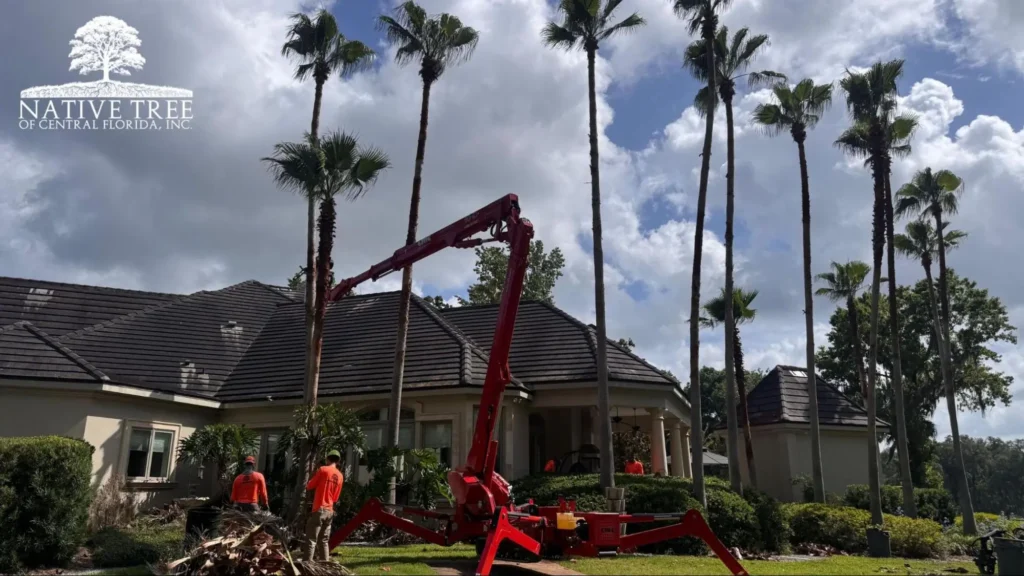
Palm pruning should be limited to fronds and other material that genuinely need to be removed. Healthy green fronds should generally remain on the tree.
One commonly used guideline is the 9 o’clock-to-3 o’clock rule. Healthy fronds growing above that horizontal line should generally be left alone rather than removed simply for appearance.
The goal is not to make the palm look as bare as possible.
The goal is to maintain the palm’s natural structure while removing material that is dead, damaged, or hazardous.
This is especially important during Central Florida’s storm season, when homeowners may be tempted to schedule aggressive pruning as soon as hurricane forecasts begin appearing.
Good tree care starts with the condition of the tree, not the weather forecast.
How Should Homeowners Prepare Palm Trees for a Hurricane?
The best hurricane preparation for a palm is proactive maintenance and assessment, not a drastic haircut.
For homeowners in Ocala and throughout Central Florida, we recommend looking at the entire palm and its surroundings before storm season.
1. Check the Palm’s Overall Health
Look for unusual discoloration, declining growth, disease symptoms, pest activity, or other changes that could indicate the palm is already under stress.
A healthy palm is a better starting point before severe weather.
2. Look for Dead or Broken Fronds
Dead or damaged material may become a hazard during high winds.
Removing appropriate material before a storm can help address an existing maintenance concern without unnecessarily removing healthy foliage.
3. Look at the Trunk
A leaning, damaged, or otherwise compromised palm deserves closer attention.
Don’t assume that pruning the canopy will solve a structural problem.
4. Consider What Is Around the Palm
Location matters.
A palm standing near an open lawn is different from one positioned directly beside:
- A house
- A driveway
- A pool
- A walkway
- A vehicle
- Outdoor living areas
The potential consequences of failure should always be part of a tree-risk assessment.
5. Don’t Wait Until the Storm Is Already Approaching
Storm preparation is easier when there is time to make thoughtful decisions.
Waiting until a hurricane is several days away can limit your options, especially when tree-service companies are responding to a large number of emergency calls.
Can Homeowners Prune Palm Trees Themselves?
Small, easily accessible palms may require only limited maintenance, but tall palms and palms located near homes, utility lines, roads, or other hazards are better handled by trained professionals.
Palm pruning can look deceptively simple from the ground. Once you are working several feet above the ground, the risks change significantly.
Professional pruning also involves more than cutting leaves. Someone needs to recognize which fronds should remain, identify signs of disease or structural problems, and determine whether pruning is even the appropriate solution.
For tall or difficult-to-access palms, an ISA-Certified Arborist can evaluate the tree and recommend the appropriate course of action. If you need professional palm tree pruning or an assessment in Central Florida, contact Native Tree of Central Florida to discuss your tree care needs.
What Should You Do If a Palm Is Damaged During a Hurricane?
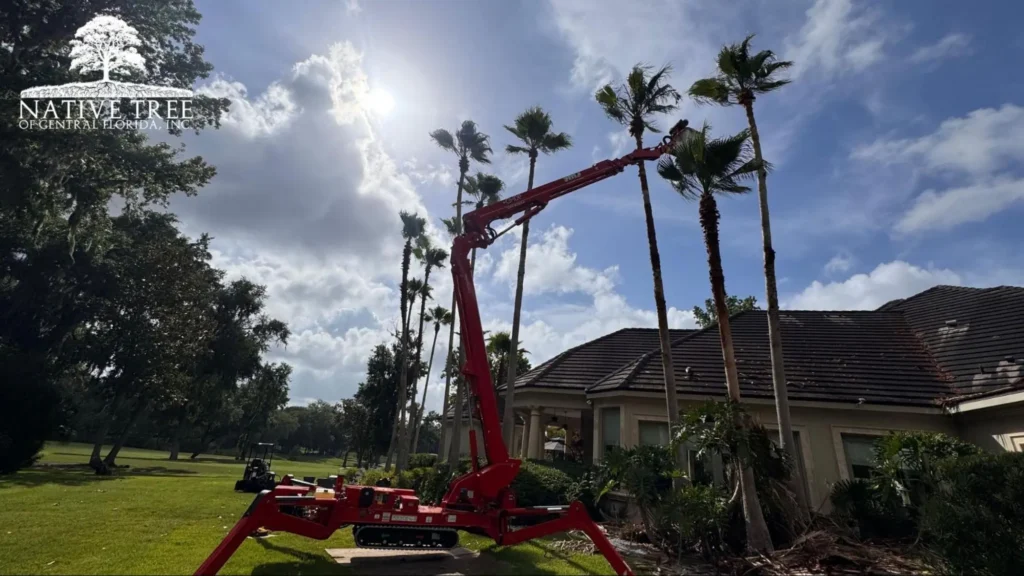
After a storm, don’t assume that every damaged palm needs to be removed. Many palms can recover from significant wind damage, depending on the extent of the injury and the condition of the tree.
However, homeowners should take extra care when they see:
- A severely leaning trunk
- Major crown damage
- Hanging or broken fronds over structures
- A damaged growing point
- Signs that the palm has shifted or partially uprooted
- Significant trunk damage
- Storm debris caught in the crown
Never climb a storm-damaged palm to investigate or remove debris yourself.
A damaged tree can be unpredictable, and working at height adds another serious safety risk.
If a palm has become hazardous following a storm, professional emergency tree service may be necessary to safely assess and address the situation.
The Best Hurricane Preparation Is a Healthy Palm
A hurricane cut palm tree may look like it has been specially prepared for severe weather, but removing most of its healthy canopy does not make the palm hurricane-proof.
In many cases, severe pruning simply removes healthy foliage that the palm needs to produce energy and recover from stress.
For Ocala and Central Florida homeowners, a better approach is to think beyond the canopy:
Health + structure + roots + location + surrounding hazards = better storm preparation.
We believe homeowners deserve an honest explanation of what their trees actually need, not a recommendation to prune simply because hurricane season is approaching.
When a palm needs pruning, we focus on appropriate cuts and safe work practices. When it doesn’t need pruning, sometimes the best advice is to leave the healthy canopy alone.
For tall palms, storm-damaged palms, or trees located close to homes and other structures, having the tree evaluated by an ISA-Certified Arborist can help you make a safer, more informed decision.
Native Tree of Central Florida is fully insured and our team has extensive experience caring for trees and palms throughout Ocala and Central Florida. Our goal is simple: provide professional recommendations that put tree health and homeowner safety first.
If you’re unsure whether a palm on your property actually needs pruning before storm season, an assessment can help you understand what should, and should not be done.
Final Thoughts: Prepare Your Palm Before the Storm
Understanding how palm trees in a hurricane respond to severe weather can help homeowners make better decisions before storm season. Rather than removing healthy fronds, focus on proper maintenance, tree health, structural concerns, and potential hazards around the property.
If you’re unsure whether your palm needs pruning or a professional assessment, Native Tree of Central Florida can help. Our fully insured team serves Ocala and Central Florida with professional tree care focused on safety and long-term tree health.
Keep Your Palm Trees Storm-Ready
Protect your palms with proper pruning and professional tree care designed to help them stay healthy and resilient through Central Florida storms.
Call us today at (352) 561-3626 or reach us via e-mail at sales@nativetreecf.com to schedule your professional tree service.
Frequently Asked Questions
Is a hurricane cut good for palm trees?
No. A hurricane cut is not recommended as a way to prepare a palm for a hurricane. Removing most of a palm’s healthy green fronds can reduce the foliage it needs to produce energy and may increase its vulnerability to crown damage.
What is a hurricane cut palm tree?
A hurricane cut palm tree has most of its fronds removed, leaving only a small cluster of newer leaves at the top. The practice is intended to reduce wind resistance, but Florida horticultural guidance does not recommend severe pruning as hurricane preparation.
Should I trim my palm tree before hurricane season?
Only if the palm has dead, broken, or hazardous material that needs to be removed. Healthy green fronds should generally remain intact. Before hurricane season, it is more useful to assess the palm’s overall health, structure, location, and potential hazards.
Can palm trees survive hurricanes without being cut?
Yes. Many palm species have natural characteristics that allow them to tolerate strong winds, including flexible structures and fronds that move with the wind. However, wind resistance varies by species, tree health, growing conditions, and storm intensity.
What should I do if my palm is damaged after a hurricane?
Keep people away from severely damaged palms and avoid climbing them to remove broken fronds. Look for major crown damage, leaning, uprooting, trunk damage, or hanging fronds. A qualified tree professional can determine whether the palm can recover, requires pruning, or presents a safety hazard.