

Key Takeaways
- Lethal Bronzing Disease is a fast-spreading threat that kills Florida’s palms, with no cure once infection sets in.
- Early signs—like premature fruit drop, browning fronds, and spear leaf collapse—should never be ignored.
- Popular species such as coconut palms, queen palms, and sabal palms are especially vulnerable, endangering Florida’s iconic landscape.
- Preventative measures, like trunk injections and regular inspections, are the best defense against the disease.
- Prompt removal of infected palms prevents further spread and protects surrounding trees.
- Partnering with a professional tree service or tree care service ensures expert monitoring, treatment, and safe removal—helping preserve your property and Florida’s tropical beauty.
Florida’s palms are under attack—and it’s up to us to act now. Lethal Bronzing Disease is spreading across the state, silently killing the palms that define our landscapes, neighborhoods, and communities. Thousands have already been lost, but with the right knowledge and the help of a trusted tree care service, we can protect the rest.
In this article, I’ll show you exactly what you need to know: what Lethal Bronzing is, the early signs you can’t afford to miss, and the proven steps to prevent it. Together, we can keep Florida’s palms standing strong for the future.
Table of Contents
What Is Lethal Bronzing Disease?
Lethal Bronzing Disease (LBD) is caused by a microscopic organism called a phytoplasma. Unlike fungi or viruses, this pathogen lives in the palm’s nutrient-carrying tissues and slowly starves the tree. It spreads through the bite of tiny insects called planthoppers, which feed on one palm and unknowingly transmit the disease to another. Once a palm is infected, the disease progresses quickly—often in just a few months.
How Lethal Bronzing Affects Palm Trees
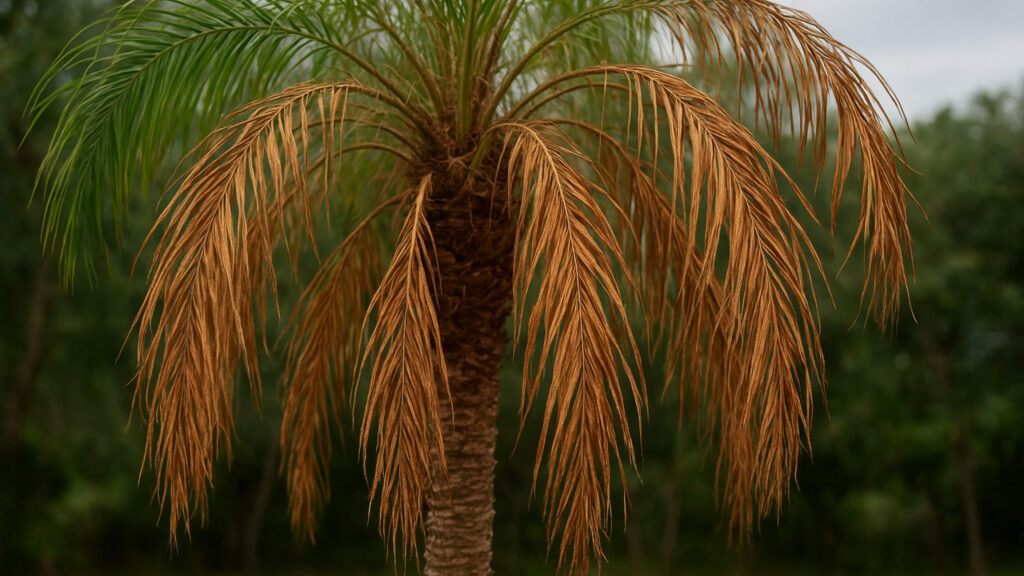
Once a palm is infected with Lethal Bronzing Disease, the pathogen interferes with the flow of water and nutrients. This disruption slowly starves the palm, triggering a series of visible symptoms that signal its decline.
Flowers and fruit drop too early
One of the first warning signs is the premature loss of flowers and fruit. This happens because the tree can no longer transport nutrients efficiently, causing stress that forces it to shed reproductive parts before they mature.
Fronds brown from the bottom up
As the disease advances, the lower fronds begin to turn brown and die. The browning moves upward through the canopy in a steady progression, showing how the pathogen is spreading through the palm’s vascular system.
The spear leaf collapses
The spear leaf, which grows from the center of the crown, is the palm’s core growth point. When it collapses, it means the heart of the palm has been fatally damaged, and no new growth will emerge.
Complete death within months
After the spear leaf is lost, the tree rapidly declines. In a matter of months, the palm is reduced to a dry, lifeless trunk that can no longer recover.
When entire groups of palms are lost, the impact extends far beyond individual trees. Communities, parks, and tropical landscapes are left bare, reshaping Florida’s iconic scenery and harming both its natural beauty and cultural identity.
Warning Signs of Lethal Bronzing
Early detection of Lethal Bronzing is crucial for protecting palm tree, as the disease can progress rapidly once advanced symptoms appear. One of the first signs to watch for is the premature death of fruit or flowers, which often occurs before more visible symptoms emerge. Another early indicator is the browning of fronds, typically starting from the bottom of the canopy and moving upward, signaling that the infection is spreading within the tree.
As the disease advances, more severe symptoms become evident. The spear leaf at the crown may collapse, indicating that the palm’s growing point is no longer alive. Following this, the palm experiences a rapid decline, often dying completely within just a few months. At this stage, recovery is impossible, highlighting the importance of recognizing and addressing the disease early.
How to Prevent Lethal Bronzing
- Inspect Regularly – Look for the first warning signs such as premature fruit drop, browning fronds, or spear leaf collapse. Catching symptoms early makes all the difference.
- Use Preventative Injections – Trunk injections with antibiotics like oxytetracycline, when applied consistently, can protect palms from infection and extend their lifespan.
- Remove Infected Palms Promptly – If a palm is confirmed to have LBD, remove it quickly to prevent insects from spreading the disease to nearby healthy trees.
- Strengthen Palm Health – Proper fertilization, watering, and pruning help palms stay resilient, making them less vulnerable to disease pressures.
Commonly Affected Palms
While all palms can be infected, certain species are far more vulnerable to Lethal Bronzing Disease.
- Phoenix species (Canary Island date, edible date, pygmy date palms): Popular for their ornamental beauty, but highly prone to rapid decline once infected.
- Queen palms: Tall and elegant, often planted along streets and estates, yet frequently targeted by the disease.
- Cabbage palms (Sabal palms): Florida’s state tree—hardy and salt-tolerant—but still at risk, making outbreaks a cultural and environmental concern.
- Coconut palms: Iconic symbols of Florida’s beaches and resorts, but extremely susceptible, threatening both beauty and tourism value.
Because these palms dominate Florida’s landscapes, outbreaks can devastate entire neighborhoods, resorts, and coastal areas—leading to major aesthetic and financial losses.
How to Encourage Mycorrhizal Fungi
Promoting fungi doesn’t require complicated steps. With the right care, you can strengthen this underground partnership and improve the wellness of your trees.
- Use organic mulch. Wood chips, bark, or shredded leaves feed fungi as they decompose while keeping soil cool and moist.
- Limit chemical fertilizers. High-phosphorus products can harm fungi. Choose compost or slow-release organic fertilizers instead.
- Plant diverse species. A mix of native trees, shrubs, and groundcovers encourages more fungal types, enriching the whole landscape.
- Avoid soil disruption. Heavy digging or compacting soil can break delicate fungal threads. Protect root zones with mulch or groundcover plants.
- Consider inoculation. In degraded soils, adding fungi when planting can give young trees a boost. A tree care service can help determine if this is useful for your property.
Why Prevention Is Key
Currently, there is no cure once palms are infected. Removal is the only option to protect surrounding trees. That’s why prevention is the smartest and most effective strategy. Partnering with a professional tree service ensures early detection and proactive treatments to keep your landscape safe.
Effective Prevention Strategies
Regular Monitoring
Routine inspections by a skilled tree care service help spot early warning signs and confirm diagnoses through lab testing.
Preventative Treatments
Arborists may recommend trunk injections of antibiotics like oxytetracycline. These treatments must be repeated every few months but can extend the life of at-risk palms.
Swift Removal of Infected Palms
If infection is confirmed, immediate removal prevents the disease from spreading. A tree service has the equipment and expertise to safely handle diseased palms without risking nearby trees.
Post-Freeze Recovery for Cold-Damaged Palms
Florida’s palms don’t just face disease, they can also suffer serious injury after winter cold snaps. A freeze can weaken the palm’s growing point, making it vulnerable to decay once temperatures rise. Taking the right steps immediately after a cold event can make a real difference in whether your palm survives.Wait Before Pruning
After a freeze, many fronds may turn brown or look burned. Resist the urge to remove everything right away. Even damaged fronds can provide energy to the palm as it recovers. Only remove fronds that are completely dead and hanging, anything with green tissue should stay in place.Check the Spear Leaf
The spear leaf (the newest upright leaf at the center of the crown) is the heart of the palm. Gently tug it.- If it’s still firmly attached, the bud may still be alive.
- If it easily pulls out or smells rotten, the growing point may be compromised, and the palm needs immediate attention.
Apply Copper Fungicide to Prevent Bud Rot
Cold-damaged palms are extremely vulnerable to fungal infections, especially in the bud area. Experts recommend applying a copper-based fungicide directly into the crown and around the base of the spear leaf.This helps prevent “spear rot” or “bud rot,” which can kill a palm long after the freeze is over.
- Copper fungicide should not be overused. Most guidelines recommend no more than one or two applications to avoid phytotoxicity.
- Apply only to the bud and crown, not as a full-tree spray.
- Treat as soon as possible after the freeze once temperatures rise above freezing.
Remove Rotten Tissue Only if Necessary
If the spear leaf is already decayed and pulls out easily, remove it and treat the exposed area with copper fungicide. However, do not remove fronds that still have any green tissue. Even ugly, damaged fronds help the palm photosynthesize and recover faster.Resume Regular Care Once Warm Weather Returns
As temperatures rise, you may begin seeing new growth, sometimes within weeks, sometimes after several months. Early new fronds may look twisted or deformed, but this is normal as the palm rebuilds from stress.- Watering normally
- Resuming fertilization only after new growth appears
- Avoiding pruning until the palm stabilizes
Be Patient, Recovery Takes Time
It may take 4 – 7 months or even longer before you know the palm’s true condition. Some palms don’t show recovery until the following warm season. As long as the bud stays alive, there is hope.The Role of Professional Tree Service
Why Hire Experts?
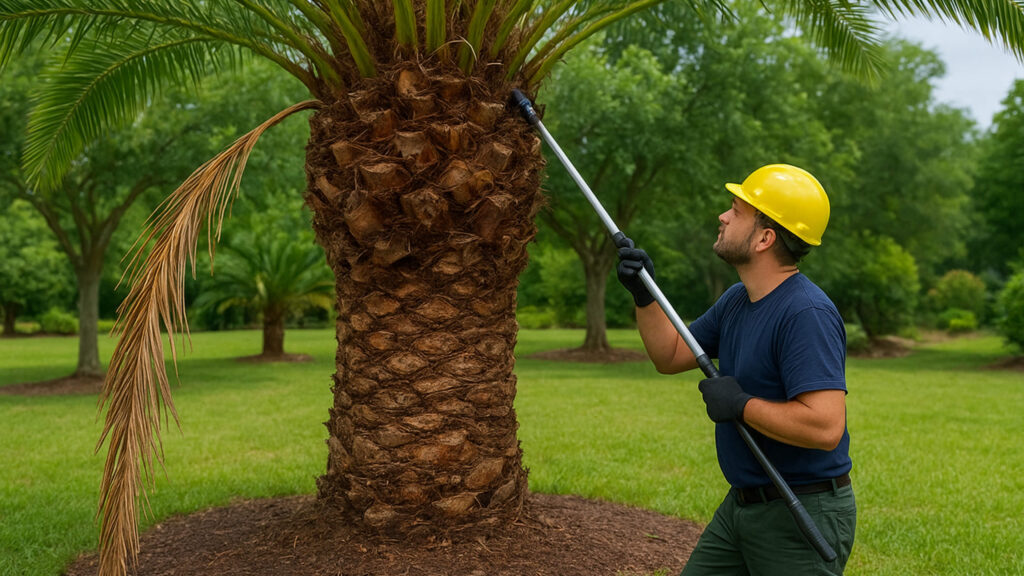
Caring for palms in Florida’s unique climate requires more than water and pruning, as palms face nutrient deficiencies, pests, and disease risks. Professionals provide the knowledge, tools, and ongoing care needed to keep your palms healthy and your landscape thriving.
- Provide regular fertilization and pruning of dead fronds – Experts apply the right fertilizers at the right time to strengthen palms and promote growth. They also remove dead or dying fronds, improving safety and overall appearance.
- Administer preventative injections and ongoing disease monitoring – Specialists detect and treat diseases early, preventing severe damage or loss of palms. Preventative injections and consistent monitoring keep palms protected from Florida-specific threats.
- Safely remove infected palms without damaging your property – Professionals can safely remove diseased palms without harming nearby plants, structures, or landscaping. Their equipment and expertise ensure the process is efficient and secure.
- A professional tree care service protects more than just your palms – By hiring experts, you preserve both the beauty and value of your property. Professional care prevents major issues, saving time and money in the long run.
A tree care service protects not just your palms but also your long-term landscape investment.
Emerging Research and Hope for the Future
Scientists are working on innovative solutions to combat Lethal Bronzing Disease. One promising approach uses scent-based deterrents to confuse insects and prevent transmission. While still in development, these methods give hope that Florida homeowners may soon have more tools to safeguard their palms.
Protecting Florida’s Landscape Legacy
Palms define Florida’s landscape identity. Losing them to Lethal Bronzing Disease would forever alter communities, resorts, and coastal regions. Prevention ensures not only the health of your property but also the preservation of Florida’s tropical charm.
Final Thoughts
Florida’s palms are at risk, but they don’t have to be lost. Through awareness, early detection, and preventative care, you can keep your palms thriving. Partnering with a trusted professional tree service ensures proper monitoring, treatment, and safe removal of infected trees. By taking these steps, you’re preserving not just your yard—but also Florida’s iconic green legacy for generations to come.
Give Your Trees the Care They Deserve
Healthy roots lead to lasting tree health. From nurturing your home landscape to expert solutions, we’re here to help every step of the way.
Frequently Asked Questions
What is Lethal Bronzing Disease and how does it affect palms?
Which palm species are most at risk?
Can infected palms be saved?
How can I protect the palms in my landscape?
Why is prevention better than treatment with Lethal Bronzing?
Because there is no cure, prevention helps maintain the health of your palms while preserving the long-term beauty and value of your landscape.