

Key Takeaways
- Mycorrhizal fungi play a vital role in supporting tree health by improving nutrient and water absorption.
- Fungi create natural defenses against soil-borne diseases and enhance overall soil structure.
- Encouraging fungi leads to healthier trees and stronger, more resilient landscapes.
- Limiting chemicals, adding organic mulch, and planting diverse species help fungi thrive.
- A professional tree service can test soils, apply treatments, and support fungi growth when trees struggle.
It’s simple to imagine lofty trunks, thick canopies, and shade on a sunny day when we think about healthy trees. Most people don’t realize what goes on beneath the surface. Mycorrhizal fungi are microscopic allies hidden in the soil and are essential to tree health.
By forming alliances with roots, these fungi increase their reach and provide water and nutrients. The tree reciprocates by giving the fungal carbohydrates to feed on. Individual trees as well as vast landscapes are strengthened by this organic interaction.
Understanding how fungus function is essential for long-lasting tree wellbeing, regardless of whether you use a professional tree service, your own gardening abilities, or a tree care provider.
Table of Contents
What Are Mycorrhizal Fungi?
Mycorrhiza literally translates to “fungus root,” and that is precisely what they develop into. Mycorrhizal fungi disseminate delicate filaments through the soil by adhering to roots and functioning as an extension of them. These filaments increase a tree’s access to essential nutrients by reaching water and minerals where roots cannot.
This relationship has existed for millions of years and is still crucial to the upkeep of robust, resilient trees today. Many plants would have difficulty surviving without fungi, particularly in hardy or nutrient-poor soils.
How Fungi Strengthen Trees and Improve Tree Health

Improved Nutrient Uptake
Although they are essential for growth, phosphorus and nitrogen are frequently retained in soil. These nutrients are released by mycorrhizal fungi and sent directly to the roots. This leads to increased vitality overall, faster growth, and greener leaves.
Better Water Absorption
By drawing moisture from minuscule areas that roots cannot access, fungus networks function as extensions of a root system. This makes trees more resilient in adverse environments and offers them an advantage during dry times.
Protection Against Disease
Around roots, these fungus provide a natural barrier. They can even activate a tree’s defenses and stop dangerous pathogens. Trees are less likely to experience soil-borne stress or root disease when they have this support.
Healthier Soil
By keeping particles together and generating gaps for water and air, fungi enhance the structure of soil. Strong soil promotes long-term growth and equilibrium, which benefits the entire landscape, not just a single tree.
How Mycorrhizal Networks Can Facilitate Communication Between Trees
“Beneath a forest’s surface lies an intricate web, not just of roots, but of threads of fungi. These threads may help trees communicate, share resources, and respond together as a community.”
What are these underground networks?
Fungi forming mycorrhizal networks, sometimes called common mycorrhizal networks (CMNs), connect the roots of multiple trees and plants via fine fungal filaments called hyphae.
- These networks act as an extension of tree roots, giving trees access to soil nutrients and water beyond the reach of their own roots.
- CMNs allow trees to interact not just with fungi, but with one another.
What kinds of communication or exchange can occur
- Resource sharing – Not only between fungus and tree, but among trees themselves. For example, sugars (carbon) produced by one tree may travel through fungal networks to another tree, even a different species, especially when that tree is shaded or otherwise disadvantaged.
- Support from “mother” trees to seedlings – Some older or larger trees, often dubbed “mother trees”, have many fungal connections and can act as hubs, helping nearby young or weaker trees by passing on nutrients or carbon through the network.
- Warning signals and defense coordination – Trees under attack by pests or pathogens may release chemical signals into the mycorrhizal network; neighboring trees connected via the same network can detect these signals and up-regulate their own defense mechanisms (produce defense chemicals, boost resistance), effectively prepping for a possible threat.
- Adaptive, community-wide responses – Because these networks link many trees (sometimes different species) across a forest patch, the exchange is not just bilateral but network-wide: nutrients, stress signals, defensive alerts may move across the community, enabling a collective, more resilient response to environmental stresses.
What recent research says and its limitations/controversies
- According to a 2015 review article, plants connected by a mycorrhizal network can exhibit “complex adaptive behavior”, meaning changes in physiology, gene expression, or defense responses in response to signals from neighbours. This supports the idea of a “forest-wide communication system.”
- However, the reality is more nuanced. Some more recent analyses (e.g. a review summarized in 2023) warn that while resource transfer between trees does occur under certain conditions, the evidence is mixed overall. In many studies, seedlings connected to a CMN did not show improved survival or growth compared to those isolated, and the benefit of resource sharing via CMNs remains uncertain.
- The claim that trees routinely send “warning signals” or preferentially share resources (e.g. from parent trees to kin) via CMNs, while popular, is not solidly backed by field studies. For example, the authors of a recent review found no peer-reviewed field study firmly demonstrating that adult trees preferentially send resources or defense signals to young trees through CMNs.
- In short: there is credible scientific basis for the concept of a “wood-wide web,” but many of the more poetic or anthropomorphic interpretations (trees “caring” for each other, “warning” each other like friends) remain speculative or provisional. The truth seems to be complex, context-dependent, and influenced by many ecological variables (soil type, fungal species, forest composition, environmental stress, etc.).
Why this matters for tree-care, forest health, and landscaping (and for your earlier content)
- If this “network communication” is real, even partially, then maintaining healthy soil and fungal networks becomes more than just good for a single tree: it supports the community of trees. This resonates with your earlier points about promoting mycorrhizal fungi in home landscapes or urban gardens.
- Practices that encourage healthy fungal networks, such as mulching, avoiding heavy soil disturbance, limiting high-phosphorus chemical fertilizers, planting a diversity of species, and avoiding compacting soil, may thus contribute not only to individual tree wellness but to the resilience and cooperative functioning of the entire planting (or forest).
- On the flip side: the scientific debates and mixed evidence remind us to be humble and not assume that every tree planting or “forest restoration” will automatically recreate a perfect “wood-wide web.” Soil conditions, fungal diversity, tree species, all matter.
Why Fungi Matter for Urban and Home Landscape
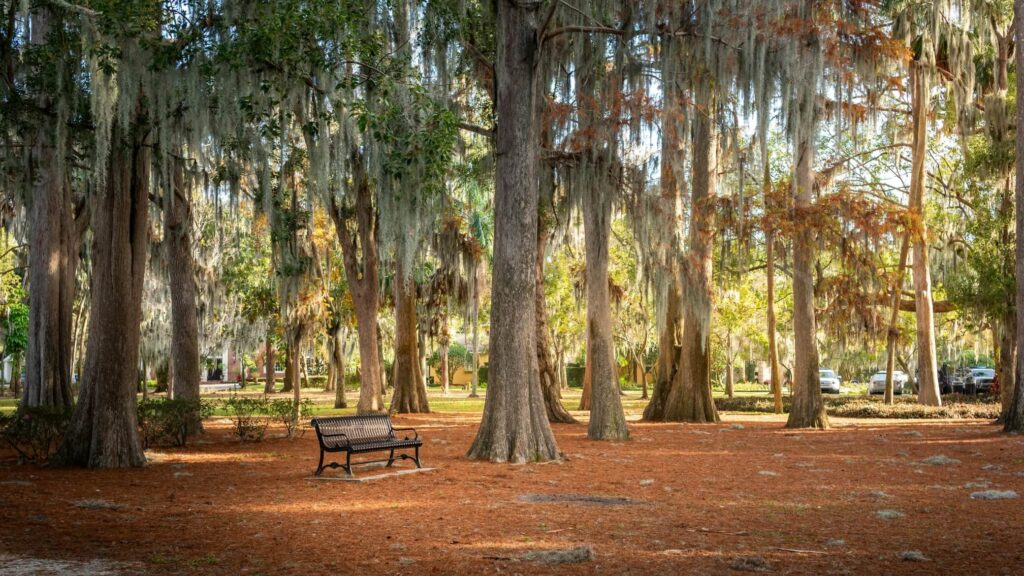
In natural forests, fungi are everywhere. But in cities and suburban yards, soils are often compacted, disturbed by construction, or lacking in organic matter. Without fungi, even the strongest trees may struggle.
Young trees especially depend on these partnerships. Fungi help new roots establish quickly and reduce transplant shock. For mature trees, they provide a steady supply of water and nutrients, improving resilience and extending lifespan.
This hidden relationship is why many homeowners and property managers turn to a professional tree service. Experts know how to encourage fungi naturally and can identify soils where fungal support is lacking.
Signs of Fungal Activity in Soil
You don’t need a microscope to guess if fungi are present. Healthy soil is dark, crumbly, and full of organic matter. Sometimes you may see thin, white threads called mycelium in mulch or damp earth. Trees that grow steadily, with lush foliage and fewer pest problems, often benefit from strong fungal activity.
How to Encourage Mycorrhizal Fungi
Promoting fungi doesn’t require complicated steps. With the right care, you can strengthen this underground partnership and improve the wellness of your trees.
- Use organic mulch. Wood chips, bark, or shredded leaves feed fungi as they decompose while keeping soil cool and moist.
- Limit chemical fertilizers. High-phosphorus products can harm fungi. Choose compost or slow-release organic fertilizers instead.
- Plant diverse species. A mix of native trees, shrubs, and groundcovers encourages more fungal types, enriching the whole landscape.
- Avoid soil disruption. Heavy digging or compacting soil can break delicate fungal threads. Protect root zones with mulch or groundcover plants.
- Consider inoculation. In degraded soils, adding fungi when planting can give young trees a boost. A tree care service can help determine if this is useful for your property.
When to Call a Professional Tree Service
Sometimes, expert help is the smartest step. Contact a professional tree service if your trees show poor growth, if soil is compacted, or if you’re planting new trees and want the best chance of success. Professionals can test soil, apply treatments, and recommend strategies that encourage fungi and strengthen root systems.
Building Strong Trees from the Ground Up
The key to lasting tree health isn’t just above ground—it’s hidden in the soil. Mycorrhizal fungi supply nutrients, improve water uptake, protect against disease, and build healthier soils that benefit the entire landscape.
By mulching, limiting chemicals, planting a variety of species, and working with a trusted tree care service when needed, you can support these underground partners. Strong fungi mean strong roots, and strong roots mean healthy, resilient trees that will enhance your property for years to come.
Ready to Strengthen Your Trees?
Support long-lasting tree health with the right care. Whether you’re maintaining your home landscape or need expert guidance, we’ve got you covered.
Frequently Asked Questions
How do mycorrhizal fungi improve tree health?
They extend root systems, boost nutrient and water absorption, protect against disease, and strengthen soil for long-term tree health.
Can I encourage fungi in my own landscape?
Yes—apply organic mulch, reduce chemical fertilizers, plant diverse species, and avoid heavy soil disruption.