
Key Takeaways
- Storm preparation is not just about cleaning up after a hurricane; it starts months before severe weather arrives.
- Proactive tree evaluations and risk assessments can help reduce the likelihood of storm-related emergencies.
- Many tree failures in Central Florida are caused by hidden structural defects, root problems, or previous storm damage that homeowners cannot easily see.
- Florida’s summer storms, saturated sandy soils, and high winds create unique risks for trees in Ocala and surrounding communities.
- Hiring a fully insured tree company protects homeowners from potential liability and financial exposure if accidents occur during tree work.
- ISA-Certified Arborists provide professional evaluations that help prioritize which trees need attention before storm season.
- Addressing tree risks before storm season is often safer, less stressful, and more cost-effective than relying on emergency tree removal services after severe weather.
- A professional storm readiness plan can help protect homes, vehicles, power lines, and valuable landscape trees.
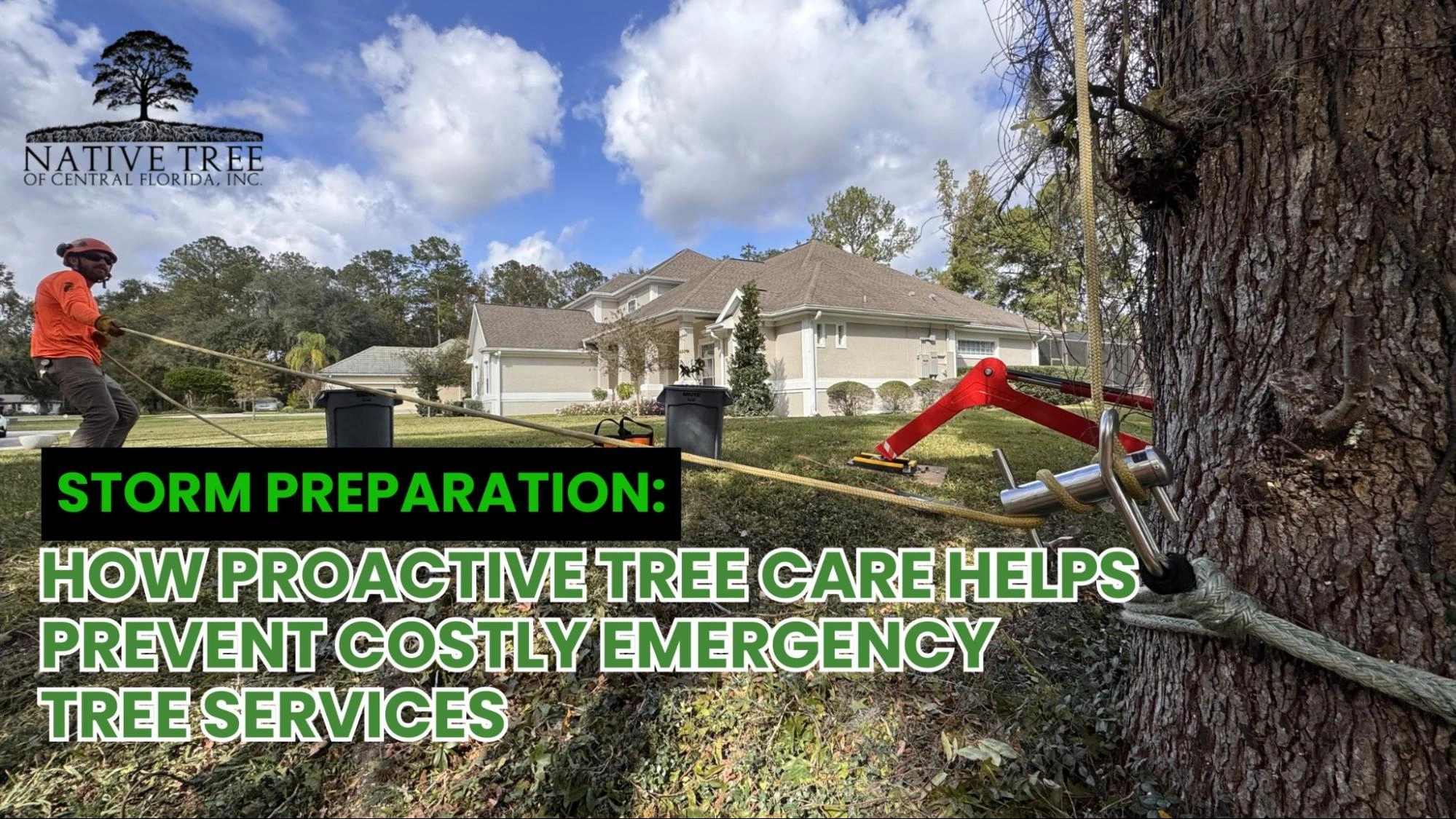
Storm preparation for trees should begin well before hurricane season because many tree failures are caused by pre-existing structural weaknesses, hidden decay, root instability, or storm-damaged limbs that worsen during high winds. A professional tree evaluation can identify risks early, helping homeowners reduce property damage, improve safety, and avoid costly emergency tree removal services after a storm.
For homeowners in Ocala and throughout Central Florida, waiting until a storm warning is issued can significantly limit your options. Tree companies become overwhelmed with requests, weather conditions become unsafe, and small problems can quickly turn into major emergencies.
Table of Contents
Why Storm Preparation Starts Long Before Storm Season
One of the biggest misconceptions among homeowners is that healthy-looking trees are automatically safe trees.
Unfortunately, appearance can be deceiving.
Many trees that fail during a severe storm showed subtle warning signs months or even years earlier. These issues often go unnoticed until strong winds expose them.
Common hidden problems include:
- Internal decay
- Root instability
- Previous storm damage
- Structural weaknesses
- Poor branch attachment
- Soil-related stress
- Leaning growth patterns
In Central Florida, these risks become even more significant because of:
- Hurricane season
- Frequent summer thunderstorms
- High humidity
- Saturated soils
- Sudden wind events
- Sandy soil conditions common throughout Ocala
When heavy rainfall softens the ground, even otherwise healthy trees can become vulnerable if underlying issues already exist.
The Insurance Factor Most Homeowners Overlook
One of the least discussed aspects of storm preparation has nothing to do with trees.
It has to do with liability.
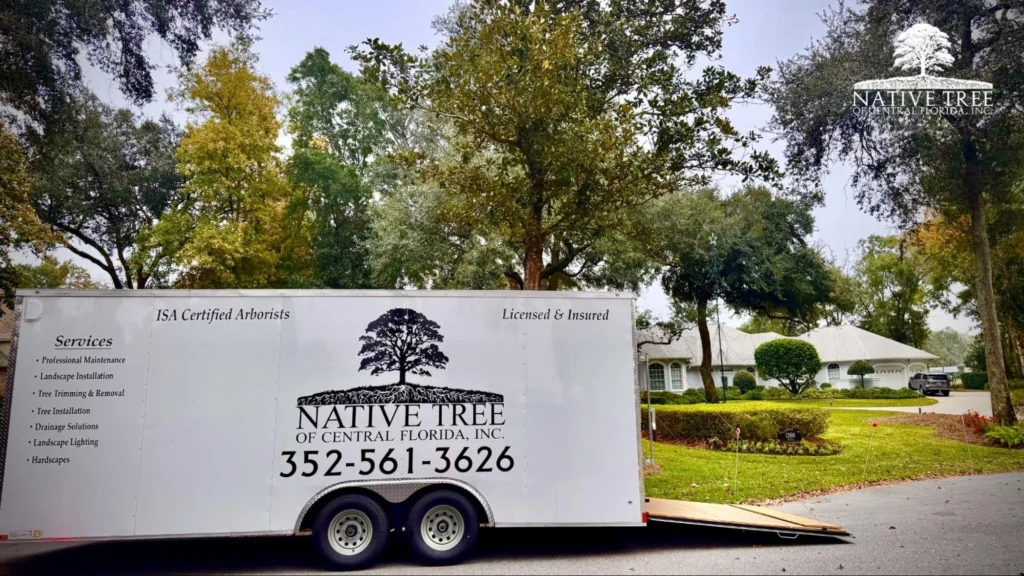
When searching for tree services near me before storm season, many homeowners compare prices without asking critical questions about insurance coverage.
That decision can become expensive.
Tree work involves:
- Climbing
- Heavy equipment
- Elevated cutting
- Rigging operations
- Property hazards
If an uninsured contractor damages a structure or if a worker is injured on your property, liability issues can quickly become complicated.
That is why we strongly encourage homeowners to verify:
- General liability insurance
- Workers’ compensation coverage
- Professional credentials
- Safety procedures
- Local experience
Storm Preparation Can Support Insurance Documentation
Many homeowners don’t realize that storm preparation can also provide valuable documentation before severe weather arrives.
After a major storm, insurance companies may ask questions about pre-existing conditions, tree health concerns, or when damage first occurred. Having a professional tree evaluation on record before storm season can help establish a tree’s condition prior to a storm event and provide useful documentation if questions arise during the claims process.
While every insurance policy is different, proactive assessments can help homeowners better understand potential risks and maintain records of their property’s condition before severe weather strikes.
Protecting a property involves more than responding after damage occurs. Professional tree evaluations, proper documentation, and working with a fully insured tree company can all play a role in reducing uncertainty before, during, and after storm season. That’s why we emphasize proactive assessments, transparent recommendations, and maintaining comprehensive insurance coverage as part of our commitment to responsible tree care.
What to Expect From a Professional Pre-Storm Tree Evaluation
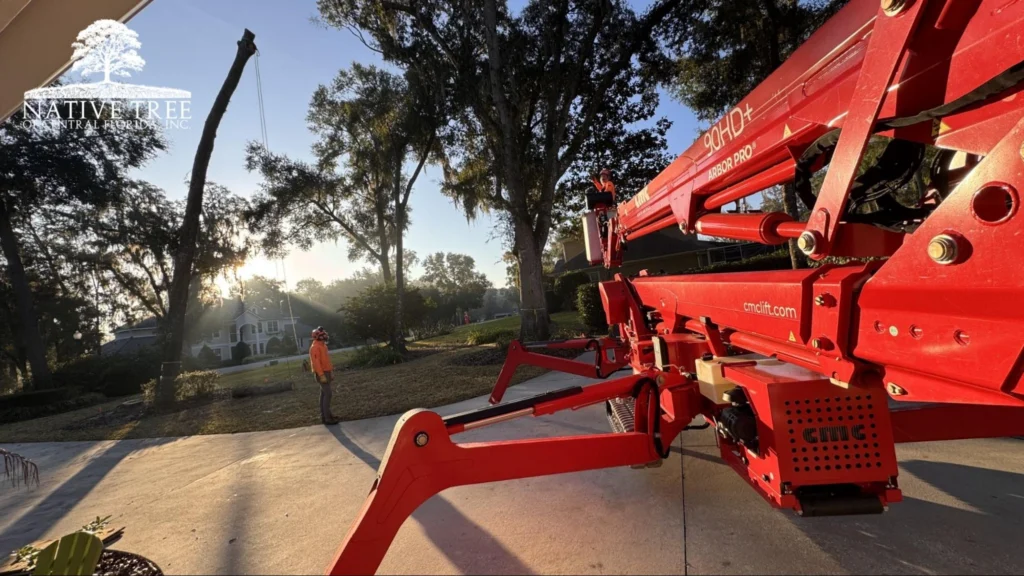
Many homeowners associate emergency tree services with chainsaws and post-storm cleanup crews. In reality, the most effective storm preparation begins long before severe weather arrives.
Professional pre-storm evaluations are strategic, educational, and designed to reduce future risks.
Professional Tree Assessment
An ISA-Certified Arborist evaluates:
- Tree health
- Structural integrity
- Root conditions
- Canopy balance
- Defect indicators
- Potential storm vulnerabilities
Risk Prioritization
Not every concern requires immediate action.
Part of our education-first approach is helping homeowners understand:
- What needs attention now
- What can be monitored
- What may require future planning
Understanding the evaluation process is important, but homeowners should also know how to assess the qualifications of the company providing the recommendations.
Questions Homeowners Should Ask
Not all tree companies approach storm preparation the same way. Before hiring a company for pre-storm tree evaluations, homeowners should take time to ask questions that help verify qualifications, safety standards, and professional expertise.
Some important questions include:
- Are you fully insured?
- Do you employ ISA-Certified Arborists?
- Will you provide a written assessment or recommendations?
- Can you explain why a tree is considered high risk?
- Do you prioritize preservation when possible rather than recommending removal as the first option?
DIY Storm Preparation vs Professional Evaluation
Homeowners can absolutely contribute to storm readiness.
| Category | Key Information |
|---|---|
| DIY Storm Preparation | Remove loose yard debris, monitor for changes in tree health, report visible concerns early, and schedule inspections before hurricane season. |
| Arborist Specialized Training | Tree biology, structural assessment, risk analysis, species-specific behavior, and storm resilience evaluation. |
ISA-Certified Arborists focus on preserving tree health while improving safety, rather than simply removing branches.
This distinction becomes especially important when evaluating mature trees that provide significant shade, beauty, and property value.
A Realistic Storm Scenario Many Ocala Homeowners Face
Imagine a mature oak that appears healthy from the street.
Its canopy is full.
Its leaves look green.
Nothing seems wrong.
Then a summer thunderstorm arrives.
After several days of heavy rain, the saturated soil weakens root support. Strong winds exploit an internal defect hidden deep within the trunk. Suddenly, a major limb fails over a driveway or roof.
Homeowners are often shocked because the tree “looked fine.“
In many cases, professional tree inspections could have identified warning signs that were not obvious to an untrained eye.
That is why storm preparation is ultimately about information, not fear.
Conclusion
Storm season preparation is one of the most valuable investments Central Florida homeowners can make for their property, safety, and peace of mind.
The goal of proactive tree care is not to prepare for an emergency response, but to reduce the likelihood that one will ever be needed. Addressing potential hazards early gives homeowners more control, more time to make informed decisions, and a greater opportunity to protect their property before severe weather arrives.
The goal is not to remove every tree or prepare for the worst-case scenario. It is to understand which trees may present elevated risks and address those concerns before severe weather arrives.
Informed homeowners are better equipped to protect their trees, property, and long-term landscape investments. Through professional evaluations, honest recommendations, and the expertise of our ISA-Certified Arborists, we help provide the clarity needed to make confident, well-informed decisions.
Schedule Your Pre-Storm Tree Evaluation Today
A proactive tree evaluation today can help reduce the likelihood of costly emergency tree services after severe weather.Let our ISA-Certified Arborists identify potential risks and help prepare your property for storm season. Call us today at (352) 561-3626 or reach us via e-mail at sales@nativetreecf.com to schedule your professional tree evaluation.
Frequently Asked Questions