


Key Takeaways
- Spring time in Central Florida accelerates tree growth, making early inspection critical for healthy trees.
- Conduct a full tree care inspection from roots to canopy to identify stress, damage, or disease.
- Proper pruning in spring strengthens structure, improves airflow, and reduces storm damage risk.
- Fertilizing and watering correctly during the spring season ensures strong root development and tree resilience.
- Early pest and disease prevention reduces costly interventions later.
- Always hire trained and insured tree care services near me for safety, proper equipment use, and risk-free maintenance.
Spring time in Central Florida doesn’t slowly arrive, it accelerates. Trees shift from semi-dormant winter survival into rapid growth mode within weeks. Leaves expand, roots actively absorb nutrients, and structural weaknesses suddenly become visible. This is exactly why homeowners begin searching for tree care tips every spring season. Most costly tree problems don’t start during storms. They start months earlier, when small defects go unnoticed. A minor crack becomes a split limb.
Poor pruning becomes hazardous weight. Root stress becomes uprooting. Proper spring season tree care prevents emergencies before hurricane season ever begins. In this guide you’ll learn practical, easy-to-understand tree maintenance strategies, what can safely be done yourself, and when professional tree care services near me should be involved for safety and long-term tree health.
Table of Contents
Why Spring Season Tree Care Matters in Florida Climate
Central Florida’s environment pushes trees harder than most places in the country. Warm temperatures, sandy soil, sudden rain, and high winds create fast growth but also fast failure.
How Spring Time Affects Tree Biology
Trees transition from conserving energy to aggressive growth. During this period:
- Roots rapidly expand searching for moisture
- Weak branches grow faster than strong ones
- Insects and fungi reactivate
- Old damage becomes exposed
Because growth is rapid, defects multiply quickly. This makes spring the most important time of year for preventative tree care near me searches and scheduled maintenance.
Benefits of Early Spring Season Tips
Taking action early in the spring season helps homeowners:
- Reduce storm damage risk
- Improve shade coverage
- Prevent disease spread
- Avoid emergency removals
- Extend tree lifespan
Waiting until summer often means the problem is already advanced.
Tree Care Tips for Spring Inspection
Before pruning or fertilizing, inspect the entire tree from roots to canopy. Most homeowners only look at leaves, but structural problems start lower.
Signs of Tree Stress
Look for these warning indicators:
- Canopy – Uneven leaf growth, bare sections, and dead twig tips often signal stress or declining health in the tree’s upper structure.
- Branches – Cracks where limbs meet, hanging limbs, and peeling bark indicate structural weakness that may require pruning for safety.
- Trunk – Vertical splits, soft spots, and fungus growth on the trunk suggest internal decay that can compromise stability.
- Roots – Soil lifting, a leaning trunk, and mushrooms at the base are common signs of root instability and potential structural failure.
When to Call a Professional Instead of DIY
You should contact professional tree care services if:
- A limb is large enough to damage a roof
- The tree recently leaned
- Multiple dead branches exist
- Fungus appears at the trunk base
These indicate structural instability, not cosmetic issues. They should be evaluated by an ISA Certified Arborist, a credentialed specialist trained in tree risk assessment and proper pruning standards.
Spring Tree Maintenance and Pruning Best Practices
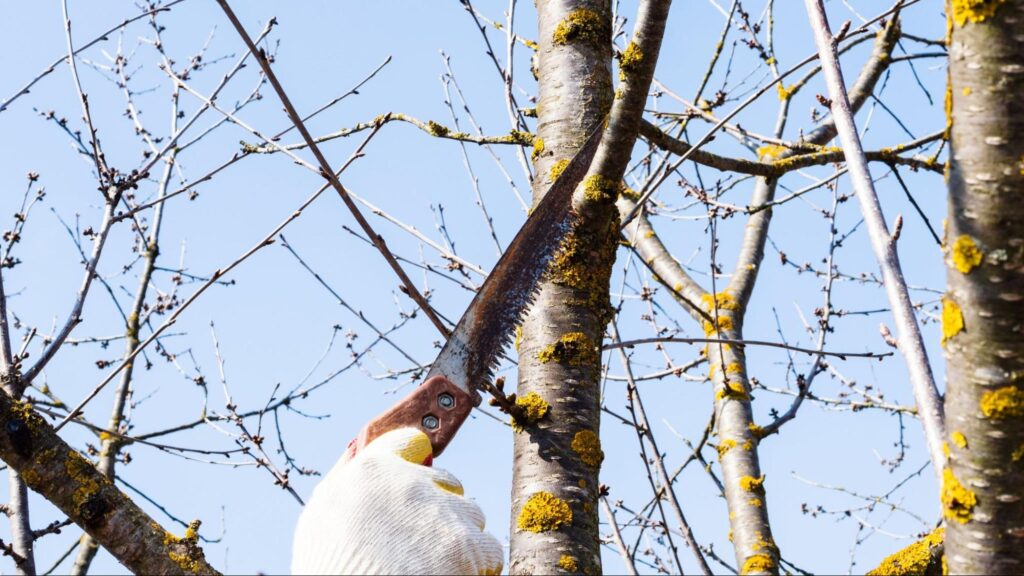
Pruning is one of the most searched tree care ideas each spring and also the most commonly done incorrectly.
Why Pruning During Spring Time Helps
- Correct pruning – Proper spring pruning improves air circulation throughout the canopy, allowing sunlight and airflow to reduce moisture buildup. It also lowers disease risk, strengthens branch structure, and prepares trees to better withstand seasonal winds and storms.
- Incorrect pruning – Improper pruning can cause internal decay and trigger excessive weak growth that is poorly attached. Over time, this shortens the tree’s lifespan and significantly increases the risk of storm-related failure.
Which Branches Should Be Removed
- Remove – Dead limbs, crossing branches, inward-growing limbs, and storm-damaged wood should be removed to improve structure and safety. Eliminating these problem areas reduces stress on the tree and encourages healthier growth patterns.
- Avoid removing – Avoid removing more than 25% of the canopy at one time, as this shocks the tree and disrupts energy production. Large structural limbs should not be cut without proper training, since improper cuts can tear bark down the trunk and cause long-term damage.
Improper cutting can tear bark down the trunk. This is why homeowners often search for tree care services near me after attempting pruning themselves.
Fertilizing and Soil Health During Spring Season
Florida soil drains quickly and holds fewer nutrients than northern soil. Spring is the most effective time for root absorption.
When Trees Actually Need Fertilizer
Beneficial for:
- Newly planted trees
- Trees with pale leaves
- Slow growing trees
Usually unnecessary for:
- Mature native species
- Healthy oaks
- Trees surrounded by fertilized turf
Proper Fertilizing Technique
Apply fertilizer around the drip line, not at the trunk. Water deeply afterward. Over-fertilizing is more harmful than under-fertilizing and can burn roots.
Professional tree care services often perform soil evaluation first, preventing wasted applications and long-term stress.
Watering Trees the Right Way in Spring Time
Spring rainfall can be inconsistent. Both overwatering and underwatering weaken root stability before summer storms.
Watering Guidelines
Young trees need deep watering multiple times weekly. Mature trees usually require water only during dry periods.
Warning Signs
Overwatering:
Overwatering is commonly indicated by yellow leaves, fungus growth near the base, and persistently soft or soggy soil. Excess moisture deprives roots of oxygen, which can quickly lead to root rot and overall decline.
Underwatering:
Underwatering often appears as leaf curling, premature leaf drop, and dry soil several inches below the surface. When moisture is inconsistent, roots remain shallow and the tree becomes more vulnerable to stress.
Balanced watering supports deep root development, the main defense against wind damage.
Preventing Pests and Disease in Spring
As temperatures rise, insects and fungi multiply rapidly. Early prevention is far easier than treatment.
Common Spring Tree Problems
- Aphids
- Scale insects
- Leaf spot fungus
- Root rot
Preventative Tree Care Tips
- Remove fallen debris
- Improve airflow with proper pruning
- Avoid cutting surface roots
- Monitor leaf color changes
If multiple limbs show symptoms, diagnosis from an ISA Certified Arborist is recommended before treatment is attempted.
DIY vs Professional Tree Care Near Me: Safety and Liability
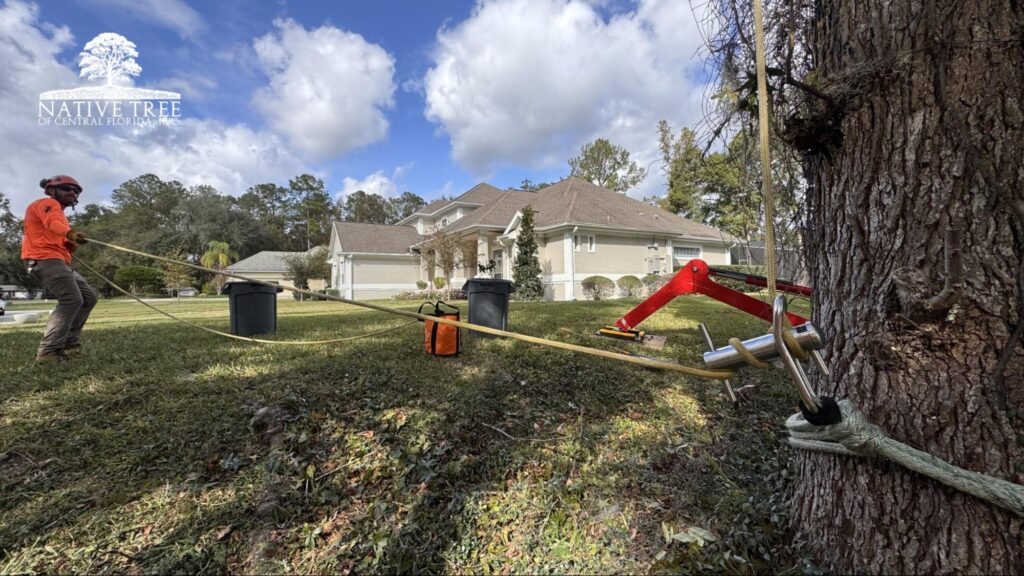
Tree work is among the most dangerous home maintenance tasks. Many homeowners don’t consider liability when choosing a contractor.
Risks of Hiring Uninsured Contractors
If an accident occurs, the homeowner may be financially responsible for:
- Property damage
- Neighbor property damage
- Worker injuries
- Structural impact to the home
Why Insurance Matters
Professional companies carry:
- General liability insurance
- Worker’s compensation coverage
- Safety training protocols
Companies that educate customers about safety usually follow those standards themselves. For homeowners in the Ocala area, businesses like Native Tree of Central Florida emphasize insurance coverage and proper procedures because safe tree work protects both property and people.
Preparing Trees Before Florida Storm Season
Spring maintenance is actually storm preparation.
Structural Tree Maintenance Steps
Structural maintenance begins by removing weak limb unions that are prone to splitting under high winds. Canopy weight should then be reduced evenly to balance the tree and minimize wind resistance during storms. Branches extending over roofs need to be cleared to prevent impact damage and falling debris. Finally, root stability must be inspected for signs of soil lifting, cracking, or instability to reduce the risk of uprooting.
Long-Term Benefits
Proper structural care significantly reduces the risk of uprooting during severe weather. It also lowers the chance of property damage caused by falling limbs or tree failure. Routine maintenance helps minimize expensive emergency removals and storm cleanup costs. Over time, strategic pruning promotes healthier growth patterns and stronger structural development.
Preventative care is significantly less expensive than emergency removal.
How to Choose the Right Tree Care Services
Not all tree care services near me provide the same level of expertise.
Questions Homeowners Should Ask
- Are you insured?
- Do you employ an ISA Certified Arborist?
- Do you follow industry pruning standards?
- Do you provide written estimates?
A trustworthy company welcomes informed customers because education leads to safer decisions.
Final Thoughts: Healthy Trees Start in Spring
Trees add shade, safety, and property value but only when properly maintained. Following these spring season tips allows homeowners to prevent problems rather than react to them.
When work exceeds safe DIY limits, choosing trained and insured professionals ensures the guidance you follow is actually practiced. Proper tree care is not just landscaping it is risk prevention, property protection, and long-term environmental stewardship.
Spring time is when trees grow the fastest, and also when smart decisions make the biggest difference.
Healthy Trees, Beautiful Landscapes
Give your trees the attention they deserve. From expert pruning to long-term care, our team is here to keep them safe, strong, and thriving year after year.
Call us today at (352) 561-3626 or reach us via e-mail at sales@nativetreecf.com to schedule your professional tree service.
Frequently Asked Questions
What are the most important spring season tree care tips?
Key tree care tips for spring include inspecting the tree for damage, pruning dead or weak branches, fertilizing when necessary, watering appropriately, and monitoring for pests or diseases. Early attention prevents costly damage later.
How often should I inspect my trees during spring time?
Homeowners should perform a full tree inspection at least once in early spring, especially after winter storms. Focus on canopy, branches, trunk, and roots for signs of stress or disease.
When should I call professional tree care services near me instead of doing it myself?
Call professionals if limbs are large enough to damage property, multiple dead branches exist, the tree is leaning, or fungus appears at the trunk. Hiring an ISA Certified Arborist ensures proper pruning and safety.
Can fertilizing and watering improve my tree’s health in the spring season?
Yes. Fertilizing around the drip line of young or stressed trees and providing deep watering supports strong root growth. Over-fertilizing or inconsistent watering can harm the tree.
What are common spring tree problems in Central Florida?
Typical issues include aphids, scale insects, leaf spot fungus, and root rot. Preventive care like pruning, cleaning debris, and monitoring leaf changes helps reduce infestations.