


Key Takeaways
- Tree planting in spring gives the highest survival rate in Central Florida because roots establish before summer heat and storms.
- Proper spring tree planting timing reduces transplant shock and lowers long-term watering needs.
- When planting a tree, the root flare must stay visible, planting too deep causes slow decline over time.
- A wide hole (2–3× the root ball) improves stability and prevents future leaning or failure.
- Avoid soil amendments during planting tree installation; native soil encourages stronger root expansion.
- Correct tree care tips in spring include gradual watering reduction, delayed fertilization, and proper mulching.
Tree planting in spring is the most reliable approach in Central Florida because soil temperatures warm while heat stress is still low. This allows roots to establish before summer arrives, giving trees a higher survival rate, faster growth, and better storm resistance.
In areas like Ocala and surrounding communities, timing matters more than most homeowners realize. Many tree failures aren’t caused by disease, they start the day the tree goes into the ground. Planting at the wrong time or using incorrect methods weakens the root system long before symptoms appear above ground.
This guide explains when to plant, how to plant correctly, and why professional installation dramatically improves long-term success.
Table of Contents
Quick Answer: Why Spring Is Best for Tree Planting
Spring tree planting works because roots grow before the canopy demands heavy water. Moderate temperatures, steady rainfall, and warm soil allow trees to adapt naturally. By summer, the tree is already established enough to handle heat and storms.
How Soil Temperature Controls Root Growth
Spring activates root development long before you see visible canopy growth. As soil temperatures rise steadily, underground activity increases even while the tree appears dormant above ground.
- Roots expand outward into surrounding soil – Warm soil encourages roots to grow horizontally and anchor into native ground. This expansion improves stability and long-term nutrient access.
- Transplant shock decreases – Consistent soil warmth reduces stress on newly planted trees. Roots establish faster, helping the tree adapt smoothly to its new environment.
- Irrigation needs drop significantly – As roots spread efficiently, the tree absorbs moisture more effectively. This reduces the need for frequent supplemental watering.
- Nutrient absorption improves – Active root systems take up nutrients more consistently in warm soil. This supports balanced growth before summer stress begins.
Trees planted in late summer must develop roots while battling intense heat. That combination often weakens establishment and increases the risk of decline within the first year.
Spring Tree Planting Tips for Proper Installation
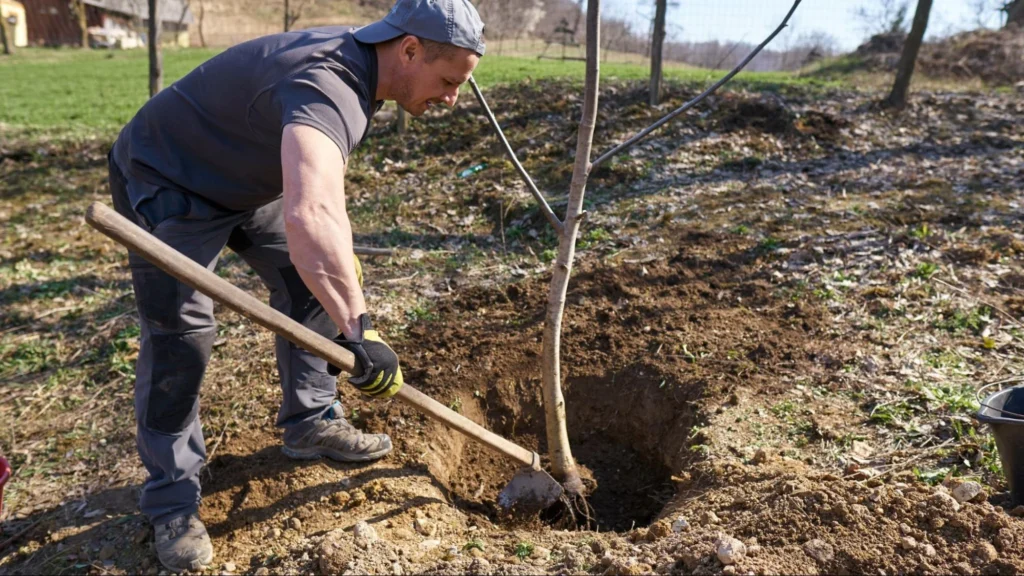
How Deep Should You Be Planting a Tree?
The most common mistake in planting a tree is burying it too deep.
The root flare, where the trunk widens at the base, must remain visible above ground level.
If buried:
- Oxygen cannot reach roots
- Bark begins to decay
- Tree declines slowly over years
Many declining landscapes in Central Florida trace back to improper planting depth rather than pests or disease.
How Wide Should the Hole Be?
Always dig wider instead of deeper.
Correct sizing:
- Width: two to three times the root ball
- Depth: same as root ball height
Wide planting encourages roots to spread horizontally, which improves stability during storms.
Should You Add Rich Soil or Compost?
Usually no, adding premium soil inside the hole creates a contained pocket. Roots stay inside the soft area rather than expanding into native soil, leading to instability later.
Native soil helps the tree adapt naturally to the environment it must survive in long-term.
Benefits of Spring Tree Planting Compared to Other Seasons
Compared to Summer
Summer planting exposes new trees to intense heat and rapid moisture loss at a time when their roots are still small and unable to absorb enough water. In Central Florida, including Ocala, this also overlaps with storm season, so young trees may face strong winds before they have anchored securely into the soil. The combination of dehydration and instability greatly increases transplant shock and failure rates.
Compared to Winter
Winter planting can be safe, but cooler soil temperatures slow root development, meaning the tree remains in a dormant adjustment period longer. Instead of actively establishing, it simply waits for warmer conditions. Spring speeds up establishment because soil warmth triggers root growth while air temperatures remain mild, allowing the tree to stabilize well before the stresses of summer arrive.
Long-Term Advantages
Trees planted in spring typically:
- Establish faster
- Require less irrigation
- Survive storms better
- Experience fewer health issues
Tree Care Tips in Spring After Planting
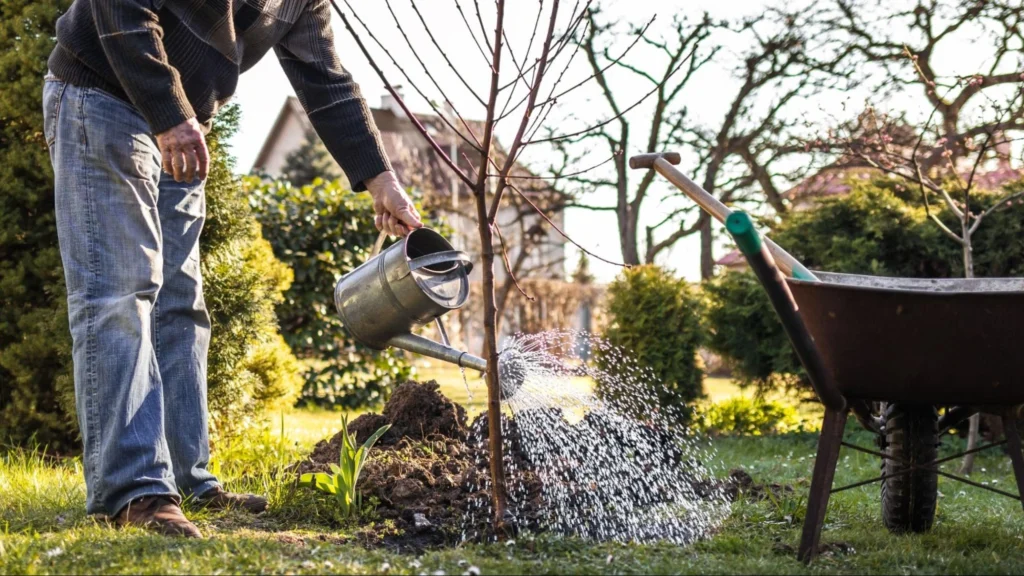
Watering Schedule for New Trees
New trees need consistency, not constant soaking.
Recommended watering pattern:
- Weeks 1–2: light daily watering
- Weeks 3–8: every 2–3 days
- After 2 months: once or twice weekly
Overwatering suffocates roots and is a leading cause of failure in Florida landscapes.
When Should Fertilizing Begin?
Avoid fertilizing immediately after planting.
Fertilizer stimulates leaf growth before root establishment. This imbalance weakens the tree and increases stress sensitivity.
Wait several months or until roots establish.
Correct Mulching Method
Mulch protects moisture and regulates soil temperature when applied properly.
Correct technique:
- 2–3 inches thick
- Keep mulch away from trunk
- Spread wide, not tall
Mulch piled against the trunk causes rot and insect issues.
Why Professional Planting Matters More Than Most Homeowners Think
Tree planting affects property safety, not just landscaping appearance.
Improper placement can lead to:
- Foundation damage
- Sidewalk lifting
- Drainage disruption
- Tree failure during storms
Hiring an insured professional protects homeowners from liability if damage occurs.
An evaluation by an ISA Certified Arborist considers soil conditions, species suitability, spacing, and long-term growth patterns, not just aesthetics.
Homeowners across Central Florida often rely on experienced companies such as Native Tree of Central Florida because proper installation prevents expensive removals later.
Choosing the Right Tree for Central Florida Conditions
Species selection must match the environment.
- Drainage capability – Florida soil often drains quickly, but some areas may hold water after heavy rain. Choosing a species that tolerates either fast-draining sand or periodic saturation prevents root stress and rot.
- Available root space – Tree roots expand far beyond the trunk over time. Planting in tight spaces can lead to foundation damage, sidewalk lifting, or restricted growth.
- Sun exposure – Many Florida landscapes receive intense, direct sunlight for most of the day. Selecting a tree that thrives in full sun prevents leaf scorch and long-term stress.
- Wind resistance – Central Florida storms bring strong winds and heavy rain. Trees with strong branch structure and deep root systems are less likely to fail during severe weather.
Trees suited for northern climates frequently struggle in sandy Florida soil and high humidity. Local expertise helps match the right species to the right location, preventing costly removal or replacement later.
Final Thoughts
A tree should be planted once and grow for decades. The difference between a thriving tree and a struggling one is rarely the species, it’s all about timing, technique, and planning. Spring provides an ideal window for planting, but the real benefits come when proper timing is paired with correct installation.
When the right tree is planted in the right place using proper methods, ongoing maintenance decreases, risks are minimized, and property value improves. Making smart choices today, whether through professional winter tree care or carefully planting tree, prevents costly problems in the future.
Start Your Spring Tree Planting the Right Way
Take advantage of the season’s ideal growing conditions with professional planting and care. Schedule your spring tree service today to ensure strong roots and long-term landscape success.
Call us today at (352) 561-3626 or reach us via e-mail at sales@nativetreecf.com to schedule your professional tree service.
Frequently Asked Questions
Why is spring the best time for tree planting in Central Florida?
Spring tree planting works because warm soil triggers root growth while temperatures remain mild. The tree establishes before summer heat and storms, improving survival and reducing watering needs.
What is the most common mistake when planting a tree?
The biggest mistake when planting a tree is planting too deep. The root flare must remain above soil level or the roots cannot get oxygen, leading to gradual decline.
Do I need to water every day after planting a tree?
Only during the first couple of weeks. After that, proper tree care transitions to watering every few days, then weekly once the roots establish.
Should I fertilize during spring tree planting?
No. Fertilizing too early promotes leaf growth before root development. Wait several months before applying nutrients as part of normal tree care.
Can trees be planted in summer instead?
Yes, but success rates drop. Summer heat and storms stress young trees before roots establish, making spring tree planting far safer.