


Key Takeaways
- A palm freeze can severely damage Florida palms, but many recover with patience and the right palm tree care.
- Cold-hardy species like sabal and pindo palms withstand freezes better, while tropical varieties need extra protection.
- Key recovery steps include waiting before pruning, checking palm health, and using careful watering and fertilization.
- A tree trimming service helps remove damaged palm tree leaves safely and promotes stronger palm growth.
- Regular visits from a professional tree service or tree care service ensure long-term palm tree health and resilience against future freezes.
When temperatures drop, it’s natural to wonder how to save your palm tree and what steps to take next. This article will guide you through recognizing freeze damage, helping palms recover, and protecting them long term with the support of a tree care service, tree trimming service, and professional tree service when necessary.
Table of Contents
Understanding Palm Tree Freeze and Its Effects
A palm freeze happens when cold weather injures palm tissues. Some species, like coconut or areca palms, are very sensitive, while cold-hardy varieties such as sabal or pindo palms can withstand cooler temperatures. Severe freezes, however, can damage any palm tree.
Recognizing Palm Tree Freeze Damage and What to Do Next
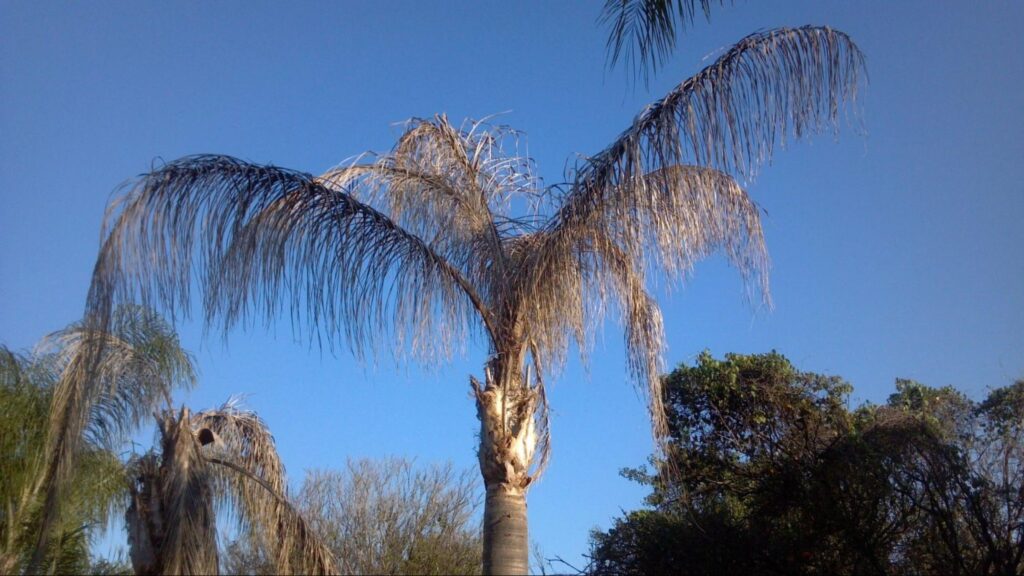
- Browning or yellowing palm tree leaves that look scorched
- Rusty, dry leaf tips
- A pause in growth that lasts for weeks or months
- Injury to the central growing point, or “heart,” which is critical for survival
If the heart is destroyed, the palm tree cannot produce new growth and recovery is unlikely.
How to Prevent Palm Tree Freeze Damage in Florida
Prevention is the best way to safeguard palms, since cold snaps can still happen even in Florida’s mild climate. With preparation, you can greatly reduce the risk of lasting damage.
Choose Cold-Hardy Palms
Select palm tree species that are naturally tolerant of cooler temperatures, such as sabal or pindo palms. Local nurseries and extension offices can guide you toward varieties best suited for your area.
Prepare Before a Freeze
Mulch heavily around the palm tree’s base to insulate the root system and water the soil a day before the freeze to help it hold warmth. Wrap small or tropical palms with burlap, frost cloth, or blankets, but always remove coverings once the freeze passes.
Ongoing Maintenance With a Tree Trimming Service
Healthy palm trees withstand stress better, and regular trimming is key to their strength. A professional tree trimming service can safely remove weak or damaged palm tree leaves and keep palms in good shape year-round.
Immediate Steps to Save Your Palm Tree After a Freeze

Wait Before You Prune
It’s tempting to cut away brown palm tree leaves immediately, but patience is essential. Some fronds that appear lifeless may still provide nutrients to the palm tree. Give your tree time, usually a few weeks, to reveal whether it will push out new growth.
How to Check for Palm Tree Health
Look for green tissue at the base of palm tree leaves or along the trunk. Inspect the crown: if it feels firm and not mushy, there’s a chance for recovery. Roots should be solid, not soft or decayed.
Minimal Cleanup
Remove only fronds that are completely brown and brittle. Over-pruning can weaken your palm tree further. For tall palms or tricky situations, a tree trimming service can safely handle the cleanup without damaging the tree.
Water and Mulch
Water deeply if the soil is dry, as hydration helps recovery. Spread mulch around the base to protect roots, but keep it a few inches away from the trunk to avoid rot.
Fertilize With Care
Hold off on heavy fertilizing until you see new growth. Once recovery begins, apply a slow-release fertilizer with essential nutrients like potassium and manganese. This strengthens the palm tree’s ability to produce healthy palm tree leaves.
Reinforced Watering Guidelines
Proper watering is essential for palm recovery and long-term health. Both the age of the palm and seasonal conditions affect hydration needs:
Established Palms:
- Water deeply but infrequently (about once a week during dry periods).
- Deep watering encourages downward root growth, improving stability and drought resilience.
- Avoid shallow, frequent watering that encourages weak surface roots.
Younger or Newly Planted Palms:
- Require more consistent hydration, typically 2-3 times per week depending on rainfall.
- Use “deep root hydration” to ensure water reaches the root ball and develops a strong foundation.
Adjusting for Seasonal Conditions:
- Florida rainy season: Reduce supplemental watering to prevent oversaturation and root rot.
- Dry spells or cold snaps: Increase deep watering slightly to protect roots and support recovery.
Monitoring Soil Moisture:
- Check soil 6-12 inches deep; it should be damp but not soggy.
- Consider a soil probe or moisture meter for consistent readings.
Fertilization Advice for Palm Recovery
Proper fertilization strengthens palms after a freeze and supports long-term growth. Use palm-special fertilizers, which according to UC Cooperative Extension, contain:
- Nitrogen (N): Promotes leafy growth
- Potassium (K): Strengthens roots and cold tolerance
- Magnesium (Mg): Prevents yellowing and maintains vibrant fronds
When and How to Fertilize:
- Delay heavy fertilization until new growth is visible.
- Apply slow-release palm fertilizers around the drip line for gradual root absorption.
- Young palms may benefit from 2-3 applications per year; established palms typically need 1-2 annual treatments, adjusted for soil conditions and rainfall.
Advanced Fertilization Techniques:
- Deep-root injection or soil probes: Deliver nutrients directly to root zones for maximum efficiency.
- Liquid feeds: Provide rapid uptake for stressed palms.
- Mulch + slow-release fertilizer: Retains moisture while feeding the tree gradually.
Combining proper watering with targeted fertilization encourages strong roots, resilient fronds, and better recovery after freezes.
How to Use Tree Care Services After a Freeze
Not every palm tree will recover on its own, especially when the damage is severe. In these cases, hiring a professional tree service is often the safest and most effective option.
When to Call a Professional Tree Service
- If palms are tall and dangerous to access: Large palm trees can be risky to climb or trim without the right equipment. A professional tree service has the tools and training to handle tall or hard-to-reach trees safely.
- When you’re unsure if the palm can be saved: Freeze damage isn’t always obvious right away. Tree care service experts can evaluate the palm’s condition and determine whether recovery is possible or if removal is necessary.
- If multiple palms in your yard were hit by freeze: Managing several damaged palms can be overwhelming. A tree care service can treat all your palm trees at once, saving you time and ensuring consistent care.
- When structural damage poses a safety risk: Palms with weakened trunks or falling palm tree leaves can threaten property and people. Professionals know how to safely trim or remove dangerous palms before accidents happen.
What a Tree Care Service Provides
- Expert diagnosis of palm tree health and recovery chances
- Safe trimming of dead or dangerous palm tree leaves
- Cold protection strategies for future freezes
- Emergency response if heavy fronds or branches threaten property
Investing in a professional tree service ensures your palms receive skilled, safe, and timely care.
Long-Term Strategies for Palm Tree Resilience
Soil and Water Management
Good drainage is essential because standing water that freezes around roots can cause severe damage. Adding organic matter improves soil structure, helping palm trees stay resilient against both freezes and other stresses.
Fertilization Plans
A regular schedule of slow-release fertilizers with key micronutrients keeps palm trees strong and healthy. Well-fed palms are better able to resist freeze damage and recover faster when stress occurs.
Landscape Design
Planting palm trees in naturally sheltered locations, such as near walls or larger trees, gives them added protection from cold winds. Avoid placing them in low-lying areas where cold air collects and increases freeze risk.
Regular Tree Care
Routine checkups from a tree care service can catch nutrient deficiencies, pests, or disease early. Healthy palms maintained by a professional tree service are far more resilient during sudden cold snaps.
Conclusion
A palm freeze in Florida can be alarming, but with patience and proper palm tree care, many palm trees can survive and thrive again. The key is knowing when to wait, when to prune, and when to call for help. Relying on a tree care service, tree trimming service, or professional tree service ensures your palms are cared for safely and effectively.By preparing before freezes, responding wisely afterward, and investing in long-term palm tree care, you can protect your landscape and keep it looking beautiful for years to come.
Protect Your Palms from Florida Freezes
Don’t let the cold take a toll on your palm trees. With expert care and proven protection tips, we’ll help your palms recover, stay healthy, and thrive year-round.
Frequently Asked Questions