
Key Takeaways
- Bud rot is a serious disease of palms that attacks the growing point, or bud, where new leaves develop.
- In Florida, Phytophthora palmivora is the pathogen most commonly associated with palm bud rot, although Thielaviopsis paradoxa can also cause it.
- The earliest warning sign is often a discolored, wilted, or collapsing spear leaf.
- On tall palms, the first obvious sign may instead be a missing spear leaf, no new leaves, or an open-looking crown.
- A spear leaf that pulls out easily, particularly when accompanied by decay or a foul odor, is a serious warning sign.
- Bud rot is more likely during wet weather and after tropical storms, when palms may experience prolonged moisture or physical damage.
- Treatment depends on the pathogen and how early the disease is detected. A mature palm with a dead bud often cannot be saved with fungicide.
- Homeowners should not climb a palm or cut into the crown themselves. Proper diagnosis and safe evaluation are more important than immediately applying a product.
Bud rot is a disease that attacks the growing point, or “bud,” at the center of a palm where new leaves develop. Because a palm generally has one main growing point, serious damage to this area can stop new growth and eventually kill the palm.
In Ocala and throughout Central Florida, bud rot deserves particular attention during periods of heavy rain and after tropical storms. This guide explains what bud rot looks like, what causes it, how to stop its spread, when treatment may help, and when a palm may need to be removed.
Table of Contents
What is bud rot on a palm tree?
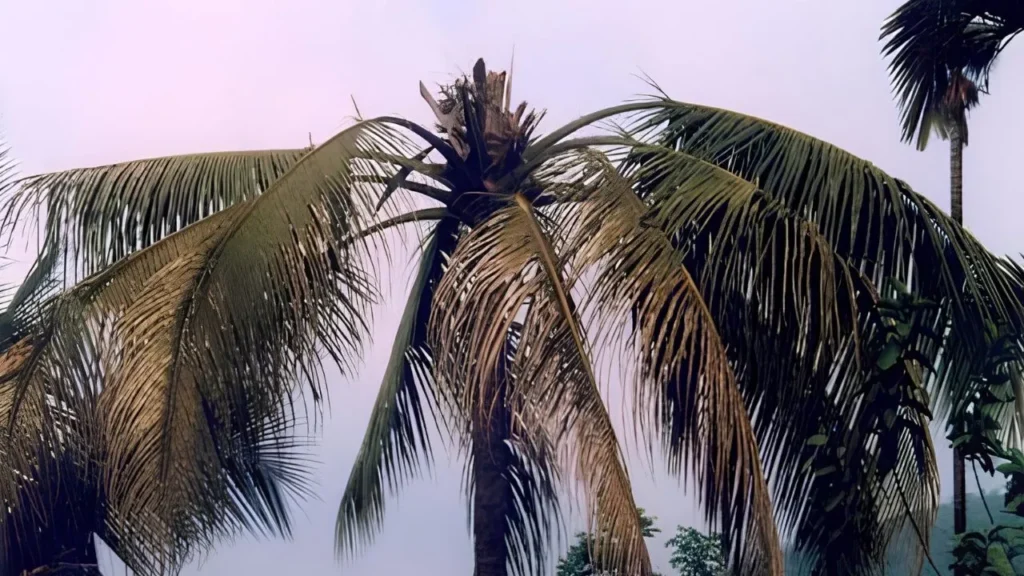
Bud rot is an infection of the palm’s apical meristem, commonly called the bud or heart, where new leaves are produced. When this growing point is severely damaged or killed, the palm can no longer produce new leaves.
In Florida, bud rot disease is most commonly associated with Phytophthora palmivora, although Thielaviopsis paradoxa can also cause the disease. The symptoms can be similar, so determining the exact cause may require laboratory diagnosis.
This is different from ordinary browning of older palm fronds. A few brown lower fronds do not automatically mean a palm has bud rot.
The part we pay closest attention to is the newest growth at the center of the crown.
What does bud rot look like?
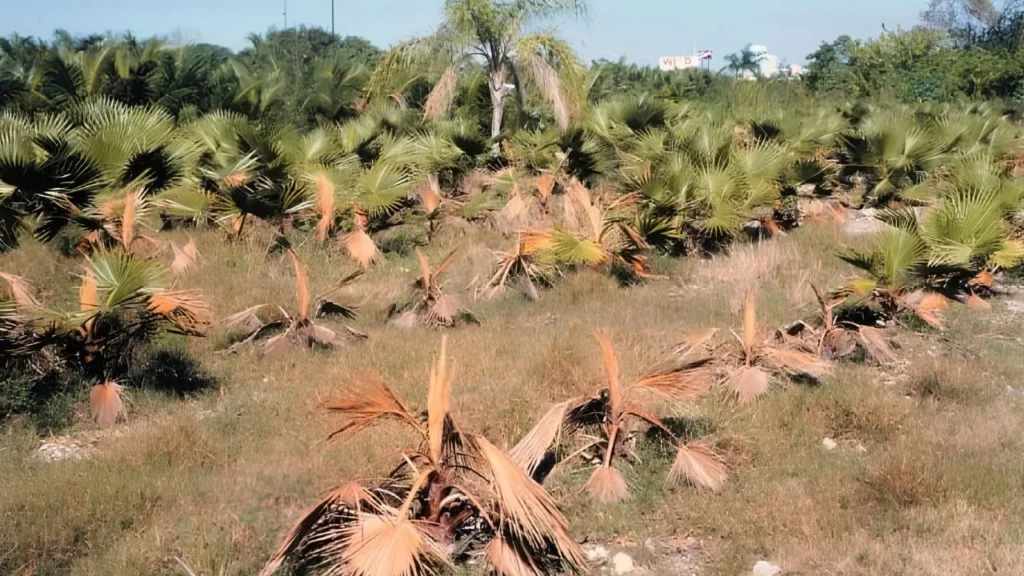
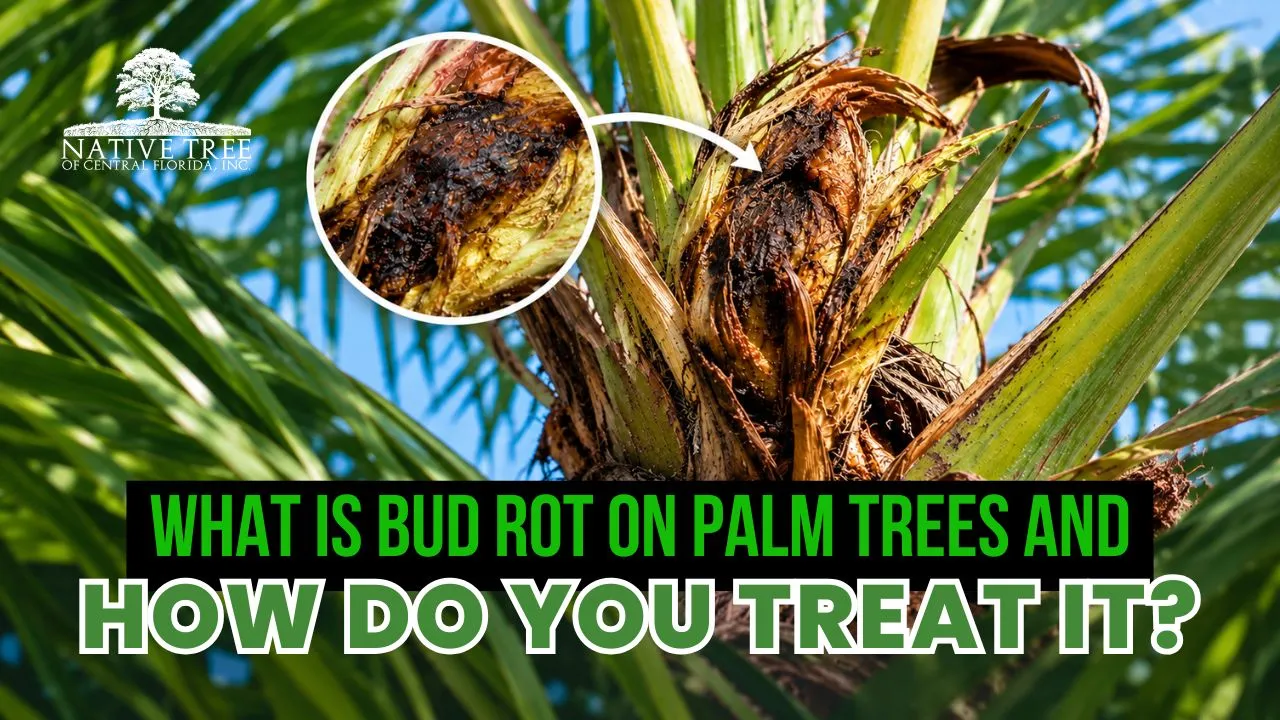
The earliest visible sign of bud rot is often a spear leaf that becomes discolored, wilted, or begins to collapse. As the disease progresses, the next-youngest leaves may also become discolored, dry out, and die.
Look for:
- A spear leaf that turns pale, yellow, brown, or black
- Wilting or collapsing new growth
- The newest leaves looking noticeably different from older fronds
- A spear leaf that pulls out unusually easily
- A foul or rotting odor around the crown
- No new leaves emerging
- An increasingly open-looking crown
- Progressive decline of the newest foliage
A particularly important distinction is that older fronds may remain green and appear healthy for months even after the bud has died. That can make an infected palm look healthier than it actually is.
What if the palm is too tall to inspect?
On tall palms, the first obvious symptom may not be visible damage to the spear leaf but a lack of new leaves or an open-topped crown. When the growing point is above eye level, homeowners may never see the earliest stage of infection.
That’s one reason we don’t recommend trying to diagnose a tall palm from the ground based only on the color of its older fronds.
What causes bud rot?
Bud rot can develop when disease-causing pathogens infect the palm’s growing point, with wet conditions playing an important role in the development of palm bud rot. In Florida, bud rot is more commonly observed during rainy periods and can occur more frequently after tropical storms or hurricanes.
Several conditions can increase concern:
- Prolonged wet weather
- Heavy rainfall
- Overhead irrigation
- Poor drainage or persistently wet conditions
- Physical damage to the palm
- Cold damage
- Conditions that leave the crown wet for extended periods
UF/IFAS notes that free water is particularly important to the life cycle of Phytophthora palmivora.
Why are storms important?
Storms can increase bud-rot risk by creating conditions that favor infection and by damaging the palm’s growing point. UF/IFAS specifically notes the association between bud rot and tropical storms or hurricanes in Florida landscapes.
That makes post-storm inspection especially important for palms in Ocala and Central Florida.
However, homeowners should avoid assuming that every damaged palm has bud rot. Storm damage, nutrient problems, cold injury, and other diseases can produce overlapping symptoms.
Can bud rot be treated?
Bud rot may be treatable when it is identified early, but treatment depends on the pathogen, the palm’s condition, and whether the growing point is still alive. Fungicides used for Phytophthora are not the same as those used for Thielaviopsis, which is why accurate diagnosis matters.
For juvenile palms, UF/IFAS describes specific fungicide options for diagnosed cases and notes that preventive applications may sometimes be appropriate in nursery situations.
For mature landscape palms, the situation is more difficult.
If the bud has already died, fungicide cannot bring the dead growing point back to life. UF/IFAS states that when a mature palm has lost its spear and is no longer producing new leaves, removal may be necessary because the dead palm can serve as a source of fungal spores.
This is why early evaluation matters.
What is palm bud rot treatment for mature palms?
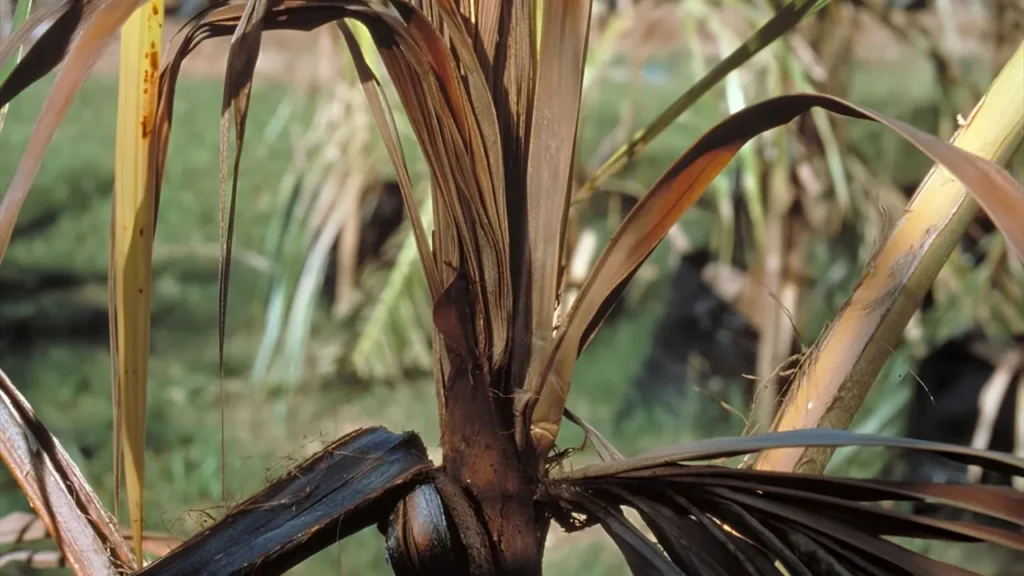
Palm bud rot treatment for a mature landscape palm should begin with diagnosis rather than automatically applying fungicide. The two primary pathogens can produce similar symptoms but respond to different fungicide groups, and mature palms are harder to treat because the growing point may be difficult to access.
A professional evaluation should consider:
- Which palm species is affected?
- Is the spear leaf still alive?
- Is new growth emerging?
- Does the spear pull out easily?
- Is there evidence of decay?
- Was the palm recently exposed to storm or cold damage?
- Are nearby palms showing similar symptoms?
- Is there another disease or environmental problem that looks similar?
We don’t recommend treating an unidentified palm problem simply because the crown looks unhealthy.
That approach can result in unnecessary chemical applications while the actual cause remains untreated.
How can you prevent bud rot?
You cannot prevent every case of bud rot, but you can reduce conditions that encourage disease and catch problems earlier. Proper water management, sanitation, careful palm maintenance, and monitoring after storms can all help reduce risk.
For Central Florida homeowners, prevention should include:
Monitor after storms
Inspect palms following periods of heavy rainfall, tropical storms, or hurricanes. Look at the center of the crown for changes in new growth.
Avoid unnecessary pruning
Healthy green palm fronds should not be removed simply to make a palm look cleaner. Native Tree’s existing palm-trimming guidance emphasizes removing dead or damaged material while avoiding excessive pruning.
Over-pruning can create unnecessary stress and wounds.
Manage irrigation carefully
Keeping palms excessively wet can create conditions favorable to some diseases. Avoid routine overhead watering when it is not necessary, particularly during already wet periods.
Watch the spear leaf
The newest leaf provides valuable information about palm health. A sudden change in the spear leaf is more concerning than a few naturally aging lower fronds.
Can a palm recover from bud rot?
A palm has a better chance of recovery when the growing point is still alive and the problem is identified early, but an advanced infection that has killed the bud usually has a poor prognosis. UF/IFAS notes that palms with advanced bud rot commonly die, particularly when the spear is already missing and no new leaves are emerging.
This is where homeowners sometimes wait too long.
A palm can retain older green fronds even after the growing point has died. So the fact that the crown still has green leaves does not necessarily mean the palm is recovering.
If the palm is valuable or the diagnosis is uncertain, an arborist evaluation can help determine whether continued monitoring makes sense or whether removal is warranted.
Should you remove a palm with bud rot?
A palm with a dead bud may need to be removed, particularly when it has stopped producing new leaves and the disease is confirmed or strongly suspected. UF/IFAS recommends immediate removal in certain advanced mature-palm cases because the dead palm can become a source of fungal spores that may affect nearby palms.
But removal should not be based on one brown frond.
Before making that decision, we consider:
- The palm’s species and age
- Whether the bud is still viable
- The severity and progression of symptoms
- Nearby palms
- The palm’s location
- Potential hazards
- Evidence of other diseases or structural problems
This is particularly important when the palm is tall, close to a home, driveway, pool, or other frequently used area.
When should you call an arborist?
Call an arborist when a palm develops a collapsing spear leaf, stops producing new growth, shows suspected crown decay, or deteriorates rapidly after a storm. Professional evaluation is especially appropriate when the palm is tall or located near people, structures, vehicles, or other valuable landscape plants.
Palm diagnosis can be deceptively difficult because several diseases and environmental stresses can produce similar symptoms. A professional assessment can help distinguish bud rot from problems such as:
- Storm damage
- Cold injury
- Nutrient deficiencies
- Other palm diseases
- Pest activity
- Mechanical damage
- Normal aging of older fronds
Native Tree of Central Florida provides professional palm and tree evaluations to help homeowners understand what is affecting their landscape before deciding on the appropriate course of action. Our ISA-Certified Arborists evaluate the palm’s overall condition rather than treating one symptom in isolation. Native Tree of Central Florida is also fully licensed and insured, with professional equipment and tree-risk qualifications for hazardous work.
Do not climb a tall palm or attempt to cut into its crown yourself. The combination of height, unstable fronds, equipment, and potentially weakened plant tissue makes this work inappropriate for most homeowners.
Conclusion
Bud rot is one of the palm problems where early recognition can make a meaningful difference. The most important warning signs are changes in the newest growth, especially a wilted or discolored spear leaf, a spear that pulls out easily, a foul odor, or a palm that stops producing new leaves.
Central Florida’s rainy periods and tropical storms can create conditions associated with bud rot, so Ocala homeowners should pay particular attention to their palms after prolonged wet weather or storm events.
The key is not to treat every unhealthy-looking palm with fungicide. Correct diagnosis comes first, because different pathogens require different management and advanced disease may no longer be treatable.
Give Your Palms the Care They Need
Not sure if your palm is showing signs of bud rot? Our tree care professionals can assess the damage and recommend the right treatment to help protect your palm.
Call us today at (352) 561-3626 or reach us via e-mail at sales@nativetreecf.com to schedule your professional tree service.
Frequently Asked Questions
Can bud rot kill a palm?
Yes. Because the disease affects the palm’s growing point, severe infection can stop new growth and kill the palm.
Can you save a palm with bud rot?
Sometimes, particularly when the problem is detected early and the growing point remains viable. Advanced cases where the bud has died generally have a poor prognosis.
Does bud rot happen more often after storms?
It can. UF/IFAS reports that Phytophthora bud rot is more frequently observed during rainy periods and after tropical storms or hurricanes.