
Key Takeaways
- The root collar and root flare are critical zones at the base of the tree that support nutrient transport, water absorption, and structural stability.
- Buried root collars can cause oxygen deprivation, girdling roots, poor root development, disease, and overall decline.
- Root collar excavation is a professional process that uncovers buried root flares, corrects soil grade, and restores healthy root function.
- Regular inspection of the root flare and maintaining proper soil and mulch levels are essential aspects of effective tree care.
- Understanding root collar vs root flare helps homeowners and arborists identify problems early and take corrective action before the tree’s health declines.
- Preventative practices like planting at the correct depth, avoiding mulch volcanoes, and consulting professionals when needed can save trees from long-term damage.
In the realm of professional tree care, few maintenance tasks are as critical—or as frequently overlooked—as root collar excavation. Many landscape trees in Central Florida suffer from ‘buried’ root collars, often caused by excessive mulch or soil piled against the trunk. This common error traps moisture, invites fungal pathogens, and leads to permanent trunk decay.
At Native Tree of Central Florida, we perform professional root collar excavation as a foundational element of our tree care program, allowing your trees to ‘breathe’ and effectively combat the humidity-driven diseases prevalent in our region.
Table of Contents
Understanding the Root Collar and Root Flare
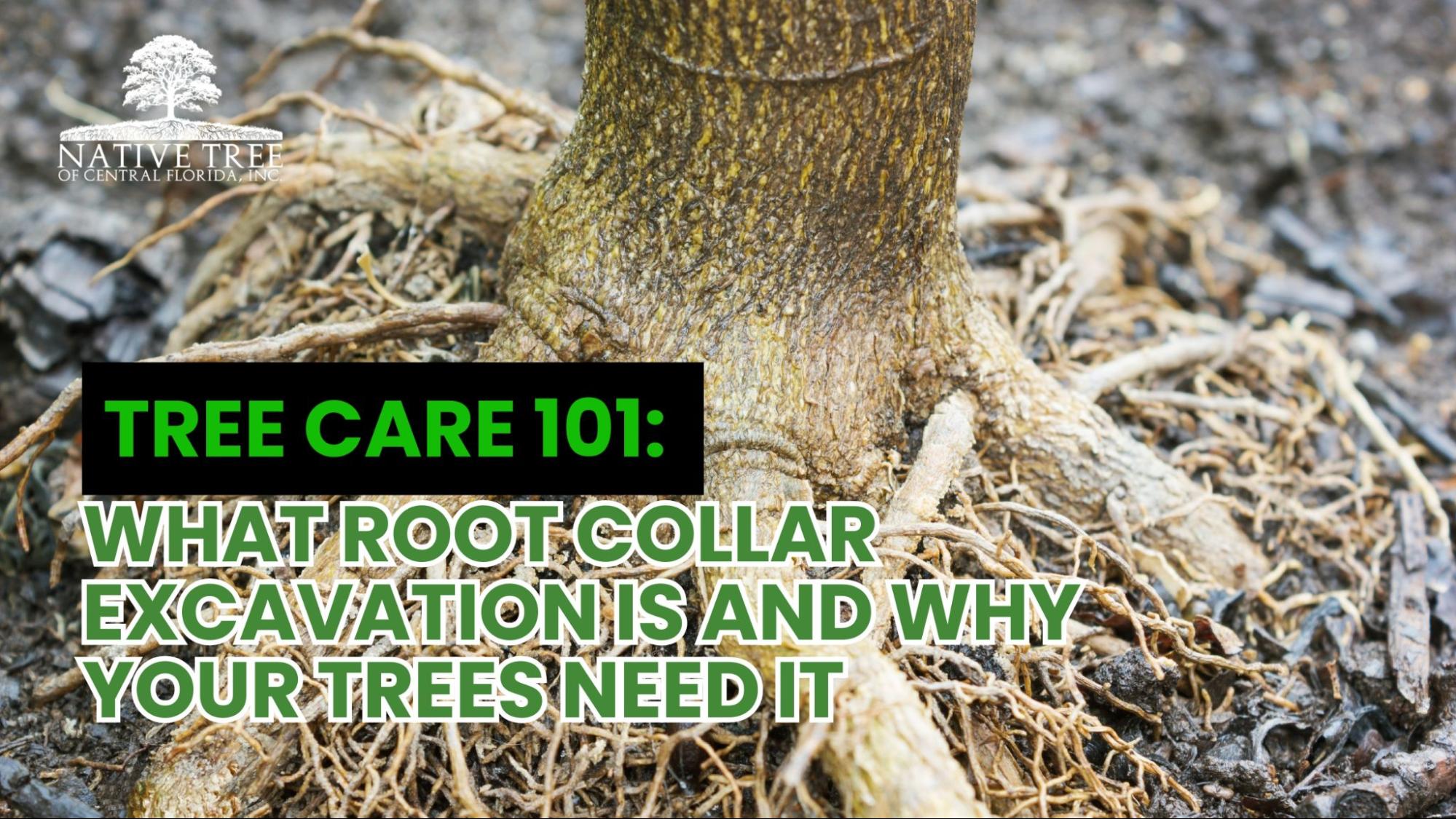
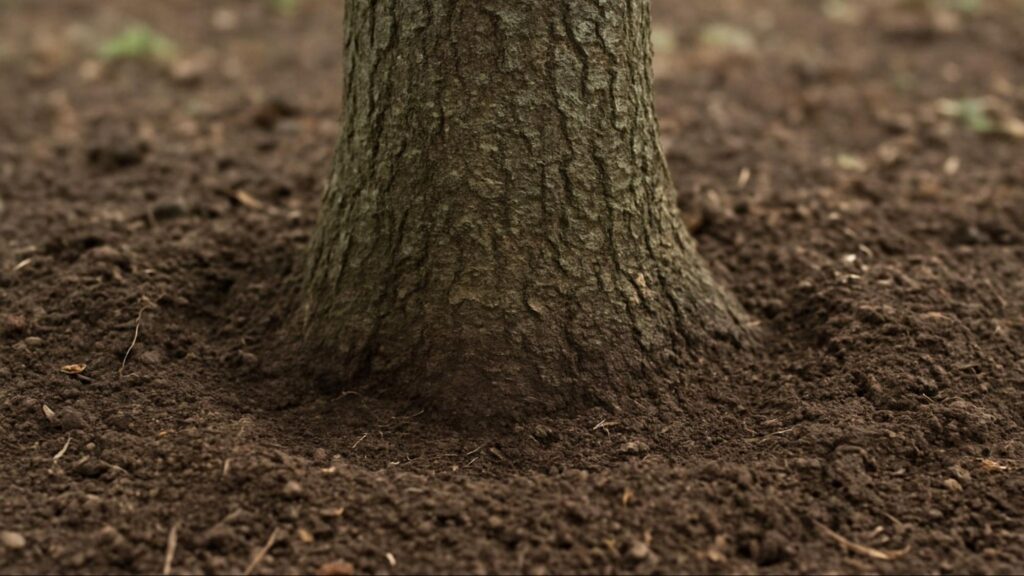
The root collar is the part of a tree where the trunk gradually widens and meets the roots, serving as a critical transition point for nutrient and water transport. The root flare refers to the outward, visible portion of this zone at the base of the tree. While the terms are sometimes used interchangeably, root flare specifically emphasizes the part that should be exposed above the soil. A visible root flare indicates a properly planted tree, with roots able to spread outward and access oxygen efficiently.
When the root flare is buried under excess soil, mulch, or debris, the tree can struggle to thrive. Buried collars can restrict airflow, trap moisture, encourage girdling roots, and increase susceptibility to disease and pests. Correct identification and maintenance of the root collar and root flare are essential aspects of tree care, as they ensure proper aeration, water absorption, and root function, foundations for a healthy, stable, and long-lived tree.
A buried root collar can interfere with several essential processes:
Aeration
The root collar and flare allow oxygen to penetrate the root system. If covered, roots can suffocate, weakening the tree.
Water Absorption
Properly exposed root flares help guide water to the root system effectively. When buried, water may pool around the trunk or drain poorly, causing either root rot or drought stress.
Structural Support
The root collar is the tree’s natural anchor point. Buried collars can prevent roots from growing outward correctly, leading to shallow or girdling roots that reduce stability.
Disease Prevention
An exposed root flare minimizes contact between moist soil and the trunk, reducing the risk of fungal infections, decay, and insect infestations.
Correct identification and maintenance of the root collar and root flare are therefore foundational aspects of tree care. By regularly inspecting the base of your trees and ensuring the root flare remains visible, you support proper root development, enhance nutrient uptake, and increase resilience against environmental stressors. In essence, a healthy root collar is the key to a strong, stable, and long-lived tree.
Why a Buried Root Collar Is a Problem

Girdling Roots and Structural Weakness
When the root flare is buried, roots may grow horizontally or wrap around the trunk instead of radiating outward. These girdling roots can strangle the tree over time, reducing nutrient uptake and stability.Reduced Oxygen and Excess Moisture
The root collar allows oxygen to reach the base of the tree. When buried, the soil traps moisture against the trunk, reducing airflow and increasing the risk of decay. Overly wet conditions can weaken the trunk and roots, making the tree vulnerable to disease.Increased Susceptibility to Disease and Pests
Buried collars create an environment ideal for fungal growth and insect infestations. Once the protective bark is compromised, the tree’s decline can accelerate rapidly.Poor Root Development and Instability
A tree with a buried root flare may develop shallow or compacted roots. This reduces stability, increases susceptibility to windthrow, and affects overall health.What is Root Collar Excavation?
Root collar excavation is a professional process used to uncover a buried root flare and restore proper soil conditions. It’s more than just digging a hole; it’s a careful procedure that preserves roots while correcting soil grade and improving the tree’s health.- Assessment – An arborist evaluates the tree’s health, soil conditions, and root flare depth.
- Excavation – Specialized tools, often an air spade that removes soil with minimal damage, are used to expose the buried root collar.
- Root Treatment – Any girdling or adventitious roots are identified and corrected.
- Backfilling and Mulching – Soil is amended if needed, and mulch is applied in a donut shape around the trunk, not against it, ensuring proper airflow.
The Dangers to Tree Care in Florida
| Condition | Central Florida Risk | The Result |
|---|---|---|
| Volcano Mulching | Traps summer humidity against bark. | Trunk rot and cambium death. |
| Buried Root Flare | Promotes girdling roots. | Tree instability and nutrient blockage. |
| Soil Compaction | Prevents oxygen reach. | Root suffocation in sandy/clay soils. |
The Native Tree Approach to Professional Tree Care
- Air Spading: We use advanced air-excavation tools to remove soil without damaging the tree’s delicate root system, a vital technique in expert tree care for mature Florida hardwoods.
- Crown Inspection: Once the flare is exposed, we conduct a thorough inspection for early signs of decay or structural cracks that were previously hidden.
- Corrective Mulching: We finish by applying a proper, 3-inch ring of mulch that stops at the base, ensuring the flare remains dry and visible to support long-term tree care goals.
Key Takeaways for Long-Term Tree Care
Visible Flares are Essential: If you cannot see the base of the tree where the trunk widens into roots, your tree care routine is missing a vital step for preventing decay.
Central Florida Humidity: Our high moisture levels make exposed root flares non-negotiable for preventing pathogen entry.
Structural Stability: Proper excavation reveals girdling roots that can strangle a tree over time, allowing for early correction.
Professional Intervention: Excavation requires specialized equipment; improper manual digging often damages the very roots that professional tree care aims to protect.
Conclusion
Proper tree care goes far beyond watering, pruning, or fertilizing;it starts at the base, with the root collar and root flare. Buried root collars can lead to oxygen deprivation, girdling roots, disease, and structural instability, threatening both the health of your tree and the safety of your property. Root collar excavation is a proven method to restore this vital zone, improve root function, and ensure long-term tree vitality.By understanding the difference between root collar vs root flare, recognizing warning signs, and taking proactive steps with the help of professionals when needed, you give your trees the best chance to thrive. Regular inspections, proper planting depth, and thoughtful mulching are simple yet powerful practices to prevent future problems. Investing in root collar health today protects your trees for decades, creating a stronger, safer, and more beautiful landscape.
Help Your Trees Breathe and Thrive
Buried root collars can silently harm your trees. Our experts can safely expose the root flare and restore proper growth conditions.
Frequently Asked Questions